
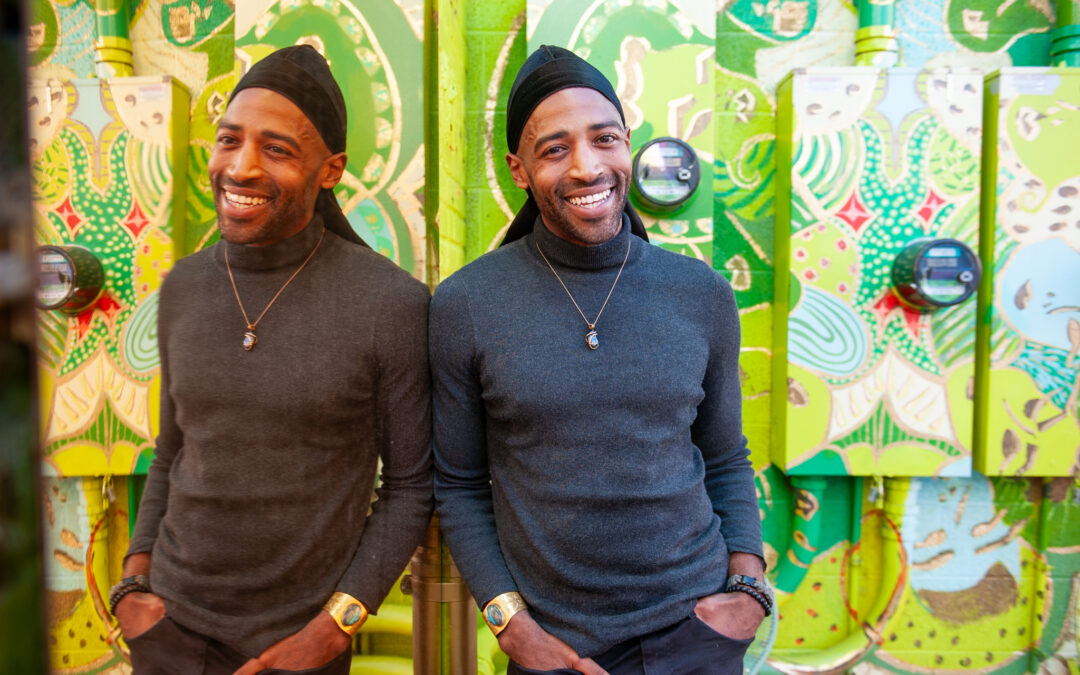
RAC is excited to partner with Humans of St. Louis to highlight stories from some of the talented creatives and artists who call St. Louis home. All stories and photography in the RAC + Humans of St. Louis series were created by and are credited to Lindy Drew, co-founder, lead storyteller, and book co-author of Humans of St. Louis.
Content Warning: This story contains references to near-death experience and suicide.
Cameron Jamarr
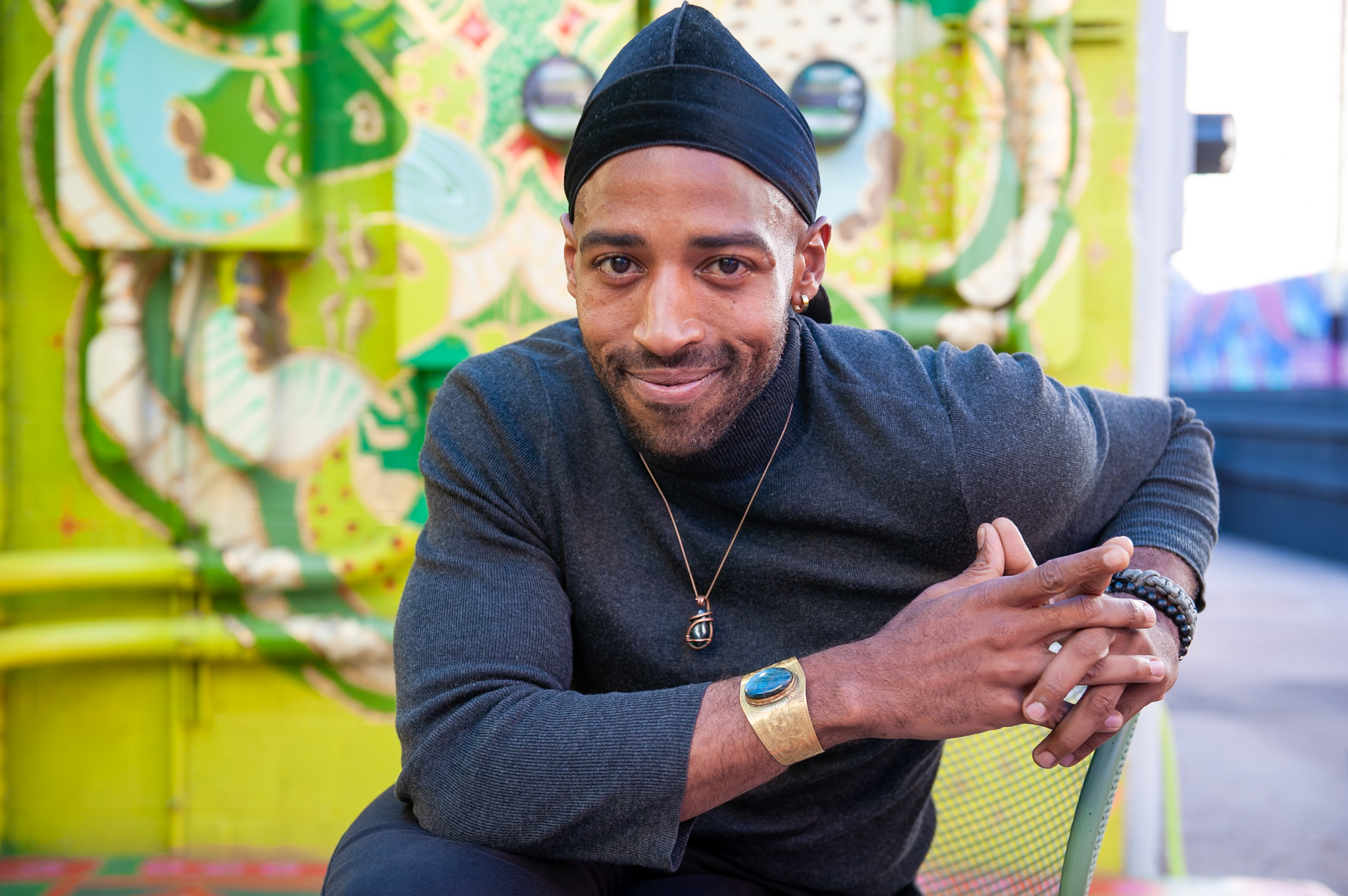 Photo credit: Lindy Drew / Humans of St. Louis
“I went to Clayton High School, where my dad worked in their preschool custodial side. So K through 12, I’d book it out from the Southside to Clayton every day. That’s where my friends were and where I’d start to get my exposure to the arts. In 2nd grade, we had Fairy Tale Theater, and I played Rapunzel’s father. In 4th grade, we had a Renaissance festival, and our teacher asked, ‘Who wants a big speaking part, and who wants a little one?’ So I spoke up: ‘I want the big speaking part!’ and I became Dromio of Syracuse. I didn’t know what I’d be doing, but I came home like, ‘Mom, I’m doing this part.’ I just always thought it’d be cool to go on stage, speak, and shine. In 6th grade, I went to Wydown Middle School and did musicals like 𝐵𝑦𝑒 𝐵𝑦𝑒 𝐵𝑖𝑟𝑑𝑖𝑒 and 𝐽𝑜𝑠𝑒𝑝ℎ 𝑎𝑛𝑑 𝑡ℎ𝑒 𝐴𝑚𝑎𝑧𝑖𝑛𝑔 𝑇𝑒𝑐ℎ𝑛𝑖𝑐𝑜𝑙𝑜𝑟 𝐷𝑟𝑒𝑎𝑚𝑐𝑜𝑎𝑡. Then in 8th grade, I played Jim in 𝐵𝑖𝑔 𝑅𝑖𝑣𝑒𝑟. That’s how I found my place in the arts. Outside of acting, I was a choir kid, a band kid, and I played the clarinet. It was always a little bit of this, a little bit of that. Because, why not? That’s what we’re here for.
Who really put me on the acting path, though, was my high school teacher and local actress, Kelly Weber. Sophomore year, there was a meeting after school one day about the fall play. At first, I was very against doing plays. Like, ‘I’ll do a musical. But a play?’ Well, the show was 𝑇ℎ𝑒 𝑊𝑖𝑛𝑡𝑒𝑟’𝑠 𝑇𝑎𝑙𝑒. And that play ended up following me later in my life. We’ll circle back to that. So, I was sitting in the black box, thinking, ‘This is cool but not for me.’ And as I walked out, Kelly said, ‘Where are you going? Here, read this.’ She gave me the role of Camillo. So I got up there, did my lil’ Shakespeare, and next thing I knew, I was in the play. We mixed the play with Baroque and operatic songs, so we actually sang monologues and worked with voice instructors who taught the school choir. As I stepped into theater, I was getting this cross-training out the gate that was synthesizing music, poetry, acting, and theater all together. I was hooked. I was in. From there, I was a drama kid.”
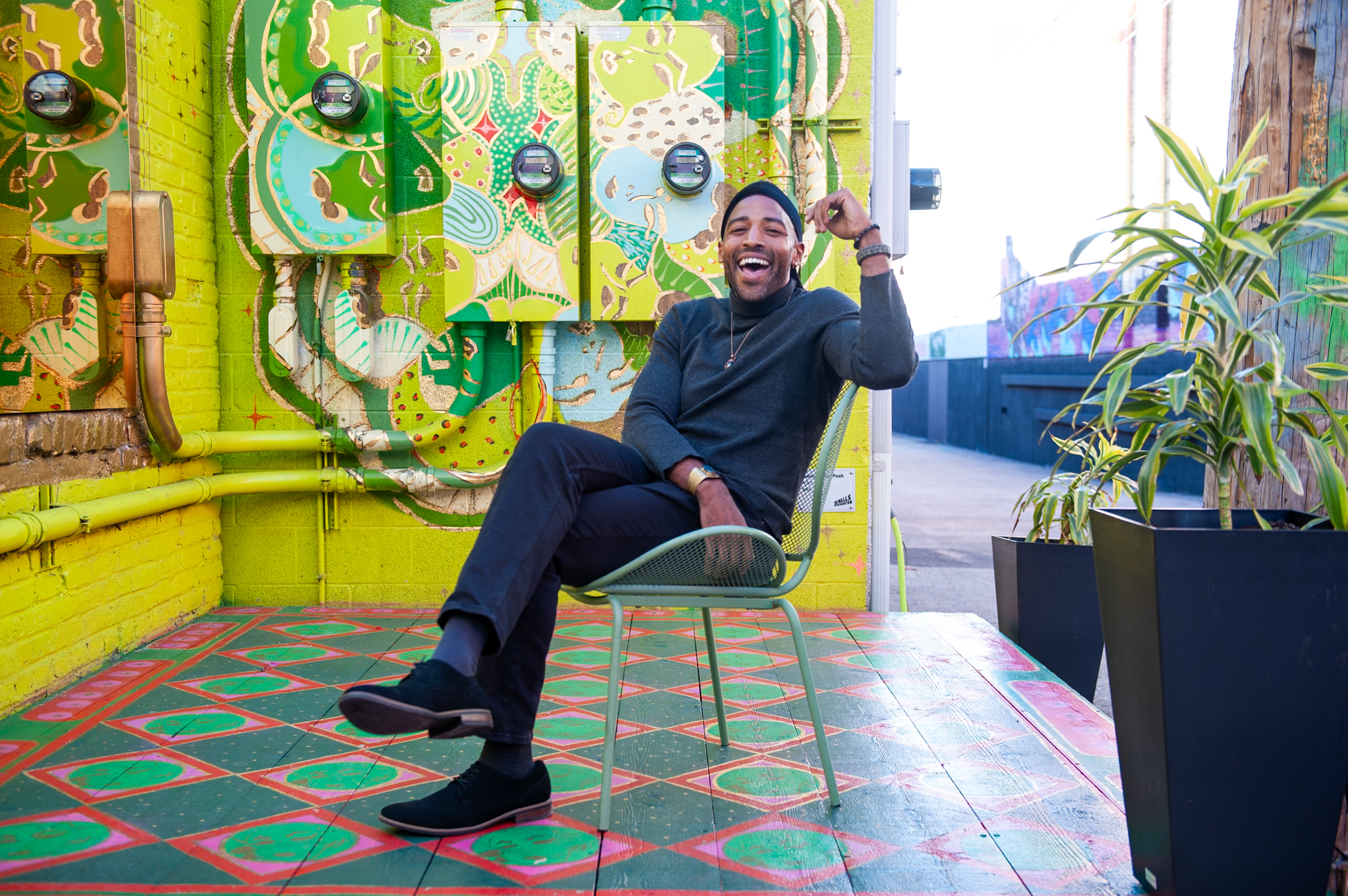 Photo credit: Lindy Drew / Humans of St. Louis
“I was all over the place in high school because I had to be there early since my dad worked for the district. Junior year, I became the drama guild president. Senior year, same thing. Part of that was just me killing time. It was me as first chair clarinet in the band every year, ‘And don’t come for it because I want it.’ It was me in the show choir and the chamber choir. It was me in musicals and plays. And I had to stay on top of my grades, which I did as much as I could in the subjects I cared about. In advanced English and AP Literature, I was reading these rich stories, learning grammatical structure, and how to write with complexity. That’s how I discovered a passion for poetry and writing. Sophomore year, I was asked if I wanted to participate in the Missouri Fine Arts Academy, MFAA, but I didn’t know what I wanted to go for. I could go for clarinet. I could go for singing. I could go for acting. I wanted to go for all of them, but we live in a world that often makes you choose. Until you start learning how to play by your own rules.
So I chose to go for acting, and I met all these cool people from high schools all across the state. We’d get together at arts camp for the summer, and we were learning how to create. Part of my journey hasn’t been just performing, but meeting artists who empowered me to go within to create something. They’d say, ‘You know you can make something yourself outside of us and apart from taking up someone else’s stories or words. You have it within you.’ Some of the best pieces of art I’ve seen have been passionate artists being like, ‘F*ck it. No budget. Here’s the idea. We’re gonna throw this together. Let’s go!’ One of the coolest pieces I saw at MFAA was 𝑆𝑢𝑏𝑡𝑒𝑟𝑟𝑎𝑛𝑒𝑎𝑛, this dark, moody, eclectic composition of dance, movement, music, and poetry. It was everything an adolescent was at the time. And I was like, ‘Yes, sign me up for more of this.’”
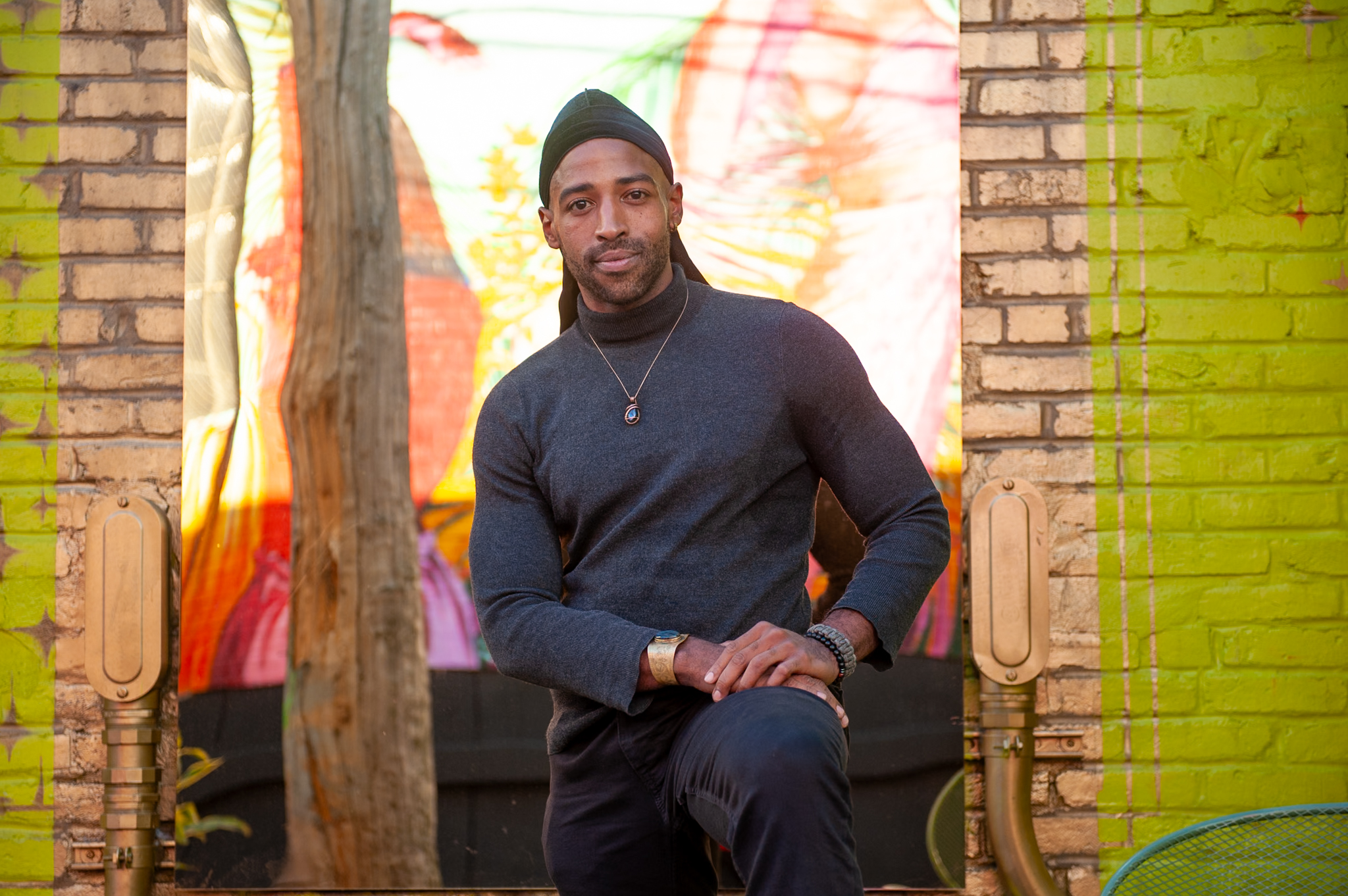 Photo credit: Lindy Drew / Humans of St. Louis
“High school was like college prep, and my classmates were already doing some dope ass Ivy League sh*t, so there was pressure on me to do the same. Meanwhile, I was just trying to make sure I kept my grades up so I could do fun things like stay in theater, or so my parents would maybe get me a car. Fast forward to senior year. People were asking, ‘Where do you want to go? What do you want to do?’ I wasn’t even thinking about what I wanted my future to look like. I was involved in so many things, like the Principal’s Advisory Council, student government, Black Student Union, class treasurer. I was also a marching band drum major. I kept getting bombarded with, ‘Don’t you want to go to Northwestern or Brown?’ The thing is, I was schooled out. I had the brain for it, but I just didn’t know what was next.
When it came to college applications, I cast my seeds wide to at least 11 schools. Some were art schools, and some were academic. I applied to Northwestern, had my final interview, and got in. I also applied to the University of Cincinnati College-Conservatory of Music – CCM. Okay, storytime. I’m probably gonna detour, if that’s okay… The week of my CCM audition coincided with our Peppers Prom, which was our high school’s unofficial prom. A week or two before, the school had to nominate who they wanted to be in the court, and I didn’t even know I was nominated. But what I did know was that I had these important auditions coming up and had to work on them.
My drama teacher said, ‘I know the artistic director (AD) of the St. Louis Shakespeare Festival. I’d like her to watch your monologues for your auditions.’ So she gets the AD to come to my school to coach my college monologues during my lunch break. Turns out, when I got to school that day, I was also going to get kidnapped as part of the prom court nomination. Pillowcase over my head, I was put in a car, driven to someone’s house, and dressed in this insane get-up — some multi-holiday sweater with Halloween, Christmas, and Chanukah all mixed together. We’re talkin’ frills and tutus and makeup on my face. I looked a hot Grinch mess. Because the idea was that you’re supposed to draw attention to yourself at school so people would know to vote for you. Even more awkward, I still had to do my monologue coaching. My first audition piece was fine because it was a comedic Shakespearean monologue from Trinculo in 𝑇ℎ𝑒 𝑇𝑒𝑚𝑝𝑒𝑠𝑡. But my second monologue was me playing a bisexual jazz musician dying from AIDS and confessing this to his mom. And there I was dressed like every goddamn holiday.
Later that day, I was on the bus going home when I got a call from my teacher saying, ‘Shakespeare Festival wants you to audition for Prince Edward in 𝑅𝑖𝑐ℎ𝑎𝑟𝑑 𝐼𝐼𝐼 in Forest Park this summer.’”
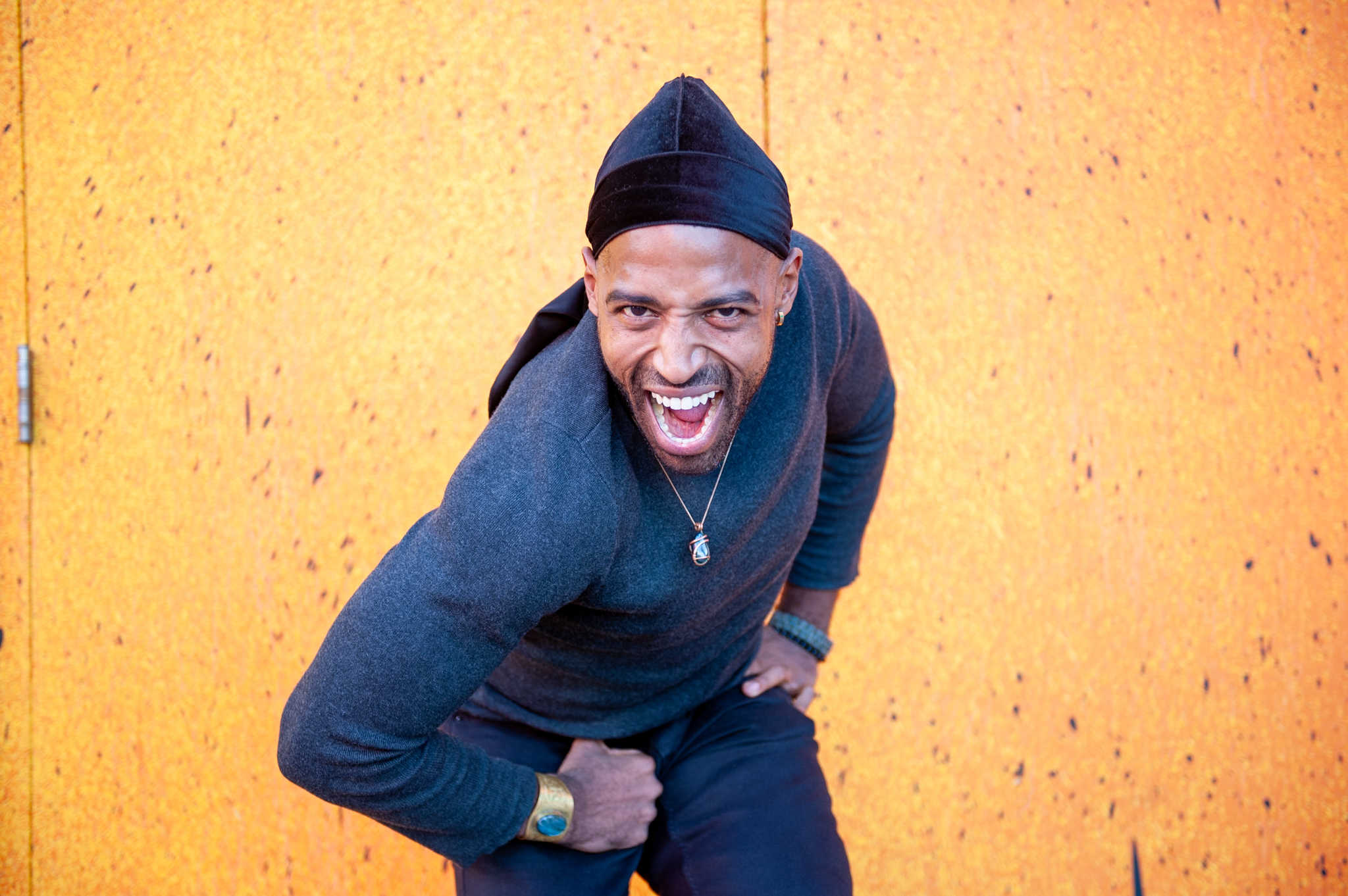 Photo credit: Lindy Drew / Humans of St. Louis
“Fast forward to my college audition. Peppers Prom was the night before. I won King. I also got the flu. Cold, chills, cough, fever. And my parents had to take me to Chicago, because that’s where the auditions were. So they drove me, but we could hardly see because the weather was so terrible. We get into the city, go to the hotel, and I wake up the next day not feeling better at all. I barely knew where the hotel was that was holding the auditions, and by this time, I’m running late, sick, anxious, sweating. Finally, I find the hall my auditions are in just as the program chair announces, ‘Cameron Davis.’ I get my sh*t together, walk through the door, and it’s go time. He asks, ‘How are you feeling today?’ I was like, ‘Eek.’ I performed the two pieces I just had coaching on — one which was full of energy, and the other where I was very sick. And because I was actually very sick, I used it.
Now, a lot of my friends had auditioned for different programs, too, and eventually they began getting rejection notices. Rejection is a reality. It happens. So I was like, ‘Damn, I ain’t heard nothing back yet. This must mean I’m getting super rejected.’ I remember thinking, ‘What are you gonna do? You’re waiting to hear back about a professional play. You could be going to acting school. How is this all supposed to play out?’ This was all happening while I was directing our student-run musical, a version of 𝑇ℎ𝑒 𝑇𝑒𝑚𝑝𝑒𝑠𝑡. And it was lit. It was so, so, so, so, so good! Well, I was working on the set with a friend who said, ‘Honestly, if everyone else has heard back, you probably didn’t get in.’
Not one minute after he said that, I got an email: ‘Congratulations, you’ve been accepted to the University of Cincinnati College-Conservatory of Music – CCM.’ And I geeked. Like, ‘Holy sh*t, I got in!’ I mean, they saw thousands of students, and only let in 15. And that 15 got whittled down to 11 by the time I graduated. Other acceptance letters came back, and now all these schools were waiting for my decision. So I told myself, ‘If I get into the show at the Shakespeare Festival, that will be the sign that I should go to acting school.’ Lo and behold, I booked it. My first professional show. And that’s when I said, ‘I’m gonna go to acting school.’
Now, my parents weren’t necessarily all about it. They thought I should have gone to Northwestern. I got into an argument with them, and I was so upset that I went to my computer and sent my acceptance to CCM. Then I told them the next day.”
 Photo credit: Lindy Drew / Humans of St. Louis
“When it came to my high school graduation, I gave one of the commencement speeches, which was the same date as opening night for my first professional show with St. Louis Shakespeare Festival. So I gave my speech, my parents were in the bleachers, and my drama teacher was right there waiting to drive me to Forest Park. It was so aligned. I walked straight off one stage in my cap and gown to go straight onto another stage to play Prince Edward in Richard lll. For me, there was no preparation for one or the other. I was ready and just had to trust it. I was operating on a huge degree of faith. Coming from the church, I guess I was raised to have that. Also, I had a lot of love from my family. My mom was the most supportive. She was always like, ‘You can do anything.’
I was actually just reflecting on that show, and how I’m grateful I was to have been surrounded by some top-notch actors then. Even though I was young and didn’t know much, I knew these people were good. They took time to mentor me in the kindest ways. Like, I’d take lunch breaks with this powerhouse actress named Claudia Robinson, a sista from the UK who had the most elevated, darling British accent. She acted her ass off. She played Queen Margaret, the prophetic, sharp-tongued, Widow Queen. Her scenes would kill every night. And I’d just watch her in awe, like, ‘I want to be like that.’ So I’d ask her, ‘How do you do it?’ And she’d tell me what she knew.
That summer, while also doing the Shakespeare Festival’s teen camp, I played Romeo in 𝑅𝑜𝑚𝑒𝑜 𝑎𝑛𝑑 𝐽𝑢𝑙𝑖𝑒𝑡. So I remember being in my trailer during a performance of 𝑅𝑖𝑐ℎ𝑎𝑟𝑑 𝐼𝐼𝐼, and going over my Romeo lines. And when you’re in the trailer, there’s a monitor to hear the show and the lines to make your entrance on time. So I’m going through my lines for Romeo when all of a sudden I realize I’m supposed to be on stage as Prince Edward. I missed my entrance, and the scene started with me. I had the first line! I ran for my life to the stage and jumped straight into the scene. After, I get off stage, walk back to the trailer, tail between my legs, feeling awful. But all the other actors were like, ‘Dude, that was great. It happens. We waited for you. We improvised. We made it work. You started the scene with a different energy tonight. And it was fun!’ To be so seen, so supported, so encouraged, I will never forget it. At that moment, I was an actor. A professional actor. Before I’d even set a foot into acting school.”
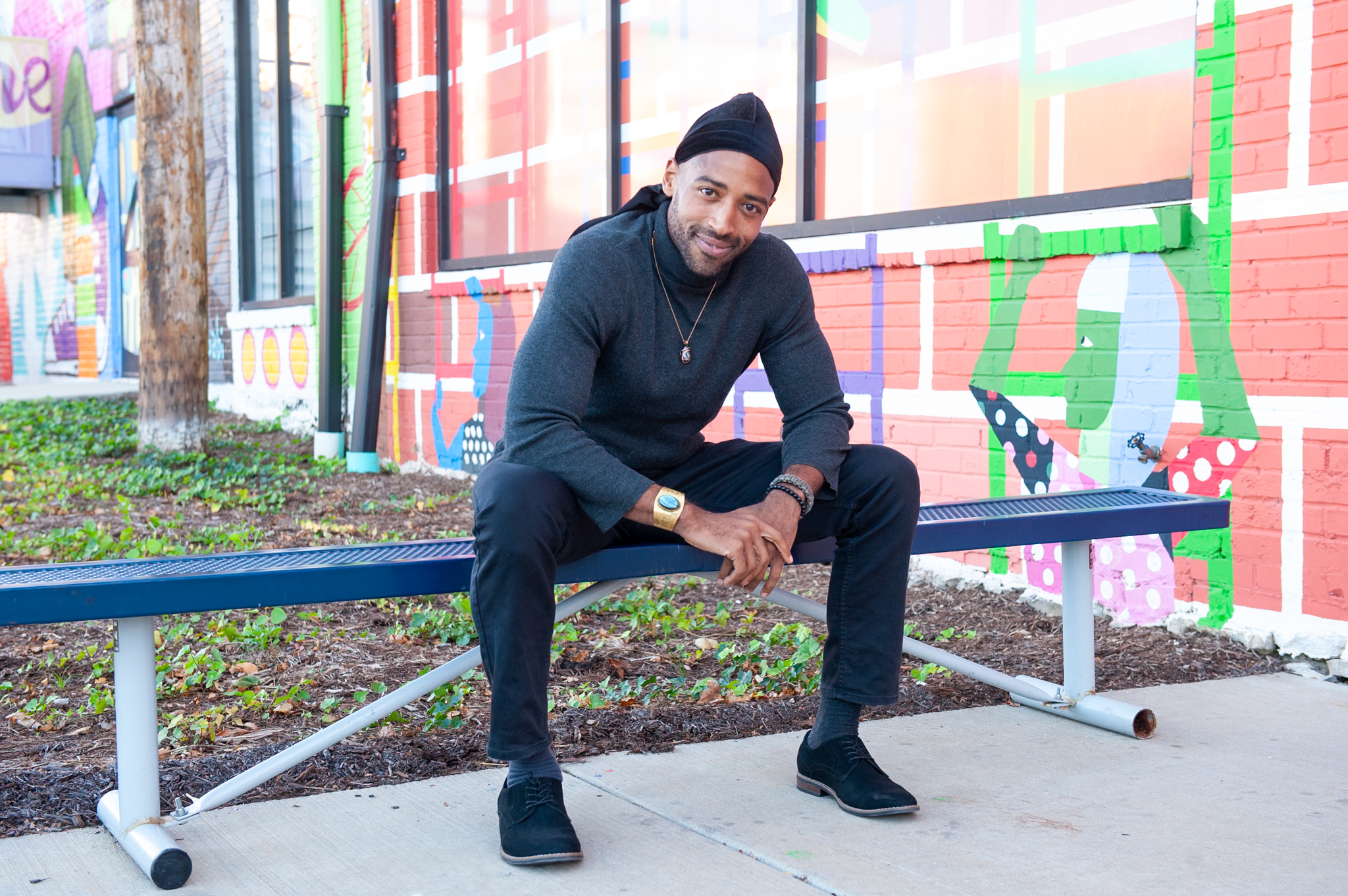 Photo credit: Lindy Drew / Humans of St. Louis
“Once I finished that summer with the Shakespeare Festival, I felt confident about starting college. Like, ‘I got this. Of course, there are things to learn. But I know a little something.’ I didn’t know what it was or how to define it, but there was something. The thing is, when you’re young, you’re caught up in proving yourself. So even when you’re confident, there’s still a degree of insecurity. And I wasn’t in my hometown anymore. I was in Cincinnati with a bunch of other actors, who had been handpicked just like me, who I assumed were also the best at what they did. So there was something to prove.
When people ask me about my time at CCM, I tell them I’m grateful for what I learned there. The experiences I had were transformative in some of the best and worst ways imaginable. It’s a party school, especially the arts school. And I was ready for that. I literally went into college as a sophomore because I had so many AP credits, which is why I felt comfortable kind of f*cking off to a degree. I was like, ‘I’m good. I’m locked in. I’m gonna graduate. All I have to do is complete my program. I’m ahead of the game. Let’s kick it.’
But CCM was its own experience. Let’s talk about the welcoming performance board you do immediately upon arrival, before starting class, before anything. Boards are essentially you performing for the entire department and whoever else wants to be there. Your teachers sit in the front row, taking notes on you, grading you, judging you. And after, they let you know what they thought. So I performed the same two pieces I’d already done for the faculty to get into the program, and I was all feeling all the nerves. My first point of feedback, the thing I remember the most, was one professor saying, ‘You weren’t a human being. I struggled to see a human being.’”
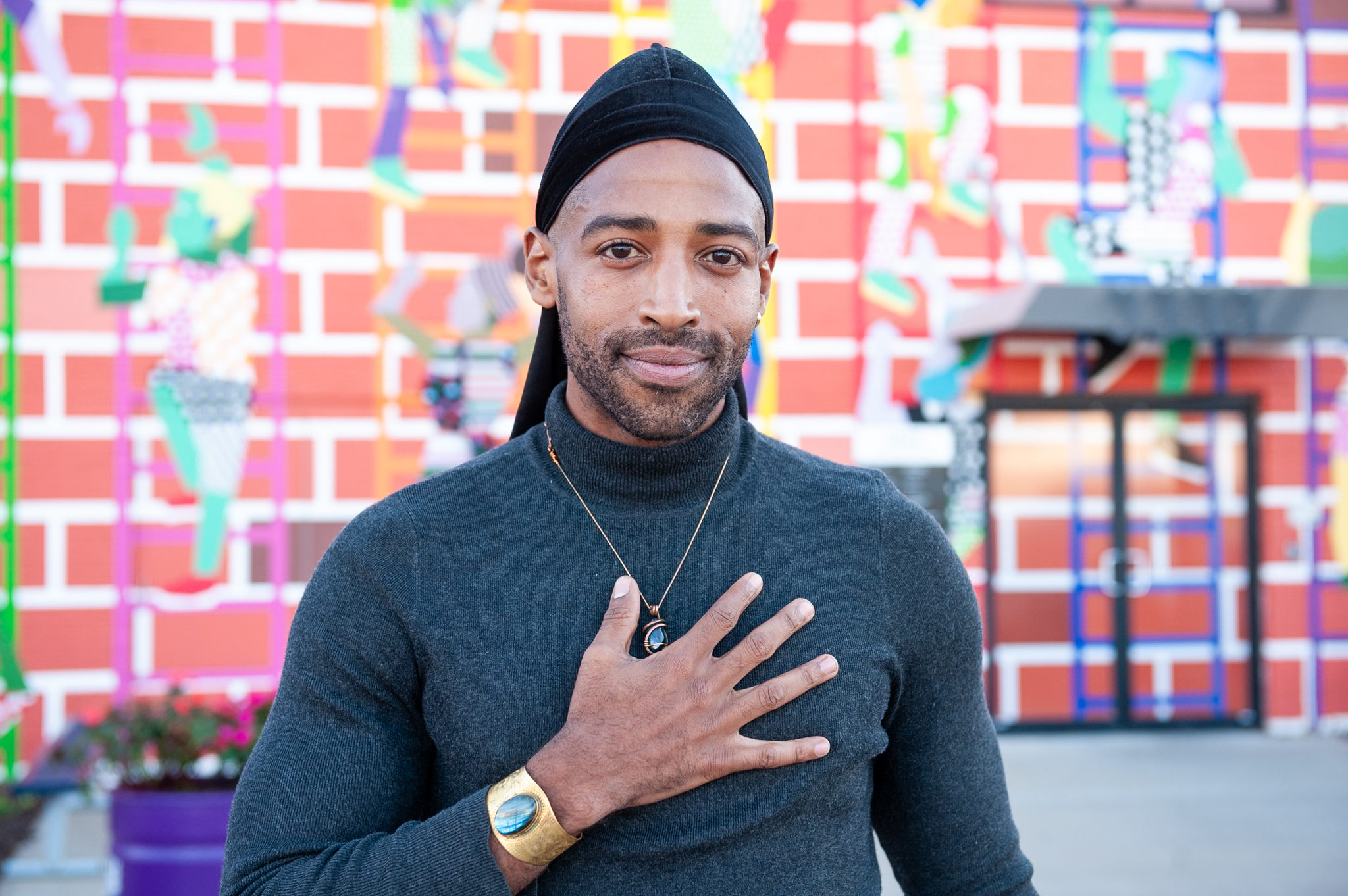 Photo credit: Lindy Drew / Humans of St. Louis
“I was blessed that I was always booked every summer, and there was always some professional job right around the corner. My freshman year, I did a three-month performance internship with the Hangar Theater in Ithaca, New York. My first summer break in college was also my first encounter with death. And death is part of my story. Three other actors from my class and I drove upstate and lodged together in a house. The first week, one of my buddies and I got into a car accident in the backwoods that left us stranded about 30 miles out of the city. I remember seeing my life flash before my eyes as he drove off the road into a ditch, crashing head-on into a tree. We spent hours trying to rescue ourselves. We stole an ax from a nearby farm in an attempt to cut down the tree we were stuck on. But the car was totaled. And we were pretty much at rock bottom. No phones, no money, no car, no help. Nothing.
Eventually, a man and his wife found us. The man’s name was Jim, and his last name started with a C, so I recall him as JC. And to this day, I say, ‘Jesus Christ saved my life,’ because that couple spotted us off the side of the road and saved us. At first, we denied them and said, ‘No, we’re fine. We got this.’ You know, we were two young guys who thought we could rescue ourselves. But there was no way we could have gotten out of that situation alone. Jim came back and said, ‘I got a friend with a tow truck. Happy to help you fellas if you’d let us.’ JC took us to his house, let us shower, and gave us a fresh change of clothes. His wife made us breakfast, and then they drove us home. Once I got inside my room, I remember lying in bed hugging myself in shock, like, ‘I just almost f*cking died.’ And I should have. Knowing what we were doing, I was like, ‘I should be dead right now. What?! Why am I here? Thank you, God.’ And I cried myself to sleep.
My mom was livid and scared, saying, ‘I want you to come home right now!’ And I was like, ‘No, Mom. I have to finish what I started here. I got this. But I won’t do that again, I promise.’”
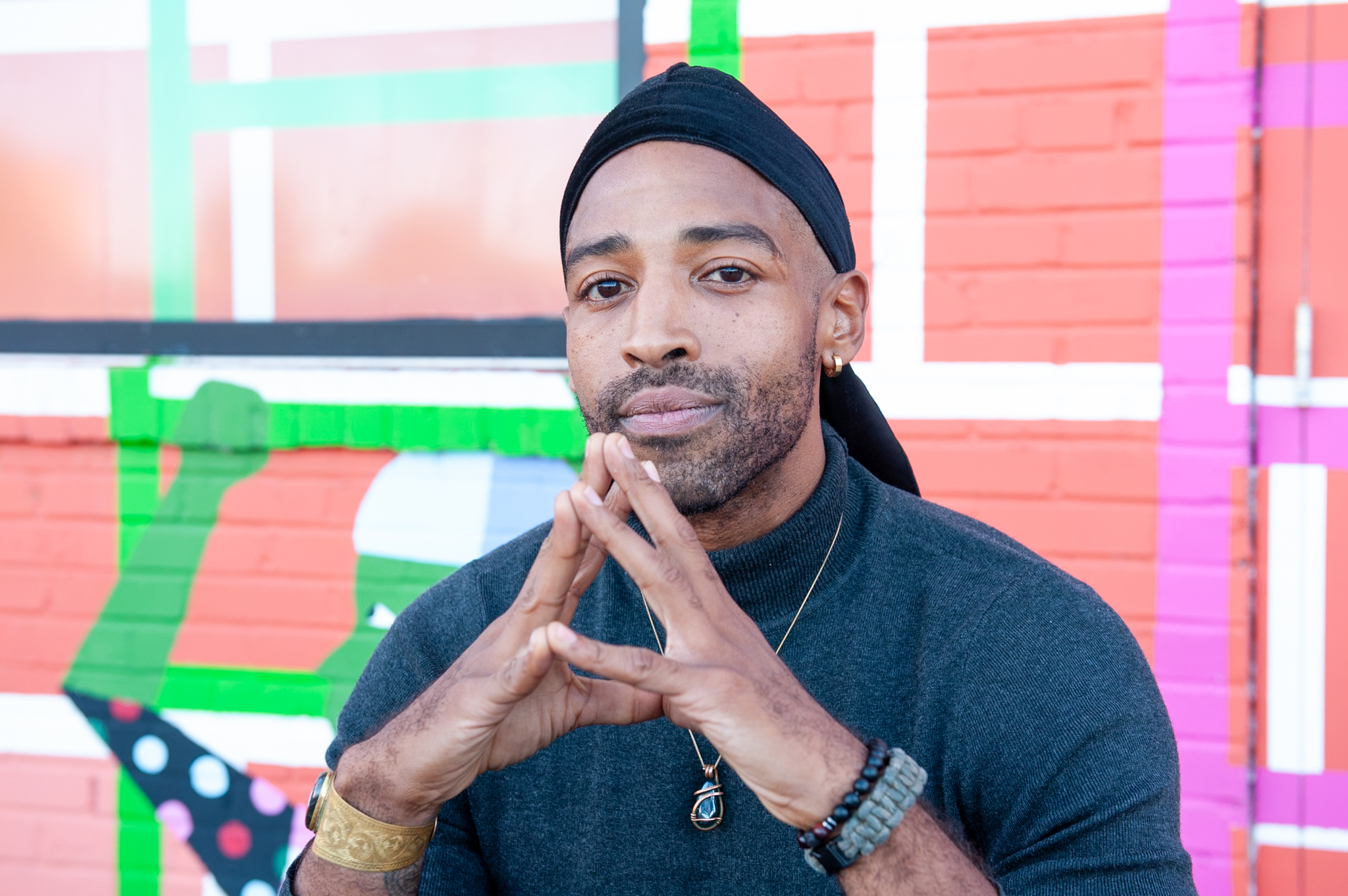 Photo credit: Lindy Drew / Humans of St. Louis
“The summer of my sophomore year, I ended up booking my second summer at Shakespeare Festival. I came back to St. Louis to do 𝐻𝑎𝑚𝑙𝑒𝑡, where I played Reynaldo, the assistant to Polonius. And that’s when I was starting to see a certain degree of treatment from faculty at CCM. I was the only Black actor in my class and the only one consistently booking work outside of school, actually getting paid to act. But I was also getting some of the most negative and critical feedback from the faculty that they weren’t giving to other actors in my class. Even when it came to the performance boards. You were given a grade of satisfactory or unsatisfactory. In my opinion, and in the opinion of my colleagues, I killed my last performance board. But the faculty was like, ‘No, this is unsatisfactory.’ And a couple of them kind of took pleasure in it as if they enjoyed telling me I wasn’t good enough. What they didn’t know, however, was that I had already booked and signed my next summer contract. So while they were telling me their feedback, I responded, ‘I hear you. I respect that. Just so you know, I won’t be able to finish the semester here because I’m performing in 𝐻𝑎𝑚𝑙𝑒𝑡 for my second summer with the St. Louis Shakespeare Festival.’ My program chair was mad mad. I left regardless. And that’s when I began to build this rebel spirit.
I returned to school as a junior, and that year was the most devastating and destructive. I had this overbearing tenured professor who I saw five days a week. She taught acting Mondays, Wednesdays, and Fridays, and combat Tuesdays and Thursdays. The irony is, out of all my teachers, she brought me some of my most cherished insights about being an actor. I treasure the knowledge and lessons to this day. But since I wouldn’t, in her words, ‘submit to her will,’ we had a lot of friction. That turned into stalking, harassment, and intimidation tactics. She tried to push me out of CCM because she couldn’t expel me. She verbally assaulted me. She physically assaulted me before my peers. She intentionally lowered my grades. My family and friends were all in St. Louis, so I felt alone. It was bad. It broke my spirit. It went from me pursuing this thing that I love to me fighting for my life. And I didn’t know why.
I was at a party one night, and asked my buddy who I got into that car accident with, ‘Dude, what is happening? What can I do? How do I stop this?’ I had people in my class spying on me, reporting my actions and conversations to this teacher, who used whatever info against me. My friend said, ‘I don’t think there’s anything you can do.’ I left the party, went back home to my room, and cried on the floor. It came to that teacher saying, ‘You can either get down or lie down. If you want to just go act, go act.’ But no one in my family had ever finished college, and I wanted to graduate. She said, ‘You have spring break to think about it.’
So, that spring break my friends and I took a trip to Little Rock, Arkansas. And on a bright, beautiful Sunday morning, we visited Little Rock Central High, where the Little Rock Nine integrated a racially segregated school in the 50s. No one was there, just us. The sun was shining on the building. I was walking around the empty halls outside. And sitting on the school steps, I decided, ‘You will not run me away. I will stay in school even if that means I have to be the bitter spouse in this relationship that just stays and stays f*cking bitter. I will stay. Because you will not stop me from achieving my goal.’”
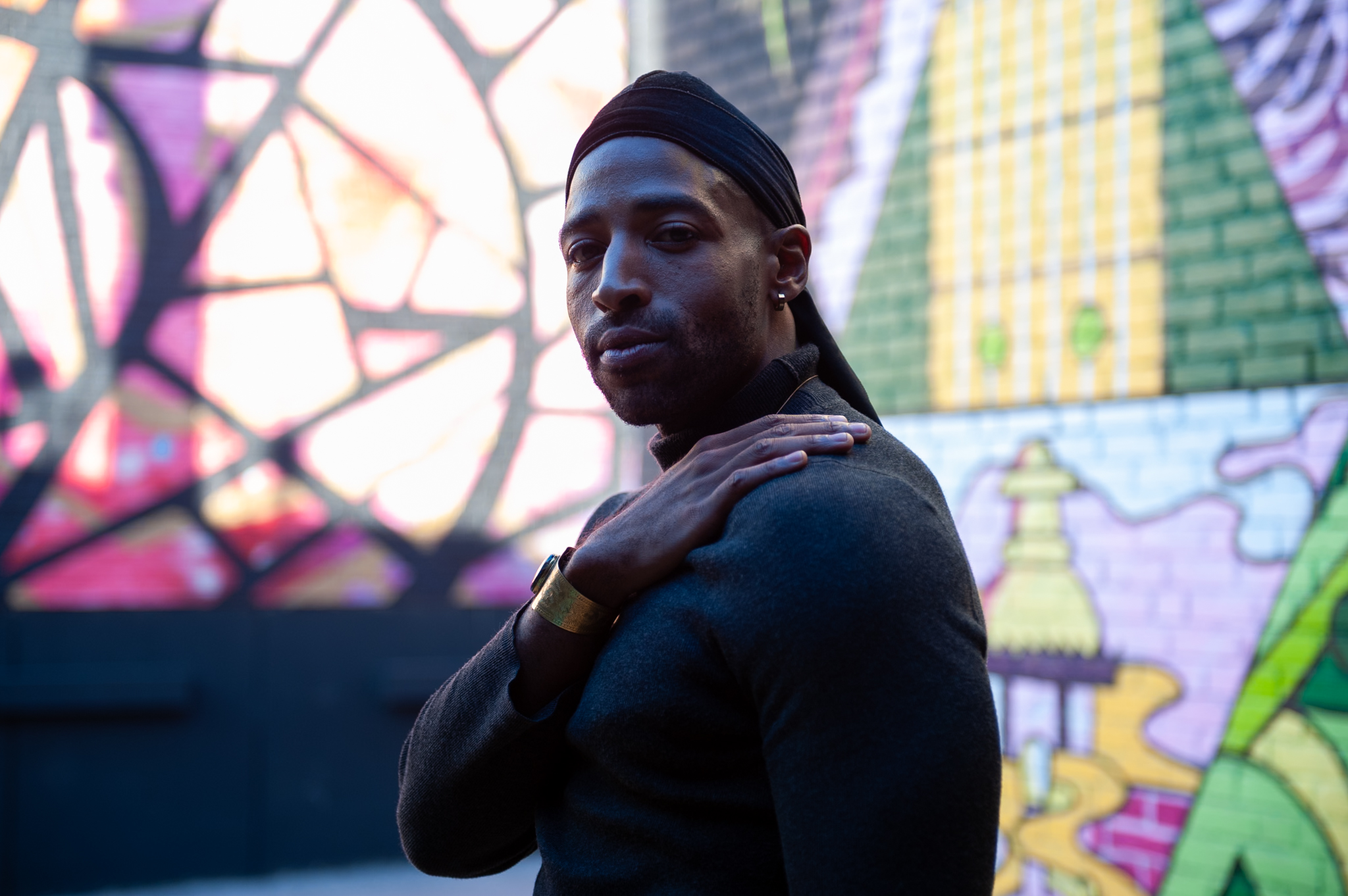 Photo credit: Lindy Drew / Humans of St. Louis
”That year, CCM was putting on a show called 𝑅𝑒𝑑 𝐿𝑖𝑔ℎ𝑡 𝑊𝑖𝑛𝑡𝑒𝑟, and I wanted to play the lead. I was the only person yet to play a lead role in school in my class. I was constantly working outside of school, but somehow, school was telling me I wasn’t worthy of a serious role within its walls. I killed the audition because people told me that the teacher I struggled with said I gave the best audition. But apparently, she didn’t want to cast me in the role because the character rapes a woman at the end of the play, and she didn’t think that Cincinnati audiences could tolerate a Black man doing that to what would be a white woman playing the role. As if Black rape is worse than white rape? My bigger issue was that they didn’t respect me or think I was adult enough to have that conversation. Instead, I was gaslit and told, ‘You’re being an egoist and need to apply what we’re learning in class. We already have a Black President.’ I eye-rolled, sighed, and said, ‘Tell the truth. Treat me like an adult and an actual actor. And be willing to face your own racism. Is Black rape really worse than white rape? Because I think rape is just bad.’
I was so dejected. Then, the weekend the cast list came out, I didn’t get cast as a lead in either show. My coping mechanism for trauma became escapism. Like, ‘Turn up, let’s party!’ I was gonna try to have a good time as much as I could. Junior year was when I first did LSD. And when people look at my work, I think that’s evident. Like, ‘The way this person’s mind works, he’s had to have some things crosswired up there.’ So when a friend of mine said, ‘Wanna do some acid?’ I was like, ‘F*ck yeah, I’ll do some acid. Run it.’ The first time I did one hit, it was incredible. My little hippie tribe and I were like, ‘We’re so bonded by this experience now. These others, they just don’t understand what we’ve been through.’ So the second time we got together, we decided, ‘Let’s do three hits. Why not?’ But what we didn’t know was that every hit was actually a triple hit. So I ended up doing nine hits the second time I ever did it. That was crazy. “…But from then on, my mind has just been unlocked. The gateway was opened.
That summer, I ended up doing 𝑃𝑖𝑝𝑝𝑖𝑛 at a nearby theater with another local college. I had a good ole time doing 𝑃𝑖𝑝𝑝𝑖𝑛. Because I love doing musicals, under the right circumstances. And that one found me at the perfect, magical time.”
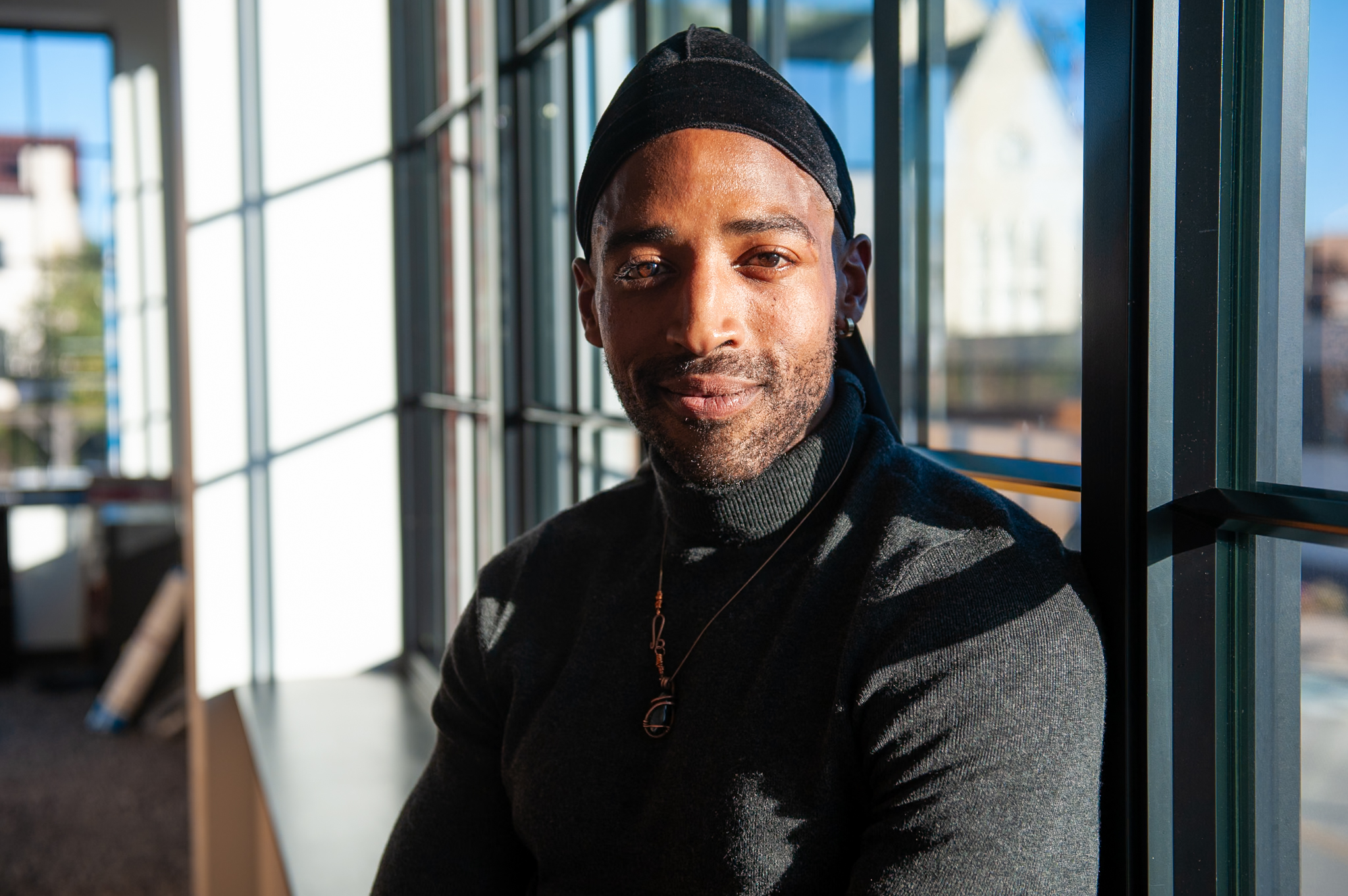 Photo credit: Lindy Drew / Humans of St. Louis
“Spring of my Junior year, CCM was participating in its first and only cultural exchange, called 𝑇ℎ𝑒 𝐷𝑎𝑑𝑎𝑎𝑏 𝑇ℎ𝑒𝑎𝑡𝑒𝑟 𝑃𝑟𝑜𝑗𝑒𝑐𝑡. Graduates of the program started their own initiative to work with the United Nations to go to Dadaab, the world’s largest refugee camp, in Nairobi, Kenya. They were doing arts and storytelling work with the people who lived there. For months, five actors from my school collaborated with this group of artists before meeting in person for World Refugee Day to present a show we’d create together called 𝑇ℎ𝑒 𝐶𝑜𝑙𝑙𝑎𝑝𝑠𝑖𝑏𝑙𝑒 𝑆𝑝𝑎𝑐𝑒 𝐵𝑒𝑡𝑤𝑒𝑒𝑛 𝑈𝑠, an original devised performance piece about the human condition and the inseparable bonds that unite us despite geographic and cultural barriers. The universal human string, if you will. I was the only Black actor from the U.S. And this was during that year I was so broken that I kind of no longer knew who I was. But when I went to Nairobi, I had the most profound spiritual experience of my life.
After we did our show, we were watching a group of Congolese drummers, dancers, and acrobats. I was sitting on a patch of grass, and I was blown away by how incredible the performers were. I’d never seen anything like it, from their attire to the way their bodies moved. The way they danced and did these insane acrobatics, I didn’t even know bodies could move like that. And then the drum… I had an appreciation for music of all degrees. So I was listening to these drums, in total awe, when these spirits started speaking to me. Like, ‘These are your people. This is you. Do you see you? Not only are these your people. This Earth, can you feel it? It too is yours.’ Something started channeling through me. The drum beat got more intense. And everything around became white noise until all I heard was the drum beat ringing in the back of my skull like I was in a trance. Then I heard this voice say, ‘You are home,’ as energy shot up from the earth, surging through my being. I could feel the earth vibrating under me, and before I knew it, I was crying in a way I’d never cried before. Bawling like a newborn baby. I got my soul back. That thing CCM and that one professor tried to break. Unbreakable. It never left. It just retreated until it was safe again to return. I had to remember it, reclaim it, re-own it. I had to take it back.”
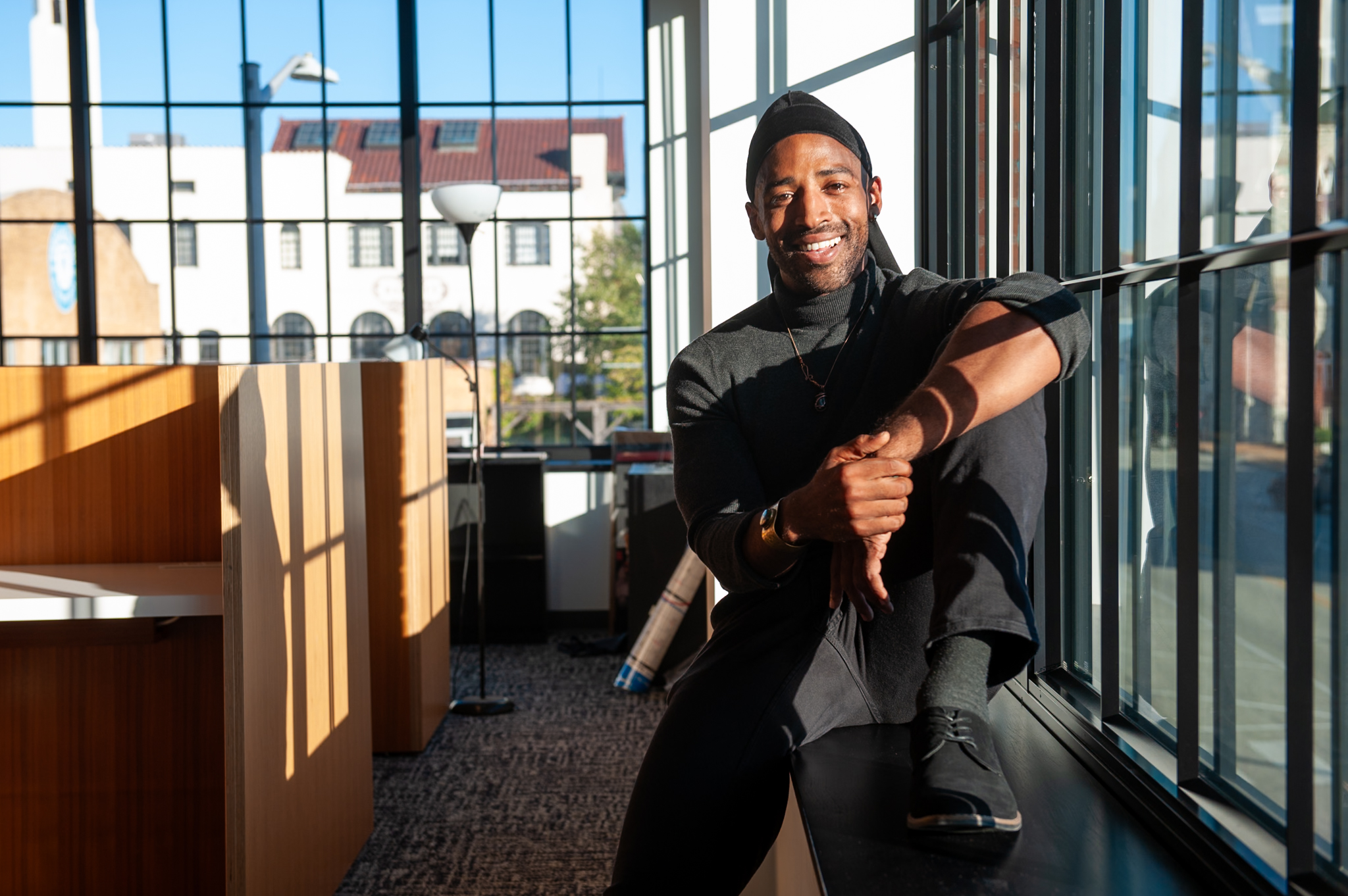 Photo credit: Lindy Drew / Humans of St. Louis
“My experience in Nairobi gave me what I needed to come back my senior year to be like, ‘Respectfully, f*ck y’all.’ I was ready to wrap up my final year of college and graduate. We were doing another show, and, again, I wanted my lead role. Like, ‘Can I please get a lead at school? This is what I’m paying for. I have leading man qualities. I’m a leading actor. I’m damn good. Give me a role already.’ So we did a show called 𝐶𝑜𝑟𝑎𝑚 𝐵𝑜𝑦, and I auditioned for the lead, who is a villain. But the character also gets publicly hanged at the end of Act 1, so you know they were not about to let a Black man play that role. Instead, they made me Dr. Smith, the choir teacher, who started the show. I went into rehearsals like, ‘I’m cool to do my little role or whatever. This one’s for me. I told you, I’m a motherf*cking actor.’ So we were rehearsing a big scene in which we were about to catch the villain, and it was time to hang him. The scene starts with the entire town in an uproar. Our director goes, ‘All right, everyone. And, begin.’ So I came in hot, like, ‘Down with the villain! Damn, devil!’ But no one else was giving. The director shouted, ‘Stop! So I guess Cameron’s the only one who came to act today? Try again.’ Then everyone in the room got with the program and got the sh*t poppin’.
Now, in the middle of this show, I booked my first paid Screen Actors Guild commercial. Didn’t mean to do it. I only went in because my agent said, ‘You should go out for this. We’re submitting you.’ And as it was starting to look like I could book it, I told my director and program chair, ‘The commercial shoot is also during tech week for our show. Would it be possible for me to do it?’ He said, ‘No, it’s a conflict. So we won’t be allowing you to.’ Mind you, I was going to school to be a paid actor. So I told my agent, ‘My program chair said I can’t do the commercial.’ My agent did not take kindly to this. They called the chair, like, ‘This is absurd. Why are you not letting him do this project? You are ruining his career.’ That turned into my program chair kicking me out of my final show at school. He said, ‘You went behind my back, and I didn’t appreciate it.’ And just like that, I was crying my eyes out again, like, ‘Why does this keep happening?’
The student body threw a fit. The director then felt bad and gave me half of my performances back, but still made me split my role with a sophomore when I was a senior. Whatever. In the end, it was all about hearing my mom scream when I walked across the stage that June for graduation. My mom, dad, aunt, and best friends were there celebrating with me — all the people who had been holding me up that entire time. But my mom really lost it when she saw me walk and accept my diploma in my cap and gown. Her baby was a college graduate. The first in the immediate family from both sides. I had survived it all. Every obstacle, prejudice, disappointment, and heartbreak. Seeing her smile made it all worthwhile.”
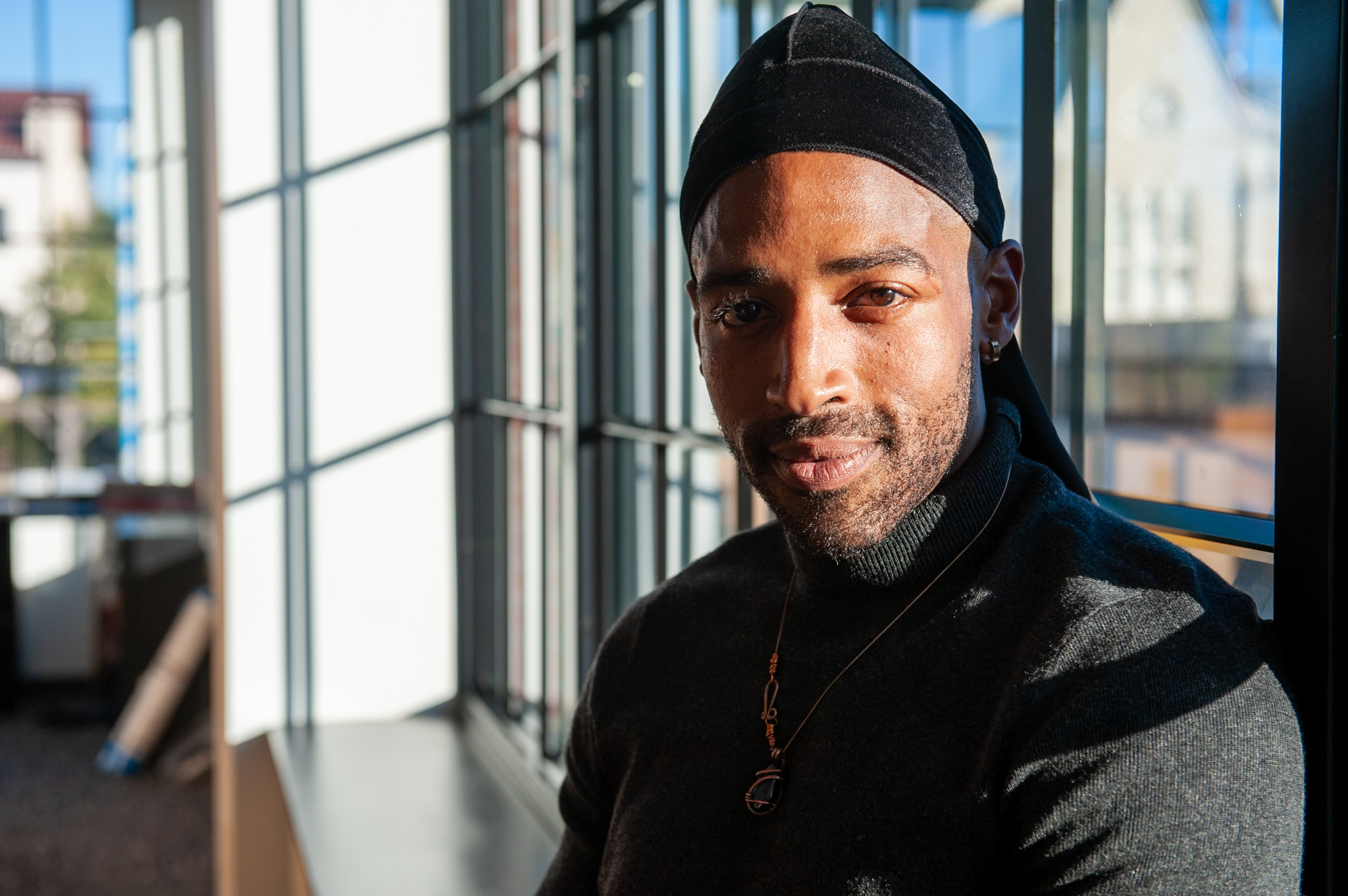 Photo credit: Lindy Drew / Humans of St. Louis
“After graduation, I was like, ‘What’s next?’ I came back to St. Louis to get a job at Starbucks, because that’s the job I had in college. And I was 22, running around outside, getting in bar fights. That summer, I was in a show called 𝐷𝑜𝑛’𝑡 𝐶𝑟𝑜𝑠𝑠 𝑇ℎ𝑒 𝑆𝑡𝑟𝑒𝑎𝑚𝑠, a musical fan parody of 𝐺ℎ𝑜𝑠𝑡𝑏𝑢𝑠𝑡𝑒𝑟𝑠, which got picked up and went to the Cincinnati Fringe Festival. And while doing that show, I got offered a job with The Children’s Theater of Cincinnati. I figured, ‘I should probably get out of what I’m doing in St. Louis, and get back to what I’m supposed to be doing out here.’ But I quickly got disillusioned. It was not for me. The hours were grueling. The pay was underwhelming. I was exhausted, performing with 102-degree fevers, going across state lines, driving and performing all day. On top of that, the artistic director, a Black woman, said one day that our cast was suffering from n*ggeritis. I was like, ‘I cannot do any of this.’ When I had the conversation with her, I was told I had a chip on my shoulder and that Black people needed to get over themselves. I said, ‘Well, this Black person quits. And you can hire another one.’ I don’t know what came over me. It had to be the spirit of my mom. I’ve always been a little saucy, and I knew, ‘This is what I am gonna do, this is what I’m not gonna do, and you need me more than I need this.’ So the day I quit that contract, I needed another job ASAP. And Starbucks wasn’t gonna cut it. That’s how I started working in upscale hospitality.”
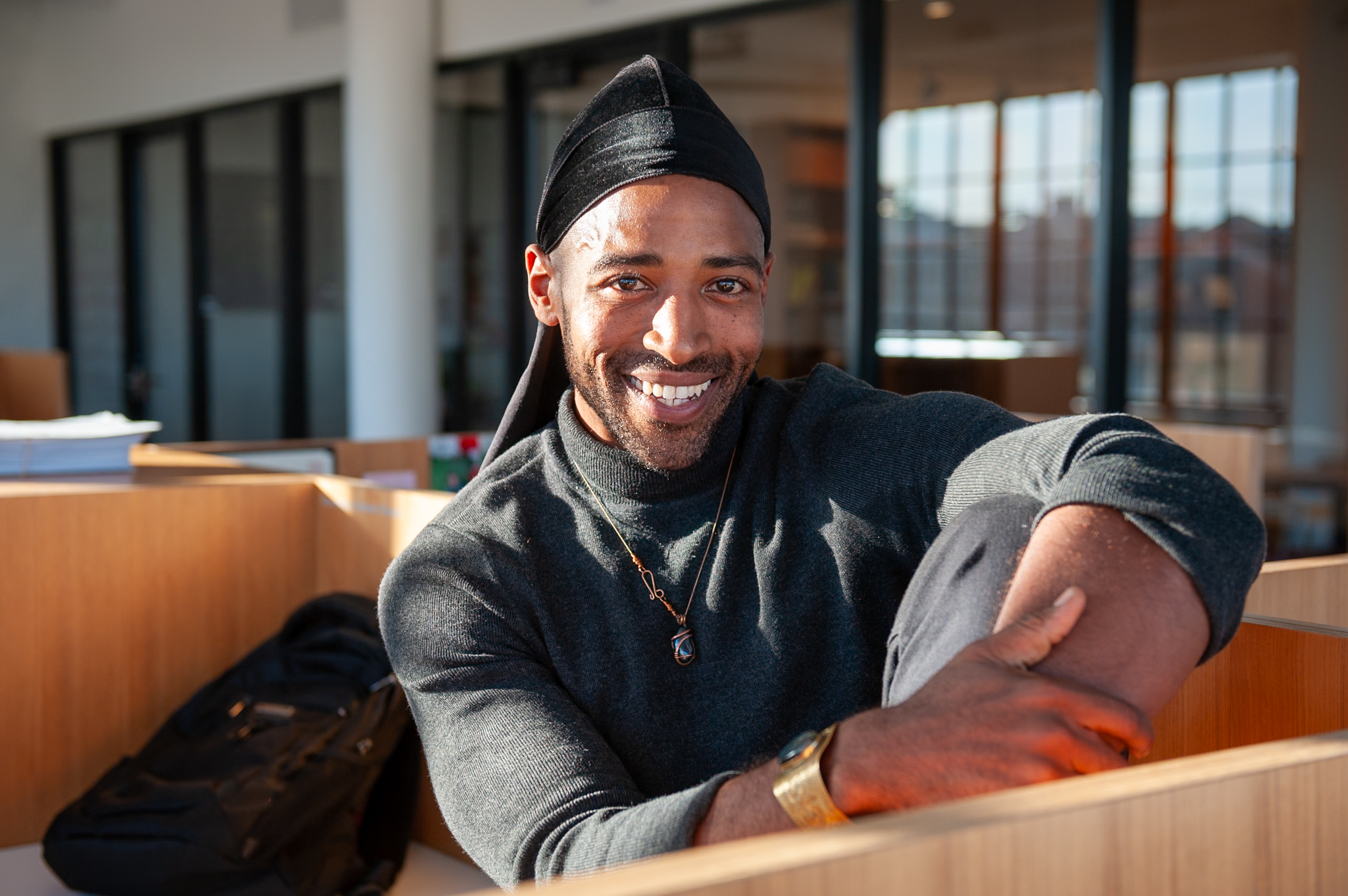 Photo credit: Lindy Drew / Humans of St. Louis
“A graduate from my acting program was the floor manager at this restaurant called the Taste of Belgium. So I walked in and was like, ‘I just quit a job and need a new one.’ She said, ‘Cool, got you.’ I started in the back on expo as a food runner, and then became a host, which I got really good at from being able to talk to people as an actor. Before I knew it, I was a bartender and a barista, and just doing my thing in my cozy little life in Cincinnati. I had my work, my art, and I was dating a bit.
I eventually went to New York to see this person for their birthday, and she asked, ‘Why are you in Cincinnati?’ I was like, ‘Because I’m doing things. Trying to figure it out.’ She said, ‘I think you’re just afraid to move.’ I was like, ‘What do you mean?’ She said, ‘You’re afraid. You should just do it.’ And because I love a challenge, she got me a babysitting gig and a bartending gig, and I moved to New York City at 23 years old with $300 and two duffel bags on a Chinatown bus. The day I showed up, of course there was a blizzard, and there I was trying to figure out the A train in the thick of it. Talk about a crash course welcome to the city. Because now, I was in this b*tch.
So I was makin’ it happen, figurin’ it out. I was auditioning, but I hated it because I was bombing in the room. I hated myself. I hated how I was showing up. I was just too in my head. And I had all this unprocessed trauma from college that I was bringing with me. I didn’t understand it; I just knew I didn’t like how I was feeling about acting or my work. I felt so bad, I quit acting for about nine months. Like, ‘F*ck it, I don’t want to do this right now. I’m gonna be a 23-year-old in NYC.’ Whatever that meant.
I ended up getting a job working room service at The Standard Hotel, a really posh, celebrity hotel in the Meatpacking District. I was making some good money, and had a room for $450 at 157th and Amsterdam with some cool roommates, all Black actors in Harlem. So I told myself, ‘This is what I’m gonna do. I’m gonna get this bread. I’m gonna live. And I’m gonna be young, wild, fast, and free.’”
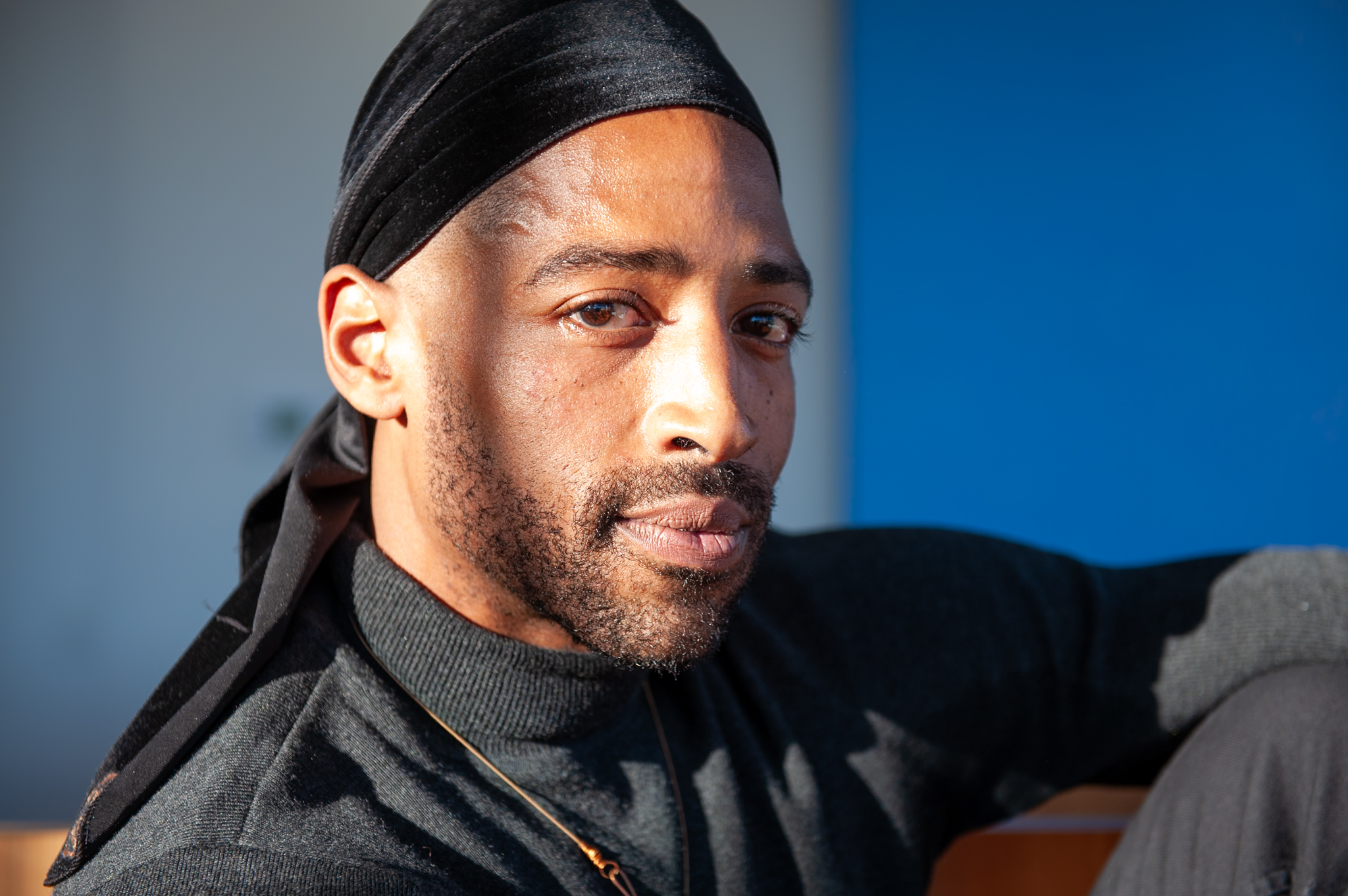 Photo credit: Lindy Drew / Humans of St. Louis
“Working overnight room service at the hotel by myself was like the devil’s playground, and oh boy, did I see some things. I was like, ‘This is fine. This is new. This is fun.’ But my soul was dying. I finally admitted to myself, ‘This isn’t what I came to the city for.’ I wasn’t performing or being creative. I was just living and surviving in NYC. So I decided to focus on writing. I figured, ‘I’m just gonna write things out. I’m gonna reflect and try to identify what I’m going through.’ So I started writing poetry and journaling again. Then an audition came about for the Hudson Valley Shakespeare Festival. And I love Shakespeare. So, I told myself, ‘Okay, if I’m going to do this, I’m going to do it on my terms. I’m going to act how I want to, not how I was trained to, told to, expected, programmed, or conditioned to. I’m going back to what I do for me.’ And I did. I did the audition, but didn’t hear anything for the longest time.
During that time, I got hit with a wave of bad luck, back-to-back. I got fired from my room service job after helping a drunk hotel guest into the wrong room. I ended up twisting my meniscus on some ice at a club and couldn’t walk, so good luck with the new job hunting. And while I was sitting in my house with insomnia and a bad knee, one of my roommates’ friends spends the night and dies that evening in our living room.
I heard him dying, but I didn’t know that was what I was hearing. Since I had insomnia from working overnights, I was falling asleep at 7 in the morning, unknowingly listening to his final gasps for breath, thinking he had sleep apnea or he was snoring. So, that day, my best friend, Brad, was moving to New York to stay with me for two weeks so he could figure out his transition to the city. When I woke up to greet him, I saw my roommate’s friend with his clothes on, ready to go, but seemingly sleeping with his mouth open. I thought, ‘He must have fallen asleep again.’ I let my friend in, and we caught up for two hours. We had no idea the man on the couch was deceased “…until one of my roommates came in and asked about him still sleeping despite us talking so loudly. We were like, ‘Oh.’ Then we all looked at the man asleep on the couch, wondering, ‘Actually, how is he not awake yet?’ We checked on him, and he was cold.
We called 911 and were told to put him on the ground to do CPR. I went to help lift his legs, only to discover they were locked stiff. This was my first time touching a dead body. I saw where he’d already vacated himself, so I already knew he was gone. And that was my first close understanding that death is real. People die.
None of us living there was the same after that. And that was the beginning of what would become a deep, dark, and highly spiritually trying time for me. A man dies in my apartment. I’m broke. No job. I can’t walk. I can’t pay rent. I don’t even have money to eat. Like, it was bad. I was trying to stay optimistic, waiting for unemployment to come in, and then I discovered that the AD who cast me in my first professional show was holding auditions for another Shakespeare Festival. So I put myself together the best I could, and went.”
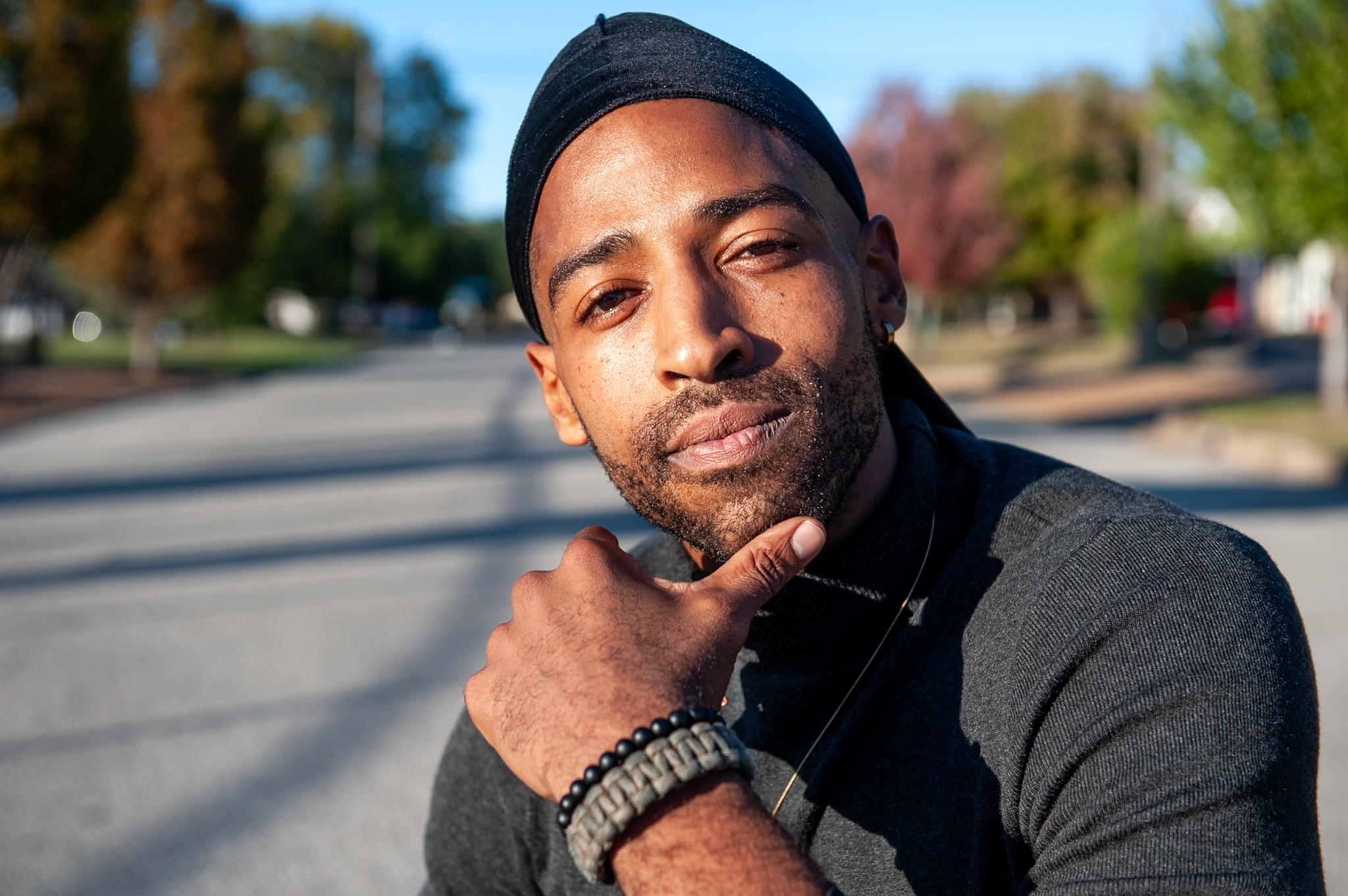 Photo credit: Lindy Drew / Humans of St. Louis
“I auditioned because it was the one thing that brought me joy in the midst of the f*ckery that was life at that time. I remember leaving the audition feeling strong, confident, and really good. The best I felt in weeks. Then I got a call from my dad to tell me one of my close childhood friends died by suicide. Completely shocking. A second death in less than a month. That friend and I hadn’t talked in years, but I loved this person. I knew I had to get to St. Louis to see him off. But my dad was very against it. So, in defiance, I used the last $100 to my name to buy Greyhound bus tickets so I could go to my friend’s service. It took me a day and a half to get there from New York City.
I stayed with my mom because my parents had separated by then. And after the service ended, it was time for me to go back to NYC. This was in January, in the thick of winter. I had to wake up super early to leave, before my mom had to go to work, to catch my bus on time. And there was so much I wasn’t telling her. I didn’t want her to know that I was broke or worried about food or that I was struggling to survive. I didn’t want her to worry about me. If she was worried, then I was worried. And nobody had time for that.
And as I was about to go out my mom’s door, she gave me this huge hug and was just holding me so strongly. At first, it was like, ‘Oh, I love you, Mom.’ But she wouldn’t let me go. It was such a strong embrace. A mother’s embrace. And I was like, ‘Mom? I love you, too. It’s okay. I’ll be fine.’
When I got back to New York City, I had 75 cents in my bank account. I’d tell people that I fasted for a week, but in all honesty, I starved for a week. And maybe that also forced me to be in a spiritual place. At that point, I’d already been stealing groceries to eat, and I didn’t have it in me anymore. I didn’t know where life was taking me, but I was in one of the darkest places I’d ever been. I had to surrender to it. While I was waiting for unemployment and food stamps to kick in, the only thing that sustained me was reading Julia Cameron’s 𝑇ℎ𝑒 𝐴𝑟𝑡𝑖𝑠𝑡’𝑠 𝑊𝑎𝑦. So I kept writing. It was literally all I could do.”
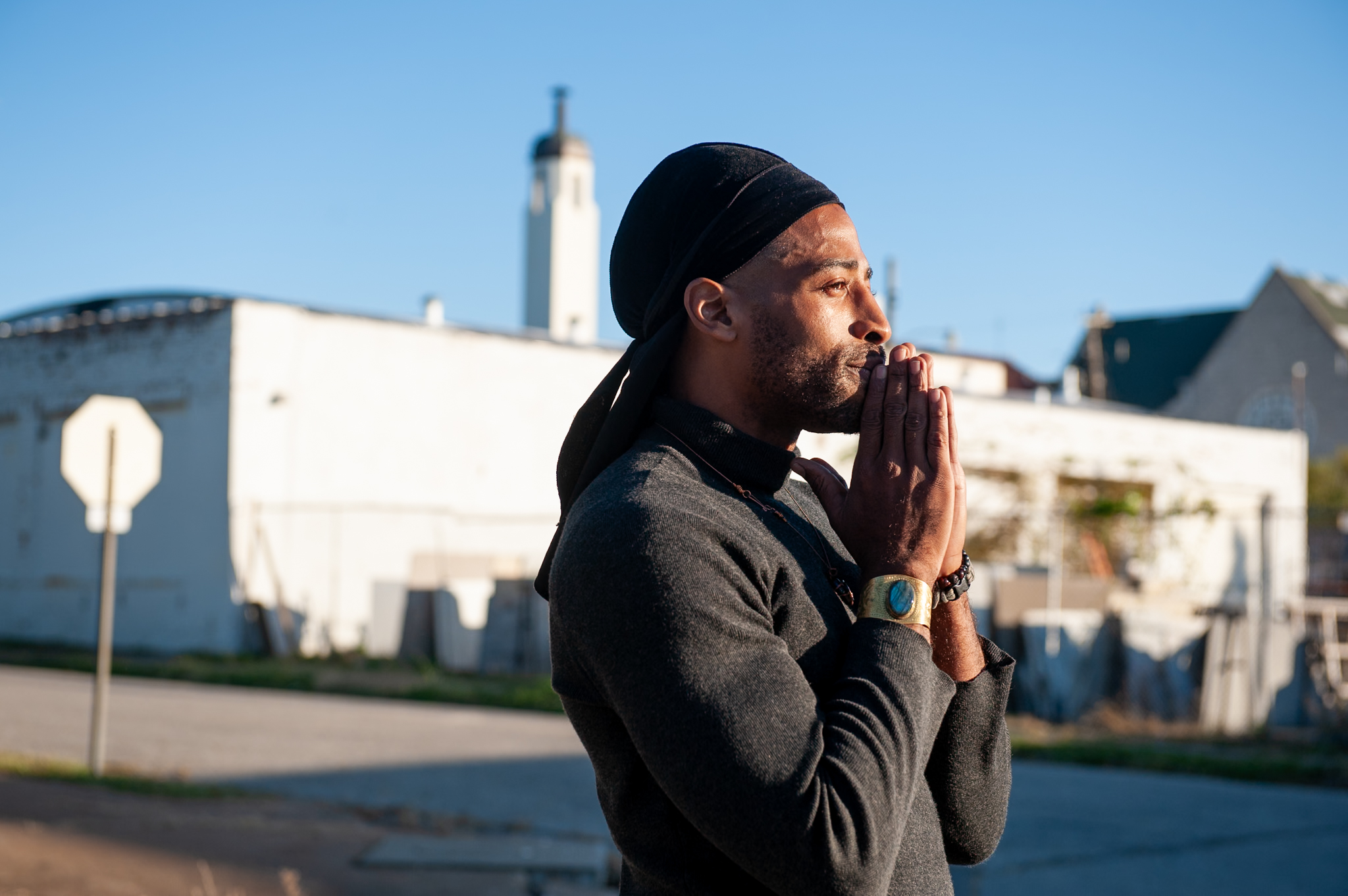 Photo credit: Lindy Drew / Humans of St. Louis
“Once I received government assistance, things started to happen for me again. February, I heard back about my audition for Hudson Valley Shakespeare Festival. I was offered a summer contract as an acting apprentice understudying their lead male roles for the season, including 𝑂𝑡ℎ𝑒𝑙𝑙𝑜. Even though I was only going to be paid $100 a week, I had some motivation knowing what that season was going to look like and that I’d finally get the chance to act and take on some roles with weight. So I got a job working at a gym and another as a host at a restaurant in Hell’s Kitchen. My knee was doing better, so I felt like I was finally back in the game and not on the sidelines anymore. Plus, I was working with actors who were showing me a new way to work with pure craft and creativity. And they taught me where my artistry wanted to go. I was eating it up, tearing it up. People were encouraging, and life was finally starting to go in the right direction.
I ended up getting a job on the Upper West Side at a private school getting paid really well as a substitute teacher. I had an agent. I was auditioning. And I booked the lead in a show upstate called 𝐿𝑜𝑏𝑏𝑦 𝐻𝑒𝑟𝑜. At that point, I hadn’t been home in over a year. So I told my mom, ‘I’m coming back to visit in March, and I’ll surprise my dad for his birthday. Don’t tell him. I’ll just pop up.’ She was so excited. But then I had to call back to tell her, ‘Mom, I just booked this new show, and rehearsals start the week I was gonna come home.’ I remember her saying, ‘You’re breaking my heart.’ I knew she understood. But it didn’t change her wanting to see her son again.”
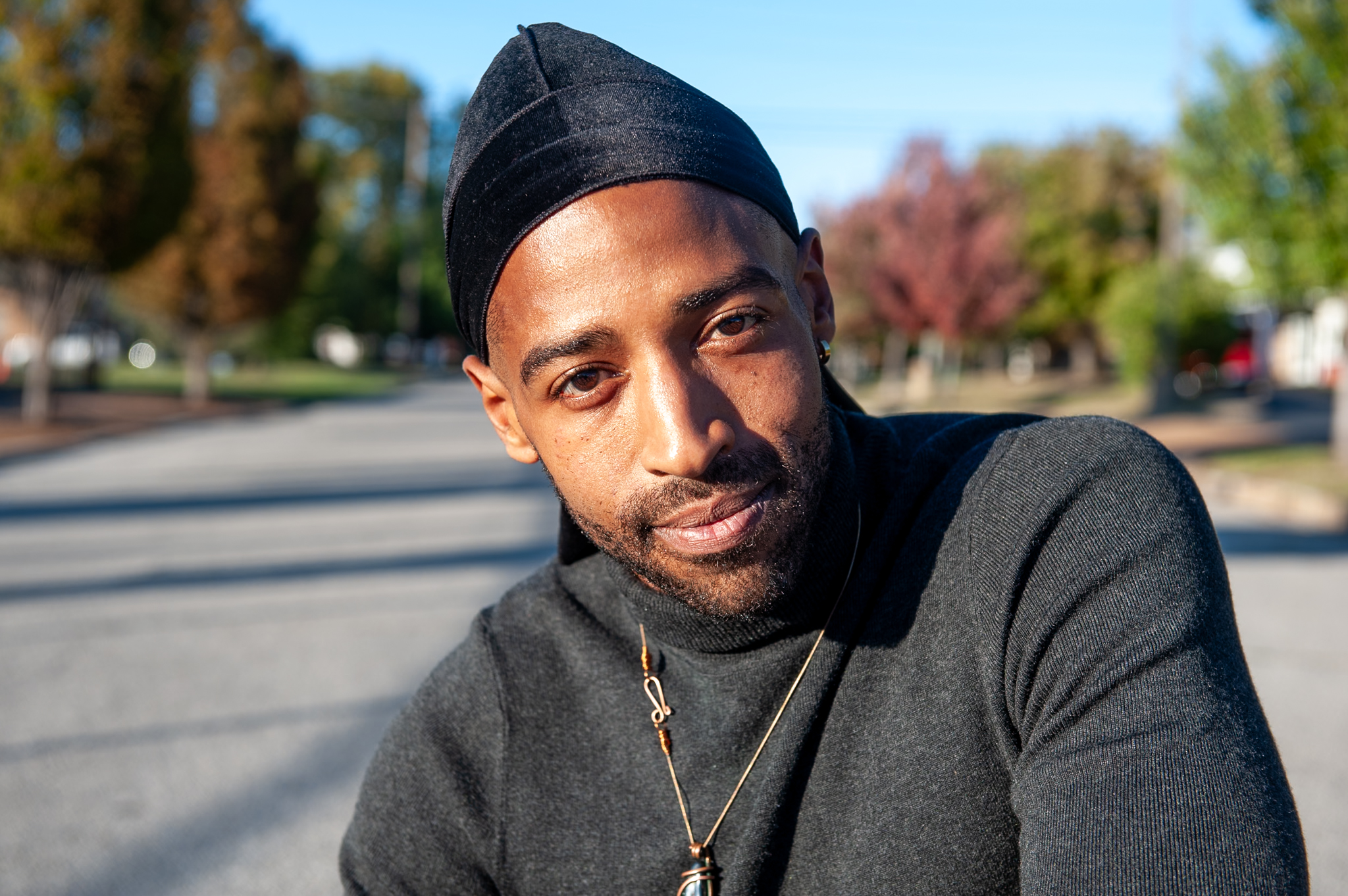 Photo credit: Lindy Drew / Humans of St. Louis
“A blizzard was coming into town, and school got dismissed early. So I was sitting in the cafeteria to kill time before getting on the subway, and I decided to call my mom. I was like, ‘Hey, Ma! How you doin’? You good?’ It was the most mundane conversation you could have with your parents. She said, ‘I’m at work. You alright?’ I was like, ‘I’m fine. I was just callin’ to check on you before I leave work.’’ She said, ‘I’m good, baby. I’m just at work. Can’t talk on the phone too long. You need anything?’ I was like, ‘Nah, just want to hear your voice. Call me later when you get off work.’ But we ended up not calling each other later. I went to bed and woke up the next day to a bunch of missed calls and texts from my aunts. Her sisters were all asking me how to get in contact with my dad.
I was like, ‘Why y’all calling me? Why do you want my dad’s phone number? I don’t have time for this. I have to go to work.’ I called my dad to let him know they all wanted to talk to him. And he called me back, like, ‘Hey, can you get to St. Louis?’ I said, ‘No, I’m broke. Why do I need to come to St. Louis?’ He said, ‘Well, your mom just needs you to be with her right now.’ This quickly turned into them buying me a first-class ticket for a flight leaving in three hours. I got to LaGuardia, and my flight was delayed five hours. So I was sitting in the airport all day, calling friends, giving them the update, like, ‘I’m coming back home. I don’t know why. But I’m coming home, so let’s hang.’
I’m such an impatient person. I hate lines. And the wild thing is, in the midst of all this, I was so peaceful. Because there was nothing else I could do. I even remember before I left my house, thinking, ‘God, whatever is going on, just let my mom be okay.’ I knew she had high blood pressure. She’d been in the hospital for it before.
So, I finally got into St. Louis at 11:18 p.m. I saw my dad, and I was like, ‘Where’s mom? What hospital? Let’s go see her.’ He was still acting so aloof that he wouldn’t even look me in the eye. So I was like, ‘What’s up?’ He said, ‘We got some decisions to make.’ And didn’t say anything else.
In the silence, I started backtracking my day. Then it just came out of me: ‘Is my mom dead?’ Still, he didn’t say anything. So I continued, ‘If my mom’s dead, and you’re not telling me, that’s really unfair right now. Is my mom dead?’ Too shocked to say, he answered in three looks that I remember to this day. First he looks at me, then up, then away. It wasn’t even like he said yes. His response was, ‘There was nothing we could do.’
March 5, 2015. Remember the date.”
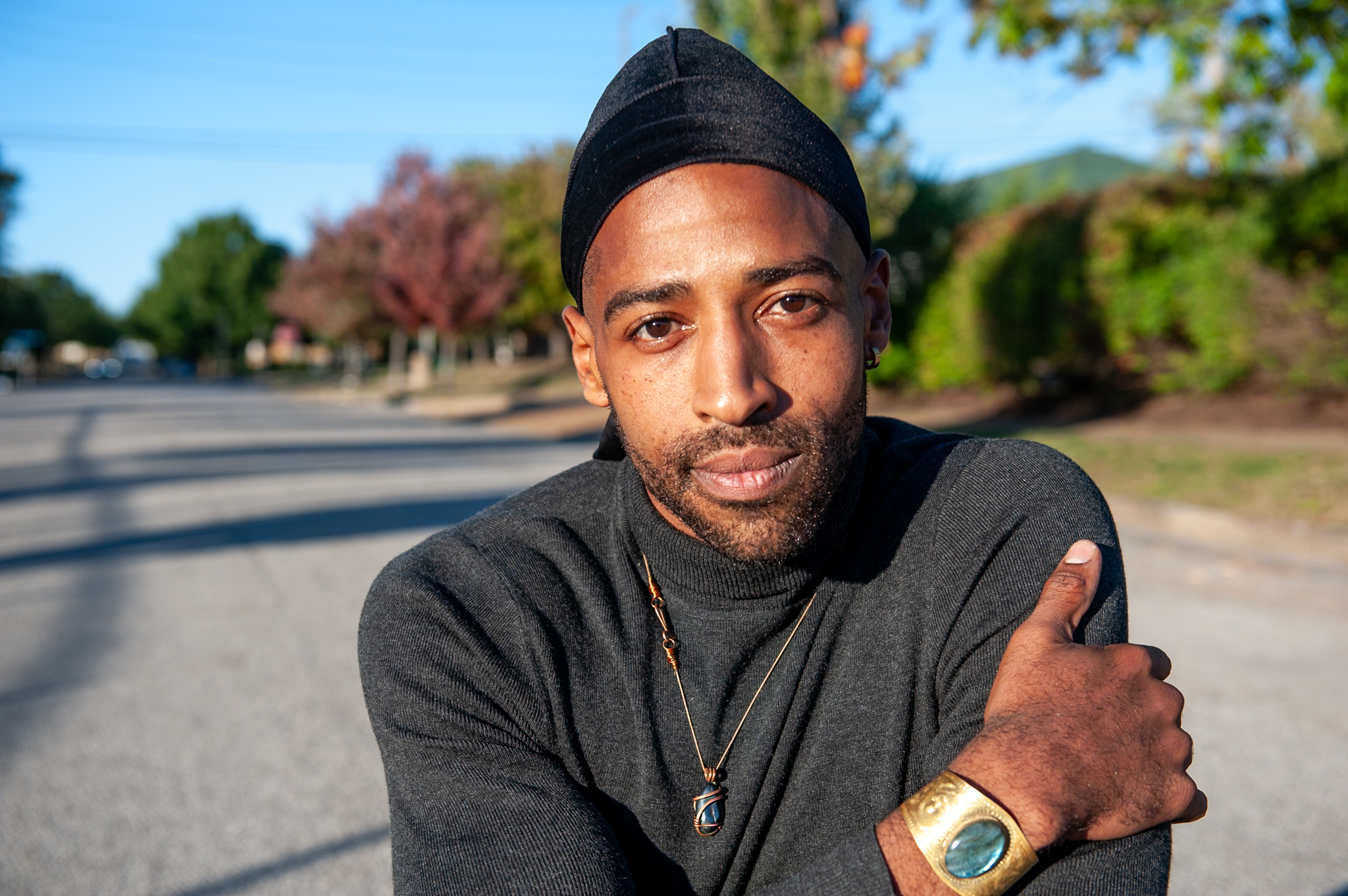 Photo credit: Lindy Drew / Humans of St. Louis
“Talk about spiritually broken. My mom was my rock, my best friend, my biggest support system. Just ripped out of nowhere. She had an aortic dissection, meaning her aorta split. It’s so rare that you have a higher chance of winning the lottery or being struck by lightning. And even if you survive it, your life span is super short afterwards. My mom had high blood pressure and would be on and off her medications. She had to be on them for life, and they slowly wore away the lining of her arteries. That day we talked, she had gone shopping and told her sisters she felt a cold snap in her back and that her back was hurting. My mom was such a strong woman. She even carried her pain with strength and grace. Her sisters told her, ‘If you’re hurt, you should probably go to the hospital.’ But she didn’t want to. Finally, she got one of her neighbors to help her get herself together and go. The ambulance took her to SSM Health Saint Louis University Hospital where she let the team know what her complications were. But they ignored her and she died in their waiting room.
The hospital didn’t contact the family to let anyone know she died. Her sisters had to call looking for her, and that’s how they discovered what happened. Once we started investigating, you could see they were doing a whole lot of backtracking to cover up where they f*cked up with my mother. It was infuriating. Heartbreaking. Still, over a decade later, it was just a blow I had to accept.”
𝑊ℎ𝑎𝑡 𝑤𝑎𝑠 ℎ𝑒𝑟 𝑛𝑎𝑚𝑒?
“Regina Hall. Like the actress.”
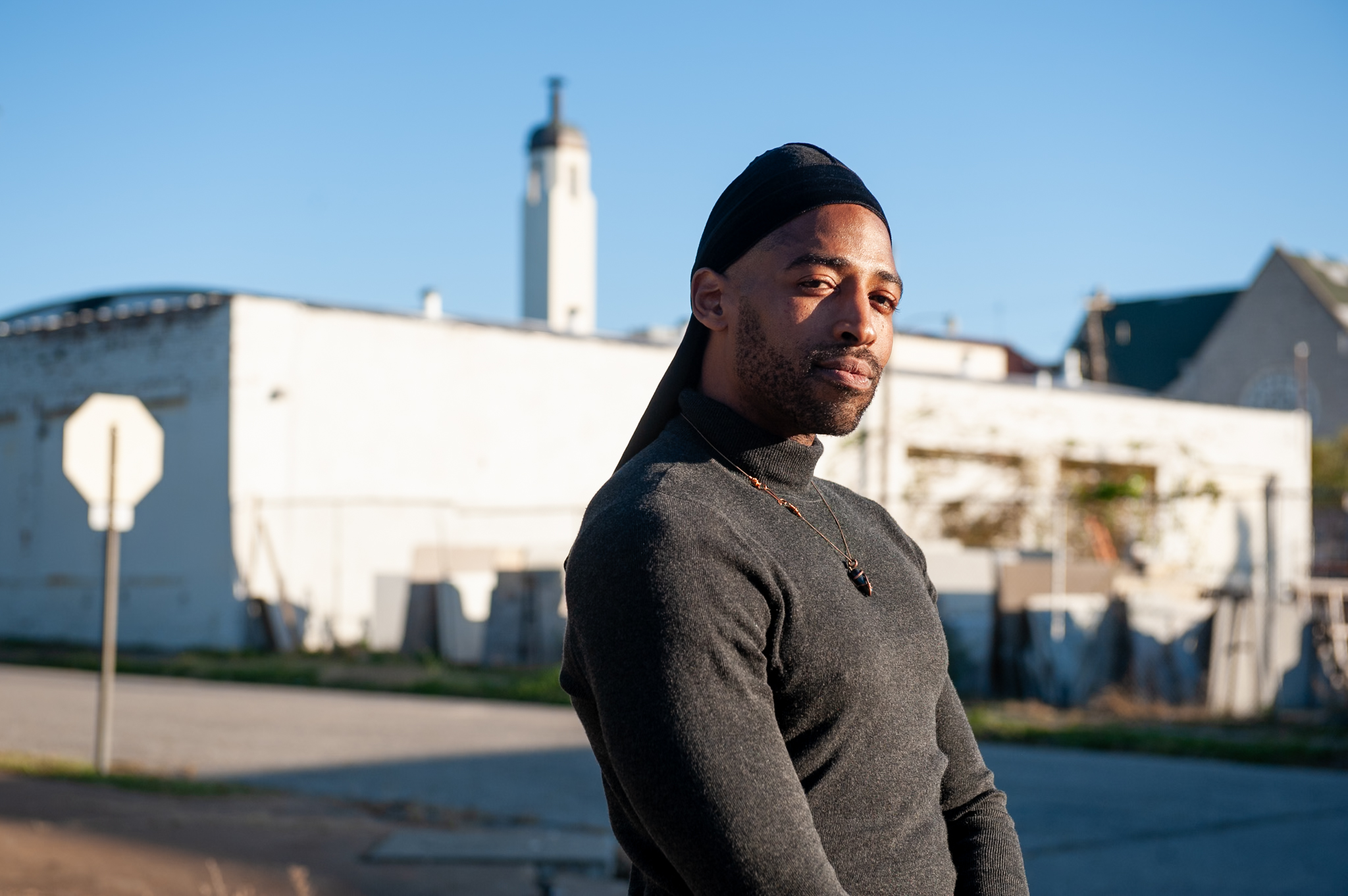 Photo credit: Lindy Drew / Humans of St. Louis
“My mom’s neighbor, who waited with her while the ambulance came to get her, didn’t find out my mom died until I was cleaning out her apartment. When she saw me, she was like, ‘Who are you?’ And I was like, ‘Who are you?’ She said, ‘I ain’t seen my friend since I helped her go to the hospital two days ago.’ And I had to be the one to tell her. That was hard. We cried together at her front door.
As my mom’s only child, who’s also an actor, I immediately knew, ‘No one’s doing her eulogy but me.’ Fast forward to her funeral, it was a beautiful service. Standing room only. My mom was a legend, so many people loved her. I’m talking like damn near 200 people showed. I’d never seen such a turnout for a funeral. And it was nothing but performances, mostly from youth in the family. We turned the day into art.
The week before she passed, I’d auditioned for Hudson Valley Shakespeare Festival again. Then, as I got in the hearse to go to the cemetery, I got the email: ‘Congratulations! We’d love to have you back for another year.’ It was almost divine. Like my mom was saying, ‘You have to keep going.’ So I stayed in St. Louis for a month to handle her affairs. Then I went back to New York City and moved out of my place after having a fallout with all my roommates. Everything just started falling apart. Later that summer, my girlfriend’s apartment burned down, so we moved to Los Angeles.
The two shows I’d end up doing that season were 𝑇ℎ𝑒 𝑊𝑖𝑛𝑡𝑒𝑟’𝑠 𝑇𝑎𝑙𝑒 and 𝑇ℎ𝑒 𝑂𝑛𝑒 𝑇ℎ𝑜𝑢𝑠𝑎𝑛𝑑 𝑎𝑛𝑑 𝑂𝑛𝑒 𝐴𝑟𝑎𝑏𝑖𝑎𝑛 𝑁𝑖𝑔ℎ𝑡𝑠 by Mary Zimmerman. That’s where I got this quote in Arabic from on my arm that reads, ‘Fear not death, for you have known love.’ It’s from “The Story of Perfect Love” in the play.
I had said 𝑇ℎ𝑒 𝑊𝑖𝑛𝑡𝑒𝑟’𝑠 𝑇𝑎𝑙𝑒 would be a show that’d follow me, and it did. The play involves a beloved queen who dies from the heartbreak of grief and imprisonment from being accused of infidelity and having her child murdered. Sixteen years pass, only to discover that she’s been preserved as a statue by a mystic maiden. And at the end, the statue comes back to life, and the queen returns.
The day we first rehearsed that scene was Mother’s Day. I was a f*cking wreck. And I’d be performing this show for three months, two to three times a week. But what I didn’t expect was that this scene would become my healing ground for everyone to bear witness and see onstage every evening. I understood there was a reason for me doing that show at that time, and I knew this was where I could learn how to heal and let art transform me. I held nothing back. Leaning in, that’s when I realized how much art can heal. Art can save. Because it did for me.”
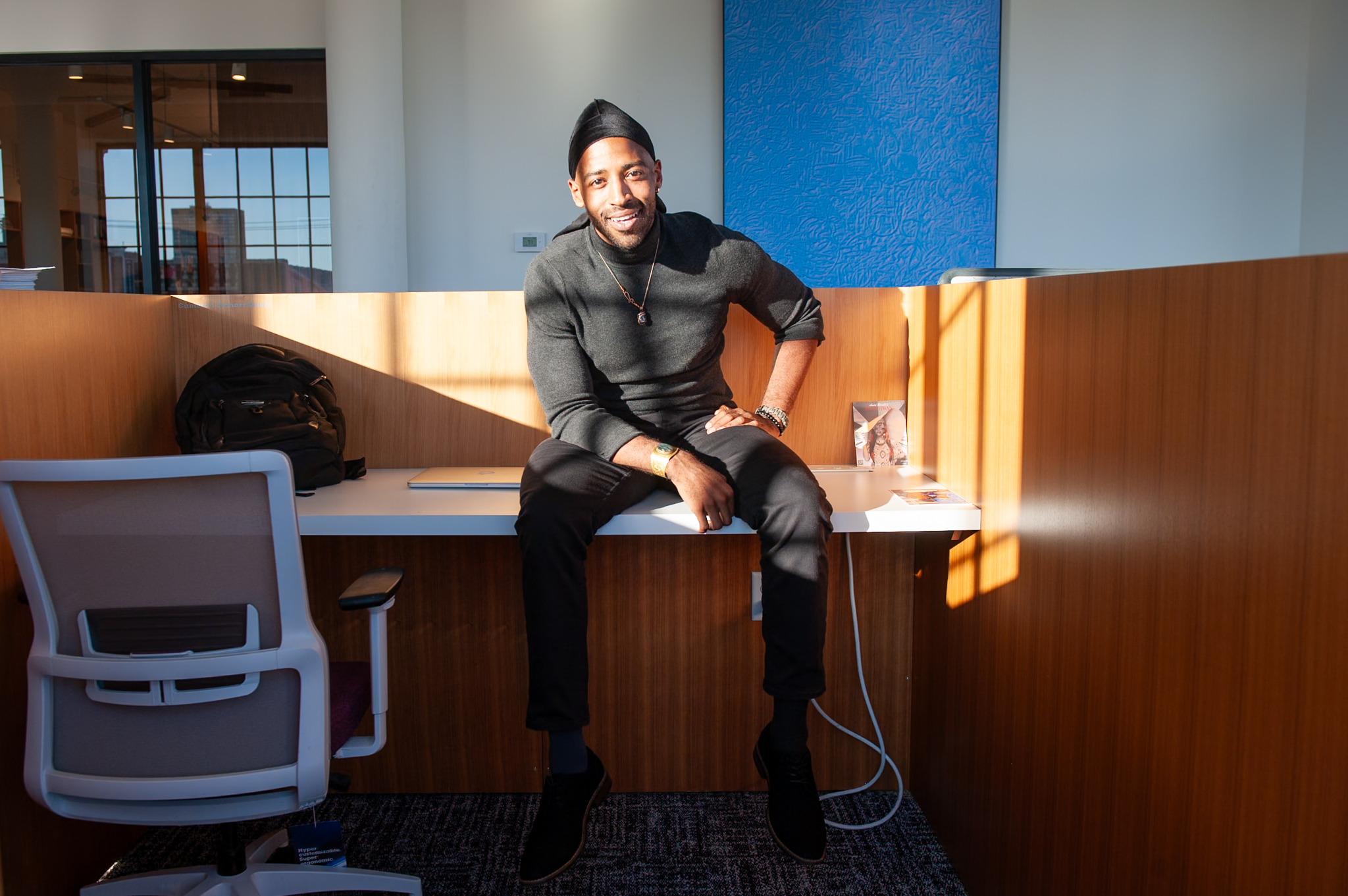 Photo credit: Lindy Drew / Humans of St. Louis
“After my mom died, I lived for months in this perpetual fear of dying. I was like, ‘Any day is the day.’ Knowing she died of a heart condition, anytime my heart rate would go up too much, I’d get even more anxious, thinking, ‘Now’s the moment. I could die right now.’ Well, there’s a story in 𝑇ℎ𝑒 𝑂𝑛𝑒 𝑇ℎ𝑜𝑢𝑠𝑎𝑛𝑑 𝑎𝑛𝑑 𝑂𝑛𝑒 𝐴𝑟𝑎𝑏𝑖𝑎𝑛 𝑁𝑖𝑔ℎ𝑡𝑠 called The Dream. And in my performance, the story before The Dream entailed this big ass party that involved me running around a massive field waving colorful smoke bombs. Because we were right across from West Point, which has this huge promenade, I was running with full physicality and stamina, only to get on stage and then have to sit down and pretend like I was asleep. So I’d be in front of 500 people every night, heart pounding out of my chest, thinking I was going to die on stage.
Now, The Dream tells the story of a man from Baghdad who has a dream that says, ‘Go to Cairo, because a fortune is waiting for you there.’ So he decides to go only to get beaten up, robbed, and thrown in jail the moment he arrives. While in jail, the jailer asks. ‘Why are you even here?’ He replies, ‘I had a dream that said come to Cairo, because there are riches for me here.’ The jailer says, ‘You’re a fool. Who would I be to leave my beautiful home with my fountain and rose garden and beautiful bricks?’ And as the jailer’s talking, he’s exactly describing this man’s home but doesn’t know it. So when the man goes to sleep that evening, he has another dream that tells him, ‘Go back to Baghdad. Your fortune is waiting in the garden of your home.’ He returns home, digs up the earth underneath his garden, and finds a wealth of gold and riches that have been there for him the whole time.”
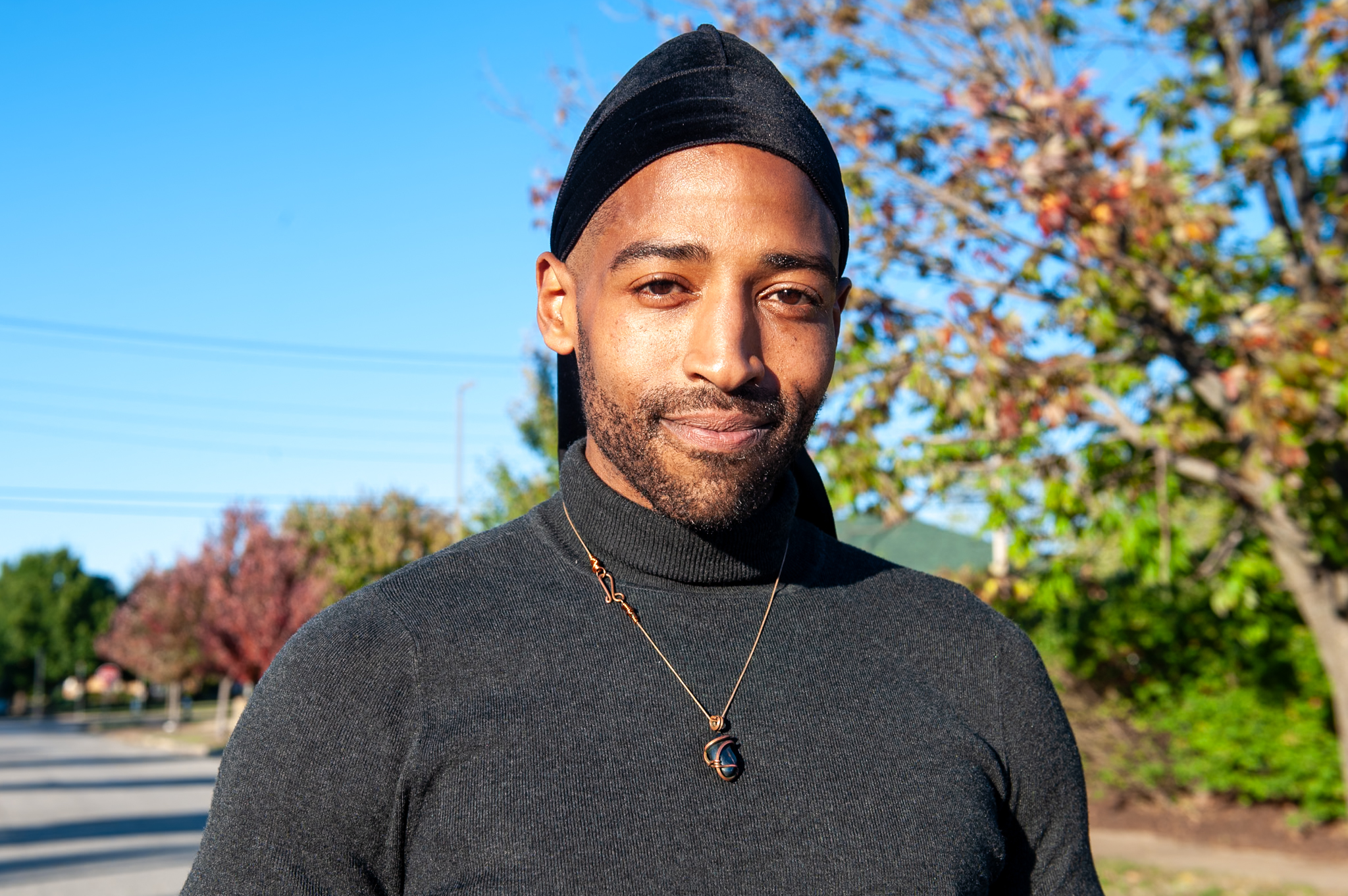 Photo credit: Lindy Drew / Humans of St. Louis
“I finished the contract, and I was done with New York. Like, ‘I don’t want none of this. I want peace. I need to find myself again. I need to heal. I need light. I need warmth.’ Once my mom passed, I was her sole inheritor. Coming out of a season of being broke and hungry, I now had funds and the ability to do anything I wanted. So I left. I was like, ‘I’m going to LA, where there are beaches and where I can sit in the sun and find myself.’ And also, where I could get paid to be young and youthful. I had just turned 25, I had friends out there from college, so I went out west. With my obsession about death, having seen so much of it, and me thinking I was going to die, my big question was, ‘What does it all mean?’ I started asking myself, ‘What is it like to die? How did my mom die? What was that like for her? Did it hurt? Was she in pain? What is death? You know what it is, but you don’t know what it is. What IS it?’ Long story short, I got drugged at a club one evening and almost died.
Being new to LA, I went out to this spot even though my spirit told me to stay home. And my friend gave me her drink after I lost mine, not knowing hers had been spiked with GHB, liquid ecstasy. When you compound that with alcohol and marijuana, it can cause your system to shut down and kill you. Well, I didn’t know I got dosed with it. And that’s when I thought I was dying. I went from feeling really great to really awful really quickly. I felt my heart rate slowing down. I was coughing up blood. My body was getting cold. By the time I got home I felt like, ‘This is it. Let me get in a warm shower. So if I go, I go there.’ After what happened to my mom, hospitals were the last place I wanted to go. I remember being back in the fetal position on the floor of my shower. I was in so much pain and just wanted it to stop. To end. I just wanted peace. To sleep, no matter how deep. And I said, ‘God, if I’m going to die, just let my mom come get me. And I’ll be cool with it. I’m okay. I’ll accept it.’ And I passed out.”
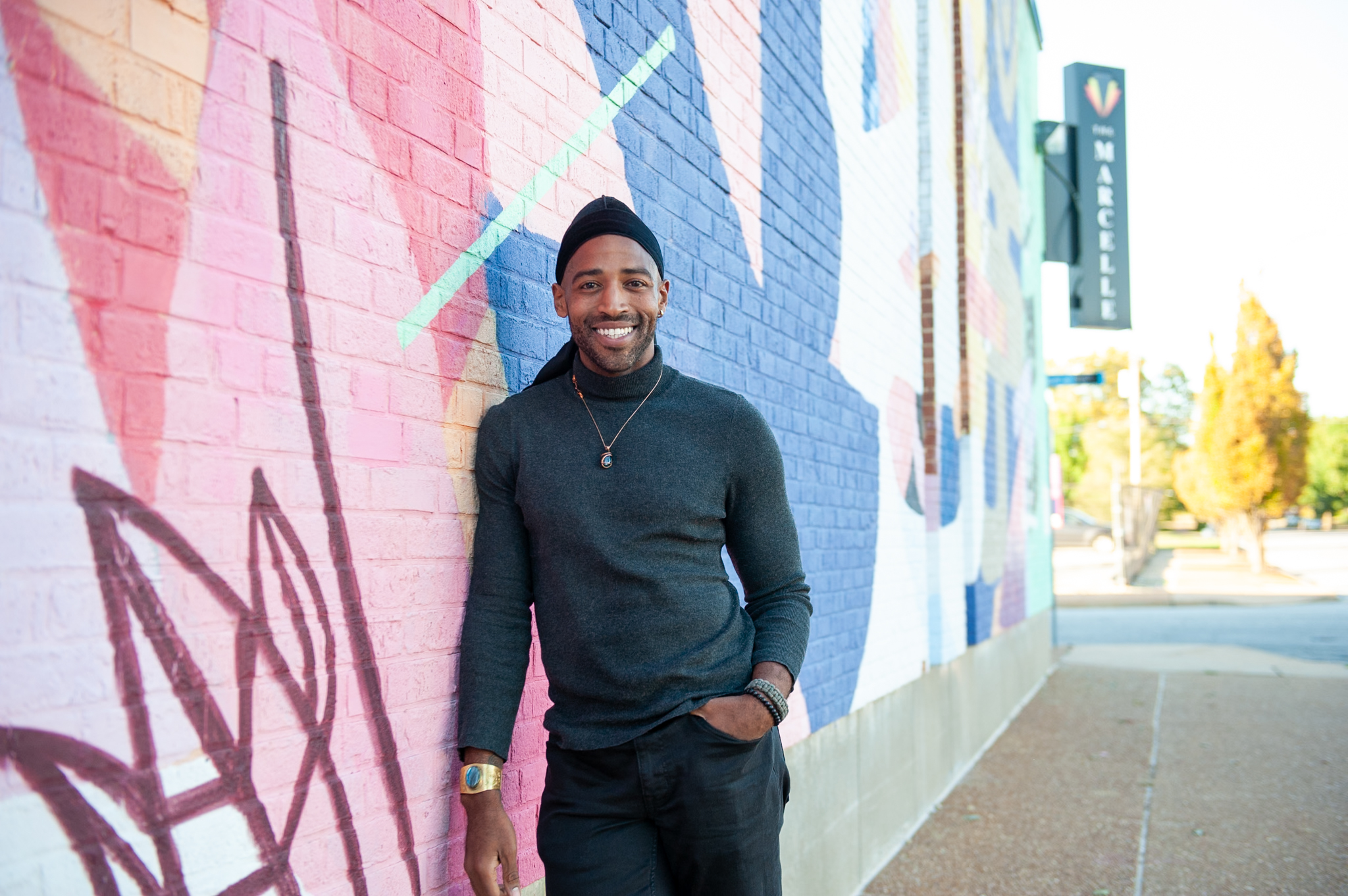 Photo credit: Lindy Drew / Humans of St. Louis
“I woke up hours later, the water still running on me, sunbeams spraying through my shower window. And as I came to, I realized I was alive and immediately started laughing, like, ‘I’m alive?’ And then I started crying in pure shock and gratitude, like, ‘Why am I alive? I’m alive!’
It was then that I knew I had to start making some changes in my life: ‘There’s something here I’m living for. There’s something that wants me to live. I have to figure it out.’ So I did that. And I lost all my friends, ended my relationship, and had a fallout with my roommate over racial politics. Before I knew it, I was homeless, living in my car on the streets of LA. And this was all within a year of my mom’s death. It was just me in the back of a Pontiac Grand Prix, thuggin’ it, figurin’ out how to live under these new circumstances. From what I inherited from my mom, I paid off some student loans, got an apartment, and got some things for myself. But, by this point, I had no more of it. I fell into tribes of hippies and different spiritual people. I expanded my consciousness even more than I had in college.
Then, in the middle of things being f*cking awful, I ended up booking my first equity show. I was doing 𝑃𝑟𝑖𝑠𝑐𝑖𝑙𝑙𝑎, 𝑄𝑢𝑒𝑒𝑛 𝑜𝑓 𝑡ℎ𝑒 𝐷𝑒𝑠𝑒𝑟𝑡 with the Celebration Theater, the country’s longest-standing LGBT theater. It’s a great show about a group of traveling drag queens across the Australian Outback told as a jukebox musical, so we sang all these hits from the ’70s. The show starts with ‘It’s Raining Men,’ and I’d come out in my trenchcoat, just living my best Chippendales life, and having so much fun. I was living, doing my thing again. It didn’t matter that I was sleeping in the back of my car every night. It didn’t matter that I was hungry because it was feeding my soul. But I’d leave these rehearsals knowing I was about to go to sleep on the street. And not only did it wake me up to realize how many people are homeless and sleeping in their cars, but it woke me up to how many people were just like me that I had completely ignored before.
I was getting paid sh*t even though I was equity, working my ass off as a swing for the show. Equity means you’re a unionized actor, which means producing companies have to follow certain protocols, you get health insurance, you have to be paid a certain rate. It’s a labor union, so you’re protected. So I was like, ‘Tickets are $75. I’m getting paid $25 per performance. I know the rest of y’all are making beaucoup money.’ Also, I knew how much the show was benefiting me and my mental health, so I questioned the producers like, ‘Why are you not opening this show up to more people? There are homeless, queer, youth struggling on the street who need this experience as much as I do. You could be providing that for them.’ But the theater turned them away. Even if they stood nearby listening to our rehearsals, they’d be accused of loitering and asked to leave. I thought, ‘This isn’t right. If I’m ever in a position to do better, I will.’”
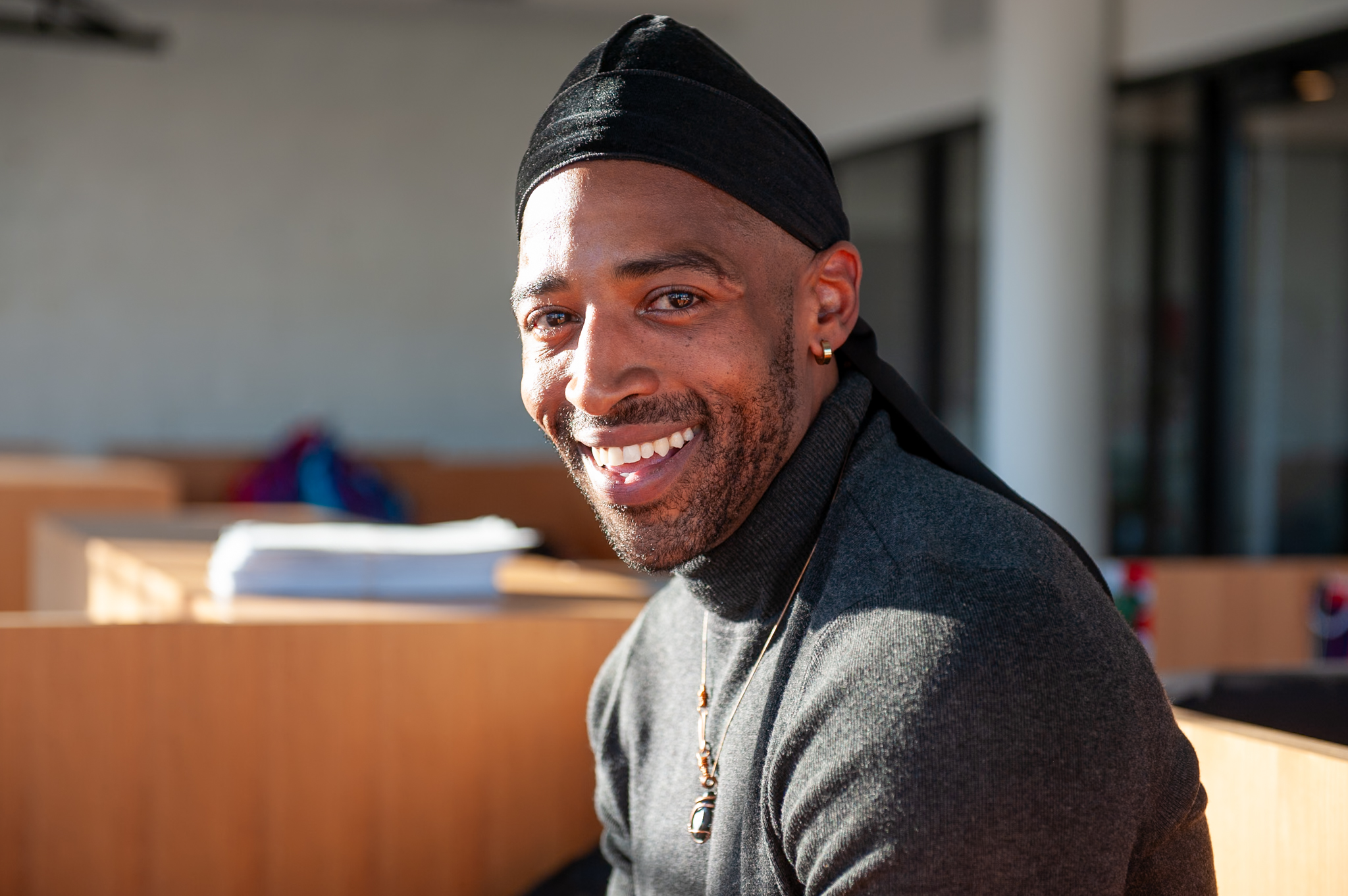 Photo credit: Lindy Drew / Humans of St. Louis
“Eventually, I was in Beverly Hills, wearing an all black three-piece suit as a host in this ritzy-ass steakhouse, trying to make it all work. This would be my life for about a year and a half before getting a job at a five-star beachfront hotel in Malibu, which allowed me to finally get out of my car and into an apartment again. I had a place that was entirely too small and expensive in Koreatown. But I was grateful to have a bed, running water, a kitchen, and a bathroom. I was grateful to not be outside, grateful to have somewhere to cook a hot meal and stretch my feet. Basic needs. Not wants, needs.
I was around all these celebrities and insanely wealthy people. I was looking at the beach every day. I was seeing dolphins. As a host, I’d stand there with a lot of free time to read during the day. And I had time to think about what my future could look like. So I’d be daydreaming, and I’d tell myself, ‘When I’m in my mid-40s, early-50s, it’d be nice to start a theater company. And my theater company is gonna do better than what I’ve seen from some of these other companies I’ve worked for. I might not know how or when. But, damnit, I’m gonna.’
Well, a kind woman named Kelly was staying at the hotel where I worked, and let’s just say she was generous. She’d bless you if you gave her a lighter or an umbrella. So, one day she called me over to the bar, where she’d post up with her red wine and do her thing. And she said, ‘I keep hearing you talk about this theater thing. What do you do?’ I told her, ‘I’m an actor. I want to have a theater company one day.’ She said, ‘Sounds interesting. Do you have a business plan? I’m here for a week. Give me something.’ So every day after work, I’d go home and put together this plan for a theater company I wasn’t even ready to make.
I thought, ‘Let me come up with a name. Soul Siren Playhouse. We’d do this, and here’s a season I would do, and here’s a budget I would need, and this is why I’d do it, and this is what I want the company to do.’ I figured it out in a week and sent it to her. And she replied to my email saying, ‘I looked over everything and sent my correspondence via mail to your job.’ That kinda caught me off guard. I was like, ‘She could have just told me to f*ck off over email. Like, who sends personal letters anymore? This is strange.’
I went to work on my day off to get what she sent. It was a large envelope with a letter inside written on her own personal letterhead. It said, ‘I looked over everything. I think this is an exciting project. I’d love to help support. Here is what you’ll need for operational expenses.’ And there was a check for $25,000 dated March 5, 2019. The day my mom died four years prior.”
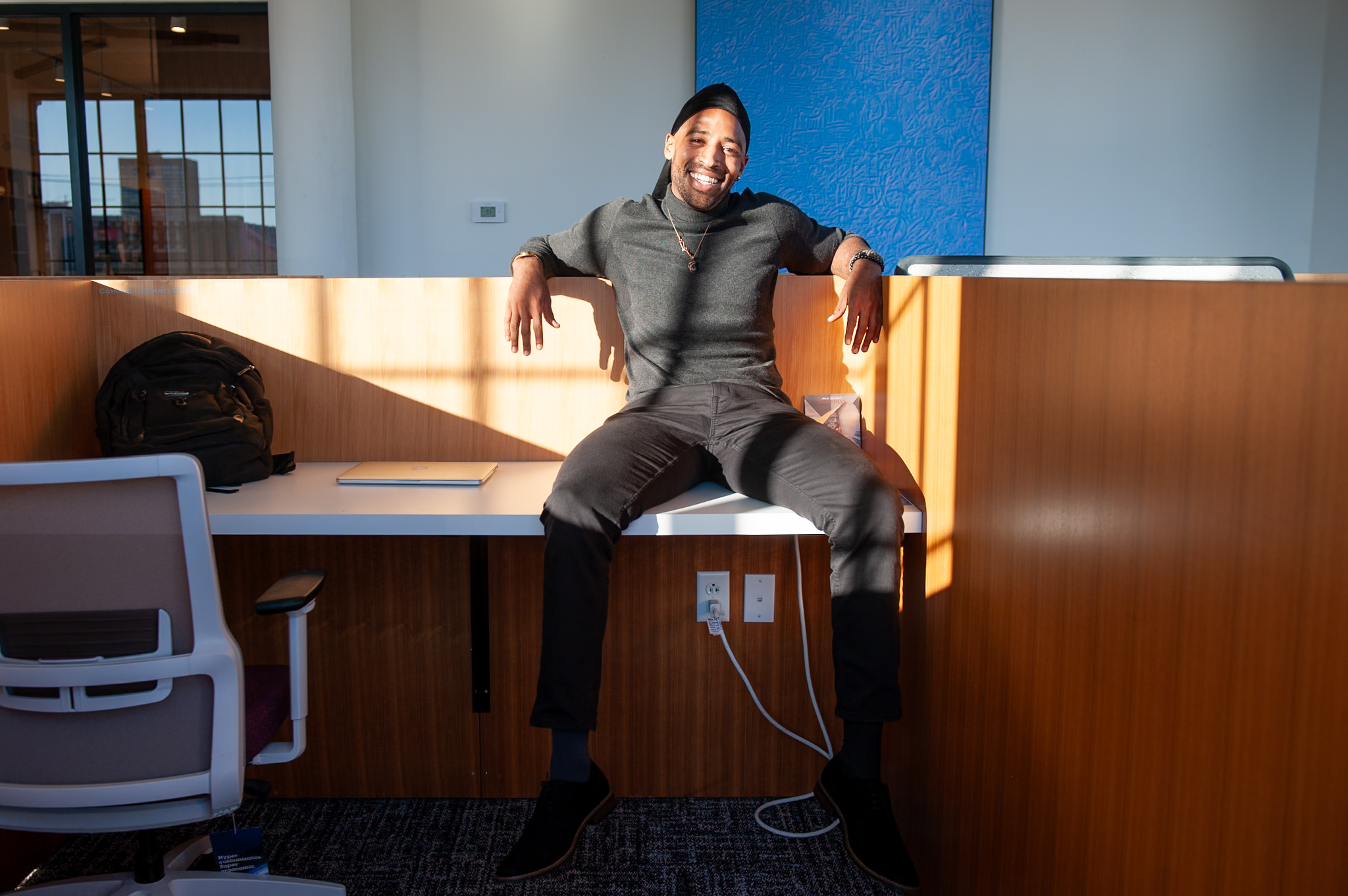 Photo credit: Lindy Drew / Humans of St. Louis
“I was on the side of the Pacific Coast Highway crying my face off. I had just come out of such a trying season of being homeless, broke, hungry, lonely, and losing everything. And this woman, who didn’t know me from Adam or my dreams or my talent, saw me and believed in me off the cuff. I told myself, ‘Now I have to do this.’ So within the month, I incorporated the company and used the funds to get going. I didn’t know how I was going to do any of it, but I was going to keep stepping out on faith.
The idea was always to start Soul Siren Playhouse in LA, and keep the company there. Until COVID happened. I never dreamed about coming back to St. Louis. My mama wasn’t here anymore. The earth didn’t feel the same anymore. How was I supposed to come home when the one who made me feel like home wasn’t home? I didn’t want to be here. I’d rather be lost in the world and find myself there. So I was sitting in my apartment with my best- friend-turned-partner, Brad, like, ‘We’re here, but I don’t know why if we can’t do what we came here to do. We can’t act right now. We’re trapped in this small space. We can’t do half the things that make this city worth living in.’ I started questioning why I was living there.
I remembered my aunts saying, ‘We miss you so much. When are you gonna come back to St. Louis?’ And I said, ‘Since the world is shut down, I might come sometime this summer.’ One of my aunts asked, ‘You’re gonna move back?’ I said, ‘Absolutely not. Don’t ever ask me to move back.’ And this was all around Mother’s Day, which is close to my birthday.
The day after I said no, everything started saying — and I’m talking a deep ancestral pull — ‘Time to go home. The world’s changing quickly. And if the world’s about to fall apart, even if your mom’s not there, St. Louis is your home.’ Then, on my birthday, The Dream started speaking to me. Those words: ‘Go. Go back to St. Louis. A fortune is waiting for you in the garden of your home.’ And quickly, I was like, ‘I’m out. Today, maybe tomorrow. Swiftly.’ And within a week, I left and was back in St. Louis in May 2020. I simply said, ‘We will take the company home. That is where Soul Siren is supposed to be. That is who needs your mission. That is who needs your story. These are the people who need to see you. Your home needs you. Return.’ And I returned as a bit of a stranger in my own backyard.”
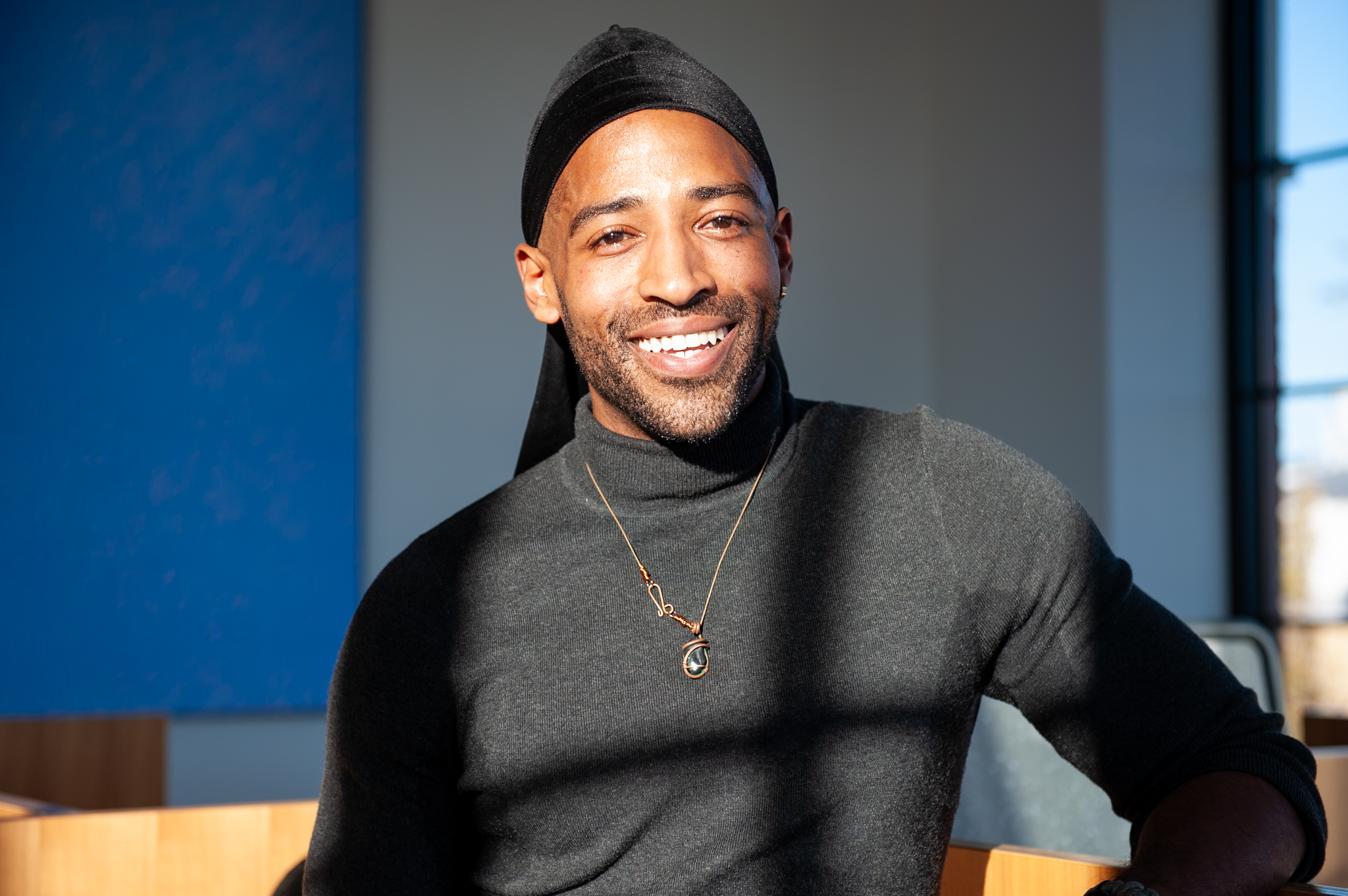 Photo credit: Lindy Drew / Humans of St. Louis
“No one really knew me in St. Louis anymore because I had been gone for over a decade. So the past few years have been a slow road of me proving myself. This is the ‘Show Me State,’ afterall. And that’s the mentality here in St. Louis: ‘What you got? Show me something. Period.’ So we shot a film. We shot some music videos. We couldn’t do theater immediately due to the pandemic. But since I had just come from a film town, I knew how to be behind the camera, shoot, and edit. So I shot two PSA films in alignment with the social consciousness and social outreach mission of Soul Siren Playhouse. Our first film, 𝐷𝑎𝑛𝑔𝑒𝑟𝑜𝑢𝑠 𝐿𝑜𝑣𝑒, was about domestic violence in queer melanated relationships, because people normally only discuss the topic in heteronormative dynamics. Our second film was a horror thriller we released around Halloween called 𝑆𝑜𝑚𝑒𝑡ℎ𝑖𝑛𝑔 𝐶𝑙𝑒𝑎𝑟 𝑈𝑛𝑠𝑒𝑒𝑛, exposing human and child trafficking influences in our modern media, and how maybe we need to look at a greater pandemic outside of Covid. And that’s what the company does. It creates high-caliber art that speaks to the heart, opens the mind, and hopefully transforms the soul.
Then I started making small moves in the direction of professional creative leadership to help the company gain legitimacy and awareness. I knew it would be hard, and that I needed to do things strategically. So I got a fellowship assistant directing 𝐴 𝑀𝑖𝑑𝑠𝑢𝑚𝑚𝑒𝑟 𝑁𝑖𝑔ℎ𝑡’𝑠 𝐷𝑟𝑒𝑎𝑚 with the St. Louis Shakespeare Festival to position myself outside of being an actor. I ended up getting my first acting role back in the city doing 𝑇ℎ𝑒 𝐴𝑓𝑟𝑖𝑐𝑎𝑛 𝐶𝑜𝑚𝑝𝑎𝑛𝑦 𝑃𝑟𝑒𝑠𝑒𝑛𝑡𝑠 𝑅𝑖𝑐ℎ𝑎𝑟𝑑 𝑙𝑙𝑙 with The Black Rep. I won the St. Louis Theater Circle Award for Best Supporting Actor in a drama. And I went on to do a Community Arts Training cohort with the Regional Arts Commission in addition to continuing to act on professional stages across the city.
Then I started figuring out how to apply for grants and pursue artist residencies. It was just the right move after move until I got to a place where I’d be able to produce my first professional stage production in the city. Soul Siren Playhouse did its first show, Amiri Baraka’s 𝐷𝑢𝑡𝑐ℎ𝑚𝑎𝑛, on the first day of Black History Month in 2024, right around the 60th anniversary of the play’s first production at Cherry Lane in New York. And to produce that show, especially as a first as a Black theater company, set a new bar and identity for us. We had arrived, and we weren’t just surviving, we were thriving. The pandemic didn’t kill us. Everything happened in its own proper divine time.”
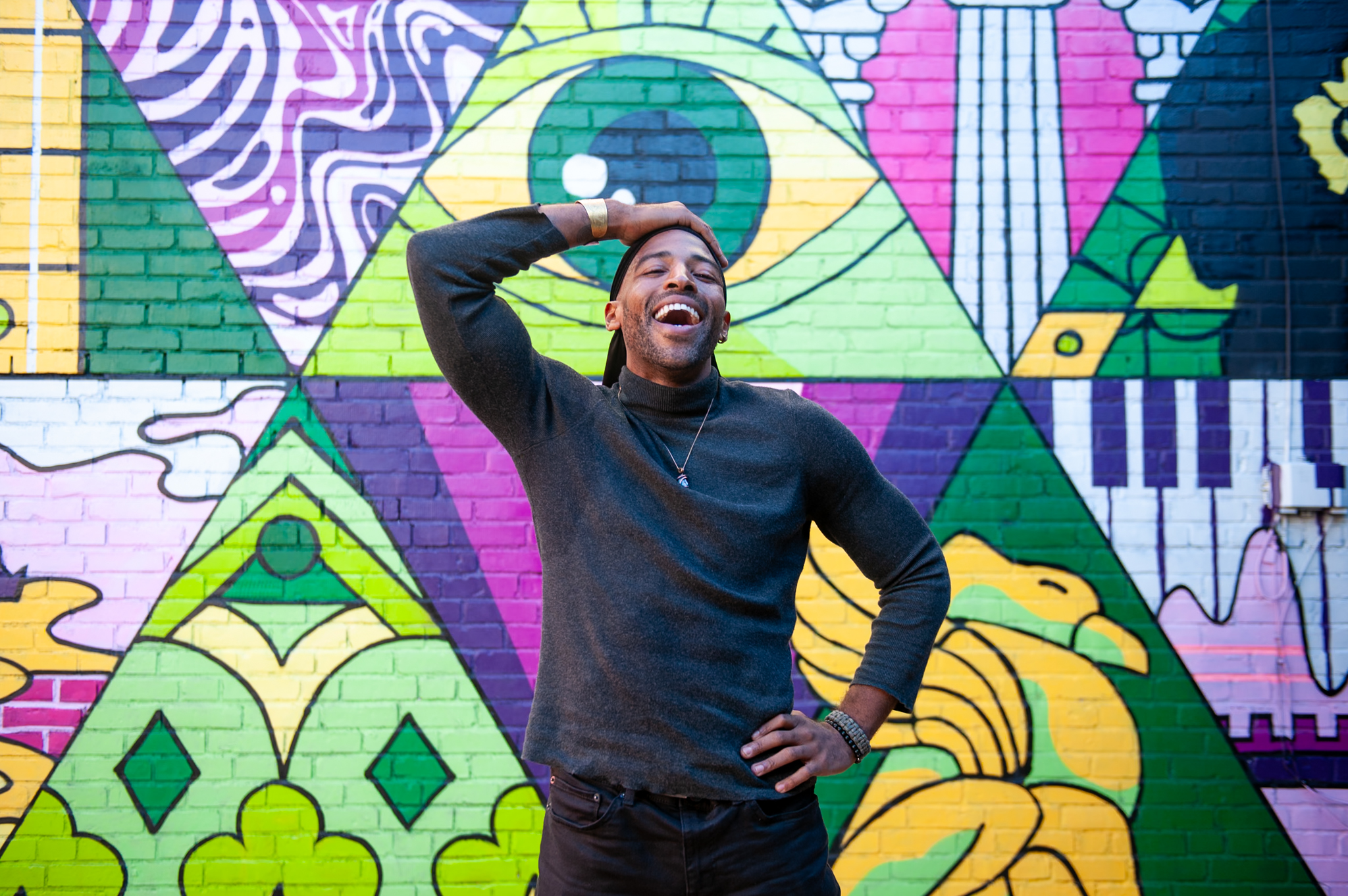 Photo credit: Lindy Drew / Humans of St. Louis
“I’m blessed to say I’ve had a strong stage career since I returned home. I was in 𝑀𝑢𝑟𝑑𝑒𝑟 𝑜𝑛 𝑡ℎ𝑒 𝑂𝑟𝑖𝑒𝑛𝑡 𝐸𝑥𝑝𝑟𝑒𝑠𝑠 at The Repertory, 𝐶ℎ𝑖𝑐𝑘𝑒𝑛 𝑎𝑛𝑑 𝐵𝑖𝑠𝑐𝑢𝑖𝑡𝑠 at The Black Rep, 𝐴𝑖𝑑𝑎 and 𝐶𝑙𝑢𝑒 at STAGES, and an educational musical concert called The American Musical at The Sheldon. Most recently, I finished a literary artist residency with the Kranzberg Arts Foundation, where I developed 𝐷𝑒𝑎𝑡ℎ 𝐽𝑎𝑚, a poetic, dramatic retelling of half of the stories I told you here, and me reconciling my relationship in the space between life and death. Essentially, it’s shadow work presented on stage, and how you must embrace your shadow to heal and return to light. I was also able to leverage that time to make Soul Siren one of their newest resident organizations.
Currently, I run Soul Siren with Bradford Rolen, our director of operations, who I’ve known since fourth grade. It’s just us, a two-man crew holding it down. We’re also connected to a lot of theater companies in St. Louis. My passion for music has me teaching myself how to DJ. I’ve been designing video projections and editing, experimenting with visual and electronic art and media outside the theater space. So I’m back in the flow.
The love I have in the world and the love I’ve been shown, it’s been beside me the whole time. Friends and family support me. The love of my mother continues to heal, sustain, inspire, and elevate me. My mom’s sisters, my aunts, make sure to pour into me. They allow me to experience the love I miss from her at the times I need it most. Then to be celebrated as the artist I am in my own hometown, and to create with people I admire for audiences that reflect and resonate with my creative expression — my heart is full.
I couldn’t imagine being anywhere else. People are like, ‘You went to New York and LA, and you don’t want to go back?’ If you only knew my story. Then you’d know why I’m so rooted and comfortable being home.’ How good it feels to say, ‘I’m home.’ How powerful it feels to have a home. I feel powerful now. There’s something in me that’s indestructible. So many people have their hands on my shoulders saying, ‘Go. Go. Go. Go with bravery. And go with courage. And go with love. Go with everything we have given you to go.’”
Cameron Jamarr | playsiren.com
About Humans of St. Louis
Humans of St. Louis (HOSTL) is a 501(c)(3) non-profit organization with the mission of sharing photographic portraits and first-person stories to highlight local needs, issues, and experiences from people in the St. Louis region. HOSTL gives followers an intimate look into the lives and struggles of the people of St. Louis, one photo and story at a time, and is the second most popular “Humans of” site in the U.S. after Humans of New York.

Follow Us On Social Media