RAC is excited to partner with Humans of St. Louis to highlight stories from some of the talented creatives and artists who call St. Louis home. All stories and photography in the RAC + Humans of St. Louis series were created by and are credited to Lindy Drew, co-founder, lead storyteller, and book co-author of Humans of St. Louis.
Edo Rosenblith
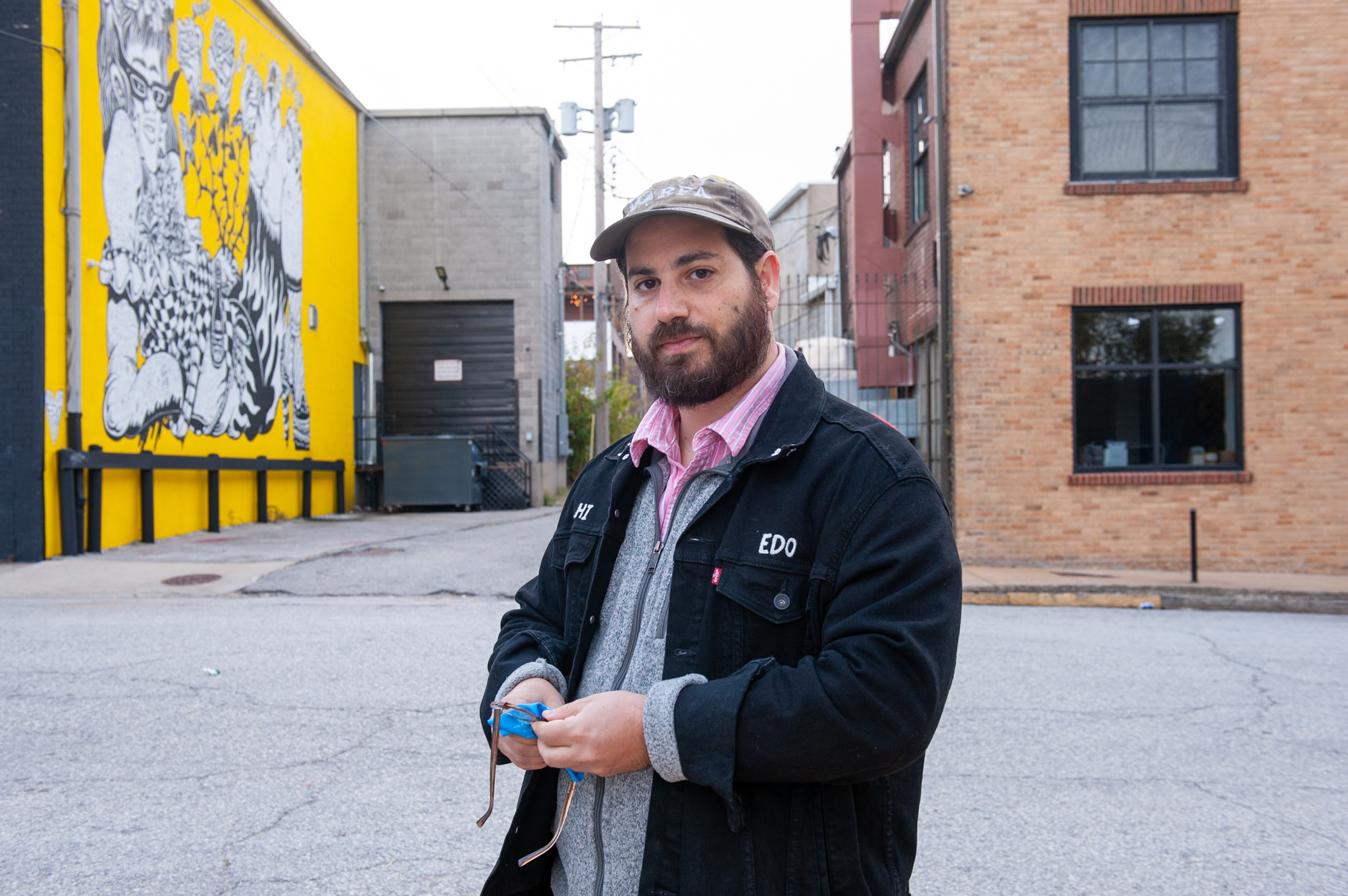 Photo credit: Lindy Drew / HOSTL
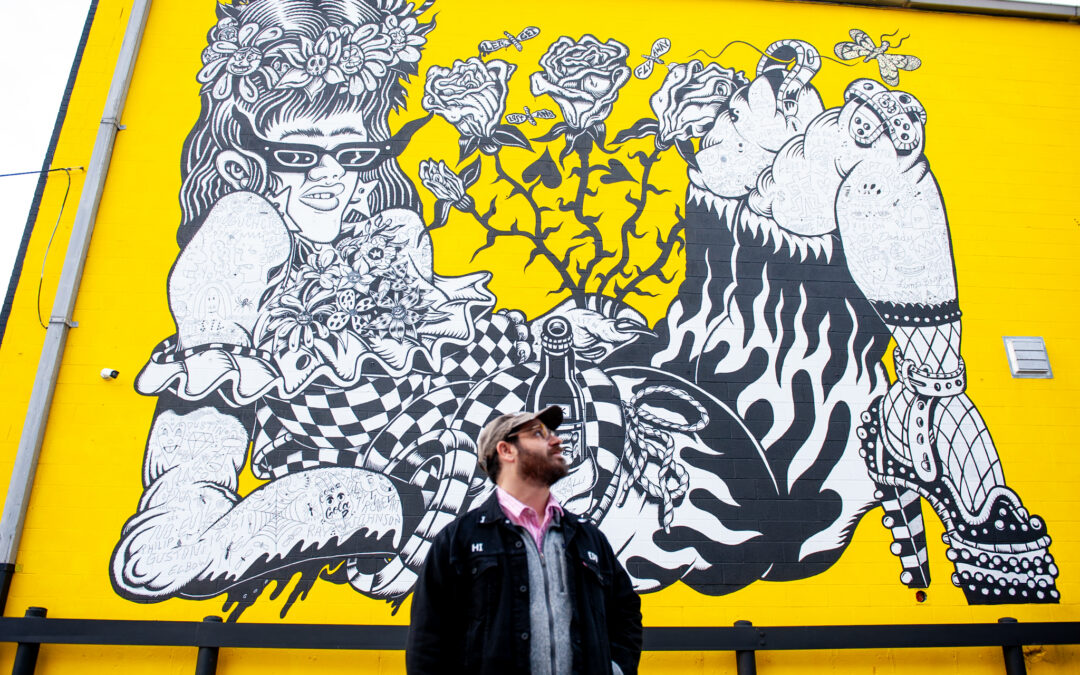
“I’ve been painting murals ever since I graduated from art school. For this one, she’s based loosely off art school girls I knew and punk singers I’ve seen at venues like Red Flag. At first, the Foundry Art Center commissioned me to do a set of paintings, and this was the first I made for them from the series “Four Women for Three Seasons.” There’s a long history in art with artists doing sequential paintings of the seasons. I was trying to imagine what kind of image would embody spring, and this is what I came up with.
I studied at the Rhode Island School of Design, where every day was like a fashion show for some people. I mean, there was a fashion department, and students wore really crazy outfits just to go to class. So it was exciting to show up to school and see what people were wearing. Often, when you think of college, you think of students in sweatpants and hoodies. This place was the total opposite, to the point that people would come down from New York to photograph them for inspiration. And many of the students there went on to become fashion designers.
It was a little tricky blowing this piece up. Usually, I come up with an idea from scratch. But for this mural for this wall, the client was like, ‘This works.’ So I used an Airbnb across the alley for a few days and projected from the windows at night. We had to get a cherry picker to trace it. Then, painting it took about a month, but that’s mostly because it rained a lot. And I had to work around the venue’s schedule because whenever Red Flag had concerts, I had to move. So far, the mural’s only been tagged once, and it was easy to cover up. That’s pretty good for it being up for two years.”
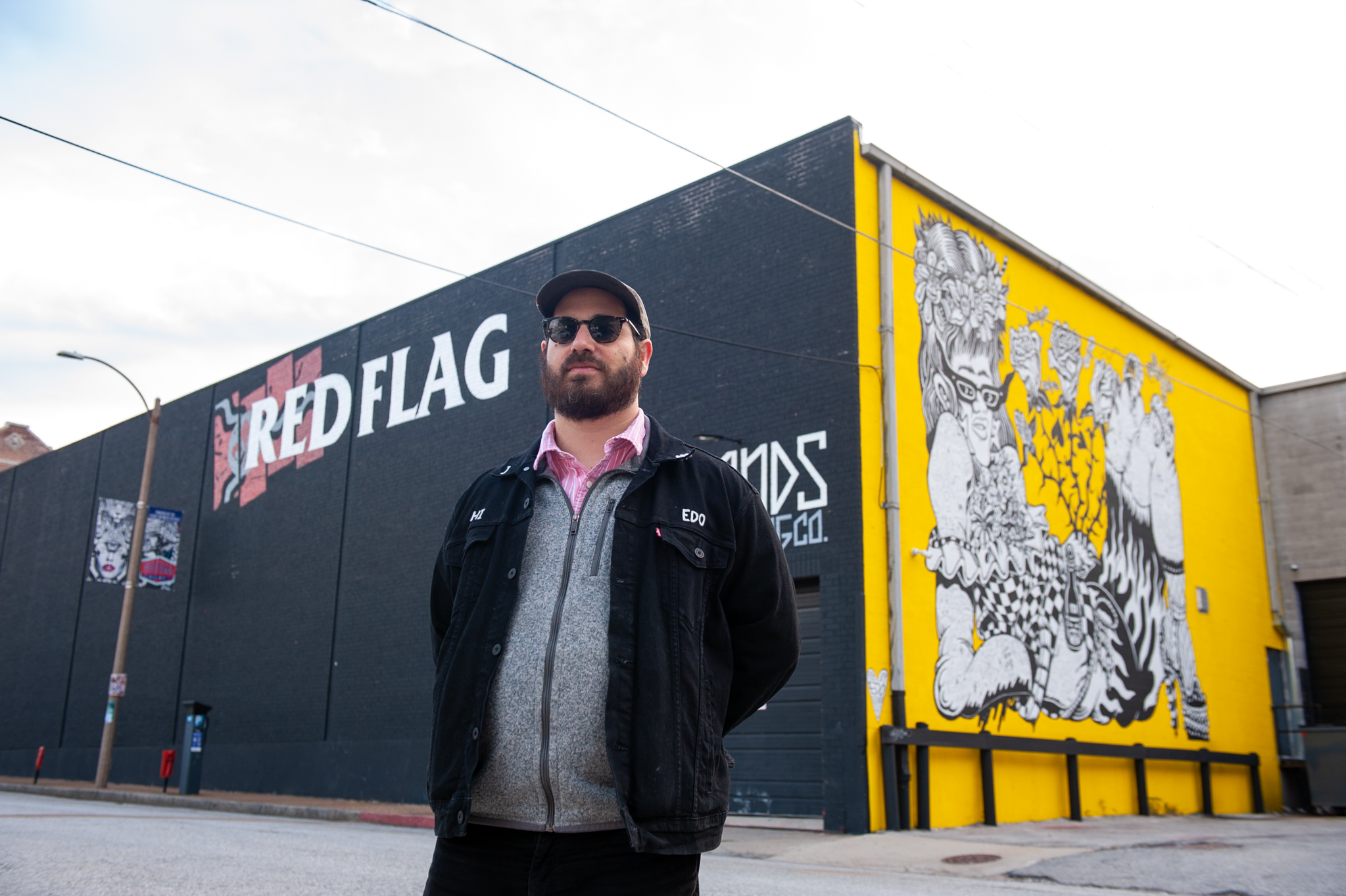 Photo credit: Lindy Drew / HOSTL
𝑊ℎ𝑎𝑡 𝑤𝑎𝑠 𝑡ℎ𝑒 𝑚𝑜𝑠𝑡 𝑐ℎ𝑎𝑙𝑙𝑒𝑛𝑔𝑖𝑛𝑔 𝑝𝑎𝑟𝑡 𝑎𝑏𝑜𝑢𝑡 𝑝𝑎𝑖𝑛𝑡𝑖𝑛𝑔 𝑡ℎ𝑖𝑠 𝑚𝑢𝑟𝑎𝑙?
“Finding the right color for the background. Because this venue is called Red Flag, the only thing the owner wanted was for the mural to be red. But the original version was yellow. So I tried 14 different reds in commercial-grade paint but couldn’t find any vibrant enough. I played with so many red swatches just to see, but nothing ever worked. Finally, I found this color yellow, which is straight yellow. And when you go to have the color made, the company literally dumps out all this yellow pigment with a little drop of white and blue. It’s like the yellowest yellow. I thought white, yellow, and black make a good combo. And when the owner saw how good it looked, he was like, ‘Okay, it’s fine.’
Often, what happens when making murals is you do what you think will work and then just hope that once the client sees it, they’re convinced it looks good. Because when making art, you’ve got to have a lot of space for artists to make stuff. If they’re excited about making something, it’ll most likely turn out well. Unless you’re on totally different pages. But you have to allow for creativity because the act of making it is where most of the decisions are made. Even for this one, I had sketches, so there was preparatory material to show. But that doesn’t necessarily show what a piece of art will actually be. Things change.”
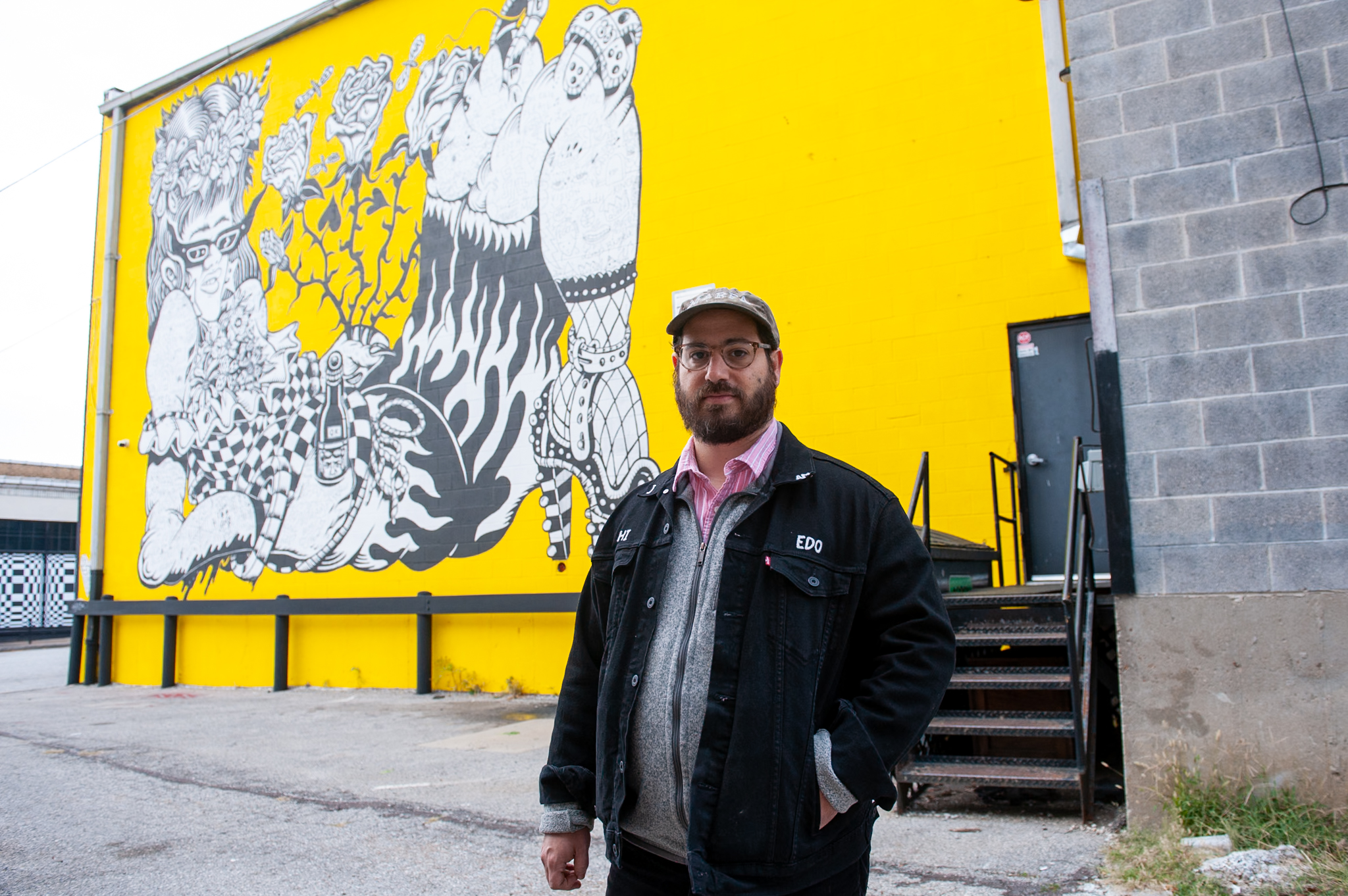 Photo credit: Lindy Drew / HOSTL
𝐼 𝑤𝑎𝑛𝑡 𝑡ℎ𝑒 𝑠ℎ𝑜𝑒𝑠!
“Yeah, the shoes. You have to have good shoes.
My dad was a shoe designer who came from a long line of shoemakers. Both my parents studied art. So art was the only thing I was really good at growing up. And that’s how I ended up making art my whole life. When I found out about art school my freshman year of high school, I said, ‘I want to do that.’ Rhode Island School of Design is one of the best art schools in the country. So I got in, had a lot of fun, and met a lot of my closest friends there. And the main thing I got out of that school was learning how to make murals, but it wasn’t through any class. It was through an internship.
I found a program through the American Academy in Rome, which allows academics and artists from the States to live and work in Rome for a year in this fancy palazzo. So one of my professors helped me get an internship there working for an artist named Stephen Westfall. He makes these giant geometric abstract murals, which he calls wall drawings. And they’re sort of like an acolyte of artists like Sol LeWitt, who was one of the inventors of conceptual art in the ’60s and ’70s. Westfall never made his murals though. He made a sketch and then hired people, including me, to do four giant murals in this gallery at the Academy. For some reason, my professor thought I had experience, so she asked me, ‘Do you want to work for my friend? You know how to make murals, right?’ I was like, ‘Yeah, absolutely,’ even though I’d never done one in my life. So I faked it and acted like I knew what I was doing. Luckily, the other people knew what they were doing. I learned from them.
Next thing I knew, I was on a three-story scaffolding, painting these giant things made of hexagons based on mosaic walls and churches the artist had seen. Each one had to be super precise and perfect. We’re talking endless amounts of blue tape. Sadly, they aren’t up anymore. That’s part of the mural game. A lot of murals are temporary, especially if they’re for art institutions. Still, that artist taught us a few techniques to make clean lines and things like that that kind of demystify the process. Because people look at a giant mural on a wall, and they wonder, ‘How is that made?’ A few little tricks of the trade, and it’s easy.”
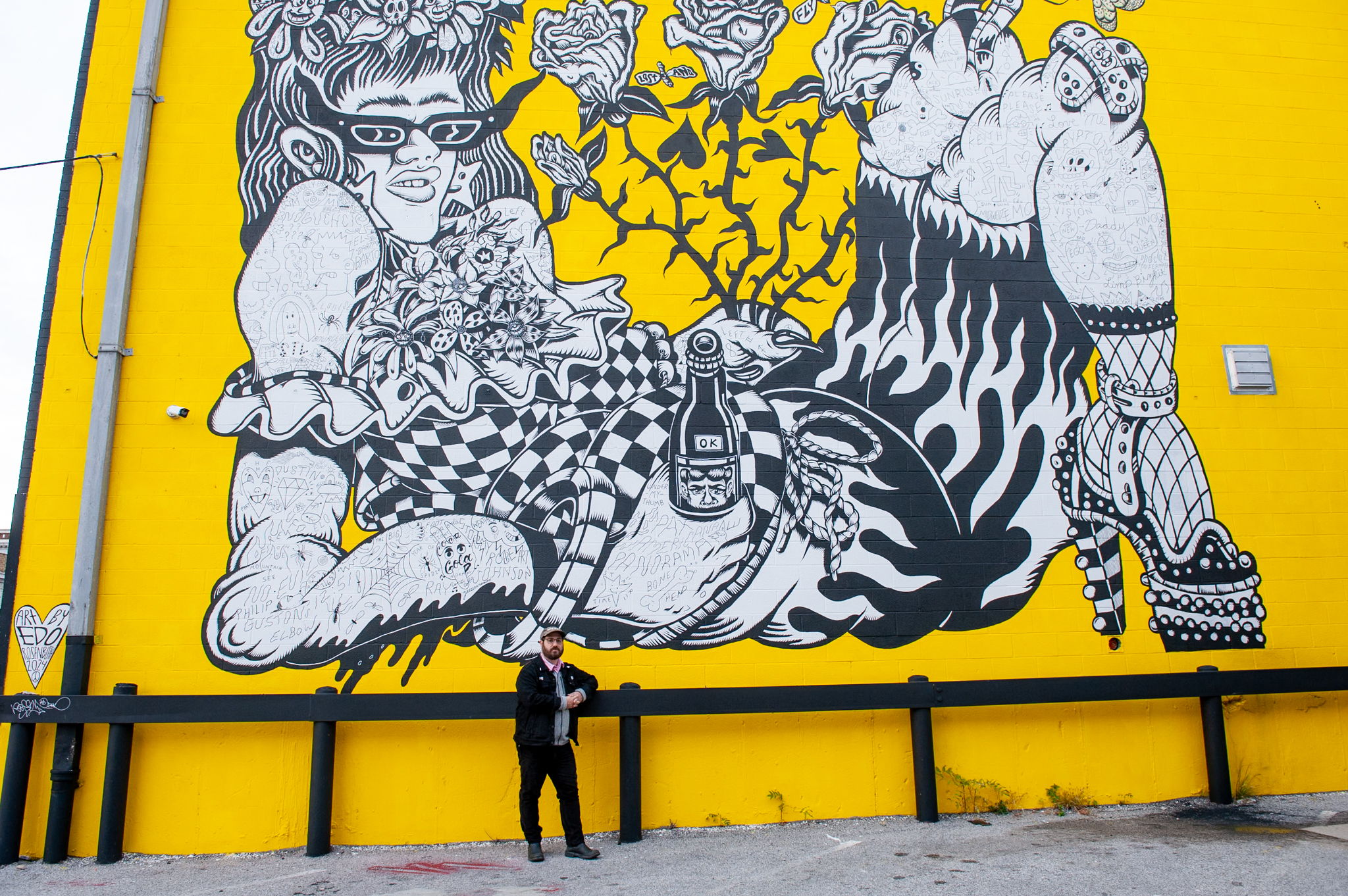 Photo credit: Lindy Drew / HOSTL
“Some friends of mine felt like they were the black sheep of the family because they wanted to go to art school. I had the opposite experience. My parents were very supportive since both my mom and dad studied art. When I told them I wanted to go to art school, they weren’t freaked out. Because they had the same experience, it was almost more expected. I mean, the question of what I was going to do with my degree was still an issue. That I had to figure out.”
 Photo credit: Lindy Drew / HOSTL
𝑊ℎ𝑎𝑡’𝑠 𝑡ℎ𝑒 𝑏𝑢𝑠𝑖𝑛𝑒𝑠𝑠 𝑠𝑖𝑑𝑒 𝑜𝑓 𝑏𝑒𝑖𝑛𝑔 𝑎𝑛 𝑎𝑟𝑡𝑖𝑠𝑡 𝑙𝑖𝑘𝑒 𝑓𝑜𝑟 𝑦𝑜𝑢? 𝐷𝑜𝑒𝑠 𝑚𝑎𝑛𝑎𝑔𝑖𝑛𝑔 𝑡ℎ𝑎𝑡 𝑐𝑜𝑚𝑒 𝑒𝑎𝑠𝑖𝑙𝑦 𝑜𝑟 ℎ𝑎𝑟𝑑 𝑡𝑜 𝑦𝑜𝑢?
“The hardest part is finding a way to fund your practice and your life because making art takes so much time, resources, and labor. Then you have to promote yourself. You have to wear all these hats all the time. So how do you manage all these things? And a big complaint my artist friends and I have is that we don’t have time to actually make our art. We spend so much time trying to get opportunities and applying to things, and when we get them, that’s great. But dealing with all the logistics can be tricky. So, for me, it’s a little frustrating thinking about how much time I’m really making art. It doesn’t feel like that much. But, you know, it’s part of the game. When I was in school, in this bubble, I was making art all the time. Once I got out, it was like, ‘F***. I have to make money doing this.’ Most artists I know have two jobs and then squeeze in bits of time to make art. The questions are, ‘How do you build that ratio of doing other work to fund your practice? And then how do you reverse that so the practice is funding your life?’
I found that murals and commissions are the easiest ways to make a living from my work. Because people intrinsically understand there’s a lot of labor and cost in mural making. People see the public good in beautifying a space with art, especially if it’s outside or in a commercial space. In school, students are asking, ‘How do I make a living being an artist?’ But schools rarely teach that. In part because so many professors primarily make their living in academia. That’s where they get their paycheck, which then opens up their lives to do art in the time they find. Back in the day, being a professor was a good deal, though. You’d maybe teach one or two classes, then you had the rest of the time to make art. But now, my friends who are adjuncts have to teach four or five classes a week just to get by. So academia is becoming less of a good deal for artists. Plus, there are only so many galleries that show art. I have friends with gallery representation who sell their paintings or sculptures. But there are a very limited number of spaces and opportunities. So if you can’t get into the gallery system, what do you do? You have to find another way. With a combination of public and private commissions, I can kind of cobble together a living.”
 Photo credit: Lindy Drew / HOSTL
“Another way to make money as an artist is through an open call for art. You apply and might get chosen. But I prefer being asked to make new art because you don’t have to compete with other artists for opportunities. A local couple commissioned me to do a big painting for their house here. It just came from word of mouth. When someone sees your work and asks you to make something, that’s the best scenario. But for people to come to me asking for commissions took years to happen.”
𝑊ℎ𝑎𝑡’𝑠 𝑏𝑒𝑒𝑛 𝑡ℎ𝑒 𝑚𝑜𝑠𝑡 𝑓𝑙𝑎𝑡𝑡𝑒𝑟𝑖𝑛𝑔 𝑎𝑠𝑘 𝑡ℎ𝑎𝑡 𝑦𝑜𝑢 𝑑𝑖𝑑𝑛’𝑡 𝑠𝑒𝑒 𝑐𝑜𝑚𝑖𝑛𝑔?
“It’s funny because I’ll go to art openings, and I never know who I’m going to run into. So one time I ran into a curator who said, ‘Oh, you still live here?’ You almost have to remind people that you’re around. Then she ended up asking me to do a four-month-long mural that was up in the gallery at COCA. Showing up to events like that and being a social creature can benefit your career. Some people think artists just live in a cave and paint on the wall. And it’s like, you can’t really do that. You can’t be a hermit.”
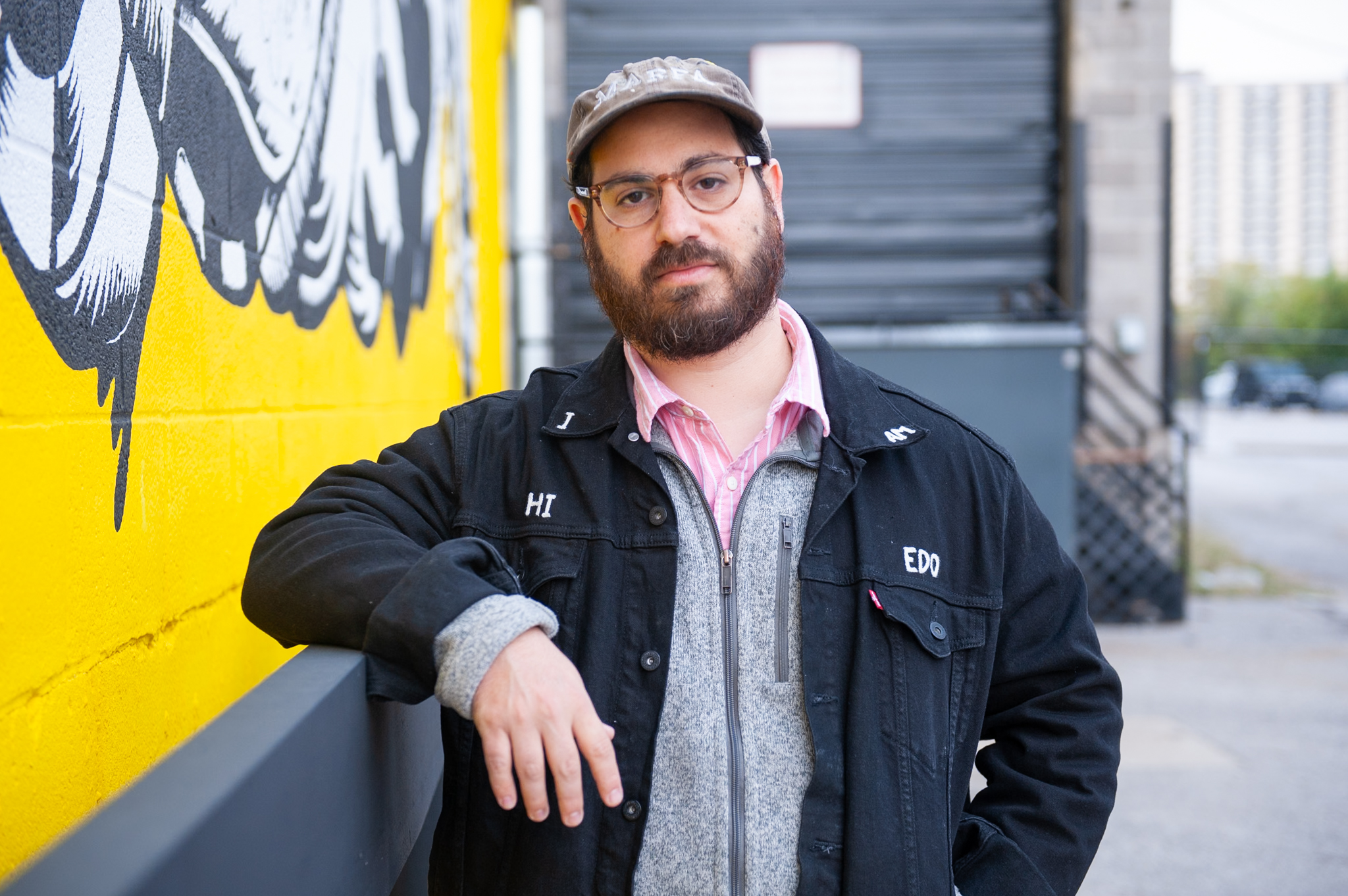 Photo credit: Lindy Drew / HOSTL
𝐷𝑜 𝑦𝑜𝑢 𝑔𝑒𝑡 𝑎 𝑙𝑜𝑡 𝑜𝑓 𝑖𝑛𝑠𝑝𝑖𝑟𝑎𝑡𝑖𝑜𝑛 𝑓𝑟𝑜𝑚 𝑦𝑜𝑢𝑟 𝑡𝑟𝑎𝑣𝑒𝑙𝑠?
“Yeah, I’m not like sitting around just sketching piazzas around the world, but, subconsciously, I think what I see when I get away seeps into my work. St. Louis is a good home base because it’s pretty cheap. But sometimes the only way to make St. Louis work long-term is to leave. There are growing opportunities here, even though they’re limited. So the affordability allows me to travel and pursue opportunities elsewhere. Artist residencies are nice, too, because you can spend time in one place and get to know it. I’ve done a bunch of residencies. I did one in Paris through Washington University for two months. I’ve done the Vermont Studio Center twice. And I did a three-month residency in Memphis, one in Missouri, and one in upstate New York. I prefer residences, instead of going on vacation for like a week and then the trip’s over. I’ve met people who were like, ‘I’m going to Europe, and I’ll be in Rome for a day!’ ‘That’s a lot to see in a day. But have fun.’ When possible, I prefer to really spend time in a place. I mean, I was in Buenos Aires for a month, and I was just getting a taste. I’m super lucky to get to do that sometimes.
Most recently, I took part in the Jentel Artist Residency on this cattle ranch in Wyoming next to the Bighorn Mountain range. Artists are invited to apply from all over the country, and when I was there, I met a photographer and musician from Brooklyn, an abstract painter from D.C., a writer and Smokejumper from Washington state, and a landscape painter from Montana. The residency was founded by one of the scions to the Doubleday Books fortune, which at its height was the largest book publisher in the world. When the owner passed away, he wanted his daughter to be a New York City heiress and marry another wealthy businessman. Instead, she moved to Wyoming and became an artist. She used her money to buy a ranch and a giant home, and she filled it with art from her travels around the world. Her brother used his inheritance to buy the New York Mets. Then, after she passed, “…she left her house and ranch to the University of Wyoming. So this residency gives artists a studio, a stipend, and a room to live in a big mansion.”
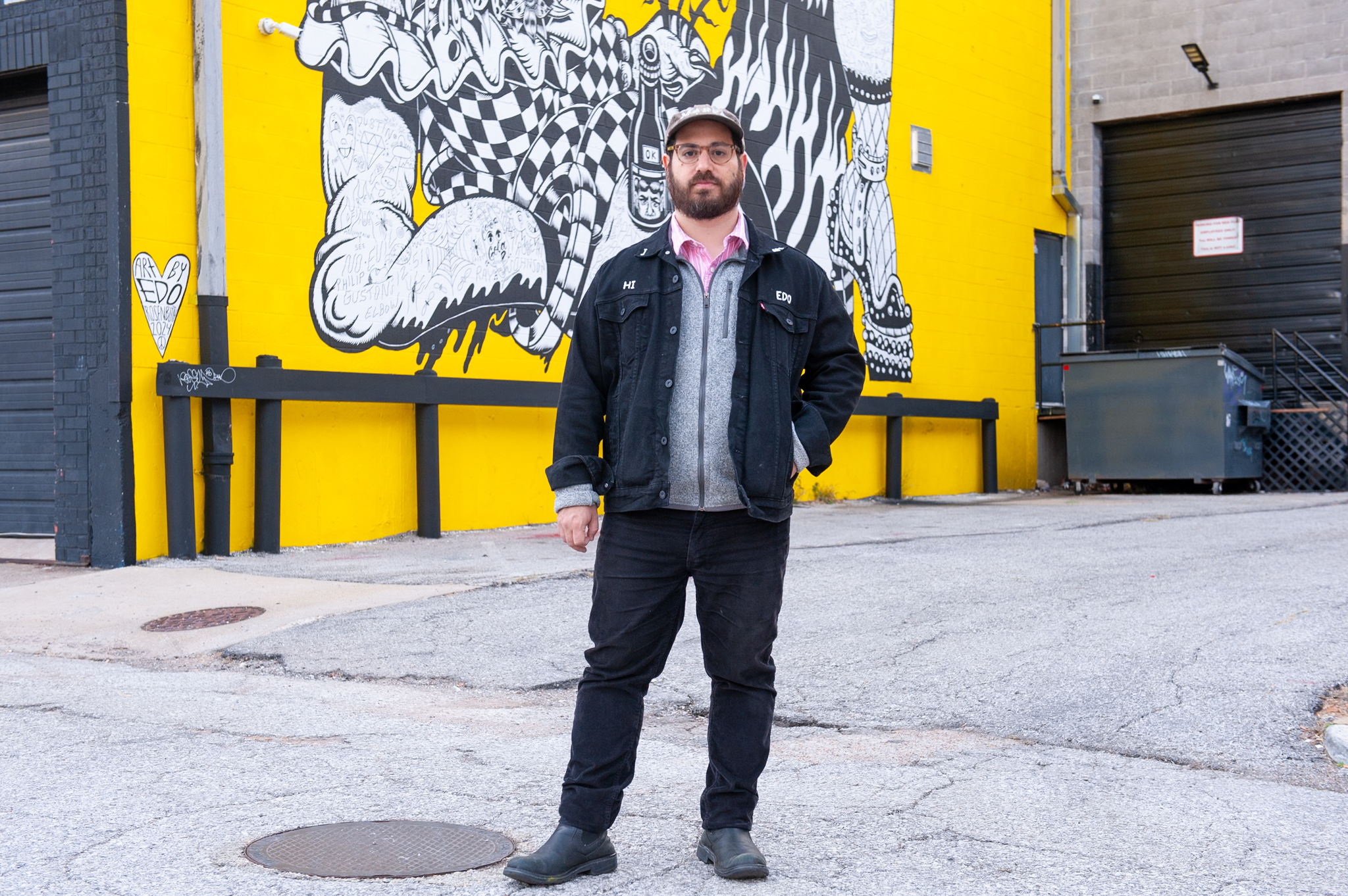 Photo credit: Lindy Drew / HOSTL
“Being an artist, I like to have one foot in one place and one in another. You know, it’s not easy being an artist here. St. Louis can often feel like a very small town, while affording the ability to actually have a space to work and access to some funding and resources. Again, these are available but limited. In addition to these resources, we also need connections or press and new opportunities outside of St. Louis to continue to grow.
So how do you get these things? You have to make all of these parts work. An artist friend of mine in New York has a tiny studio three times as expensive as mine, plus the cost of living is so much higher. If you can sell your paintings for lots of money, that’s good. But many can’t, and those budgets go quickly. So I’ve noticed a trend of artists living in smaller cities to keep their costs down.
When I first got started, it seemed like galleries and some curators used to assume that all the best artists lived in one big city, like New York, and that all other art was just provincial. But now, these major decision-makers realize the cost of living is so high on the coasts that many incredible artists are choosing to operate in smaller cities for a better quality of life while maintaining access to those higher-level opportunities. So a city like St. Louis has become more attractive to artists. And, therefore, we are slowly gaining more attention from the coasts.
When I moved back here after school, I’d meet an artist, and they’d be like, ‘Hi and bye! I’m moving to L.A. I’m moving to New York. I’m moving to Chicago.’ But in the many years since, I’ve noticed more artists staying. And I think it’s because of the cost of living. There’s now a nice little cadre of local full-time artists here. I mean, it’s typical to meet artists who teach or do something else, like graphic design, to make ends meet. But to be a full-time artist and find a way to make it work here is a really exciting thing. With social media, there’s also an ability to be from anywhere. Being in a specific place matters less when you have a big reach. That’s the attention part, right? So it becomes less essential to only be in one certain place.”
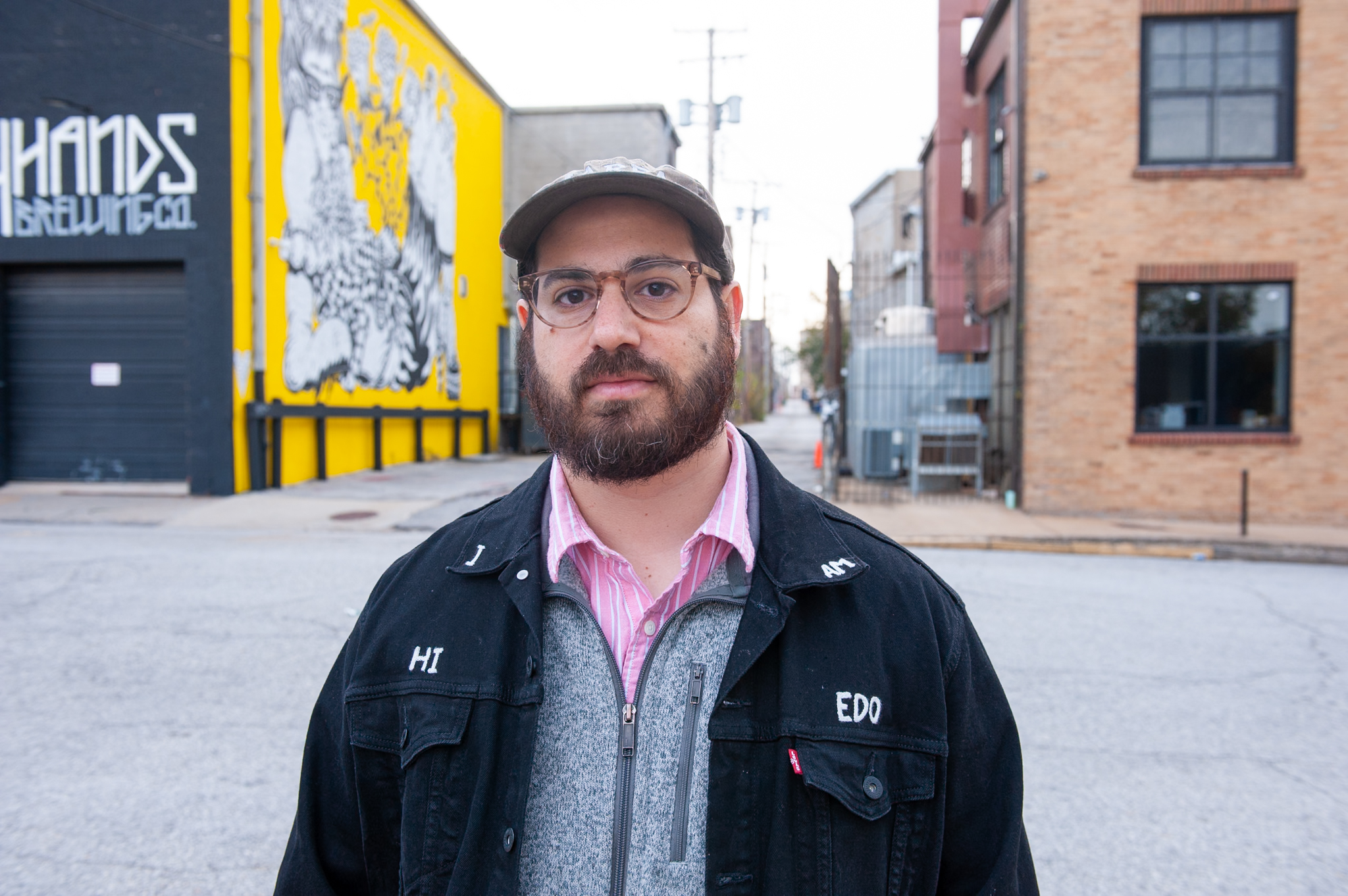 Photo credit: Lindy Drew / HOSTL
“A big part of being able to have an art practice is being able to have a studio. It’s going to be your highest cost. Most artists I know have a studio in their basement or extra bedroom. But I get pretty messy. And I need a lot of space. It’s essential. I also don’t want to be distracted by whatever I have at home. So my studio is at the City Museum, which has artist studios on the fourth floor. I moved in there in 2013, and I’ve been working out of there ever since. The museum makes so much of its money through ticket sales and events that they’re able to almost by accident subsidize the studios. So they’re not reliant on making a lot of money from us. People are coming from all over to visit that place, so going past the crowds is a small price to pay. And the museum’s a nice place. But I can enter at any time of day. Artist studios are often in the grimmest parts of town, which can be kind of depressing. So how special to be in a place that’s so vibrant.”
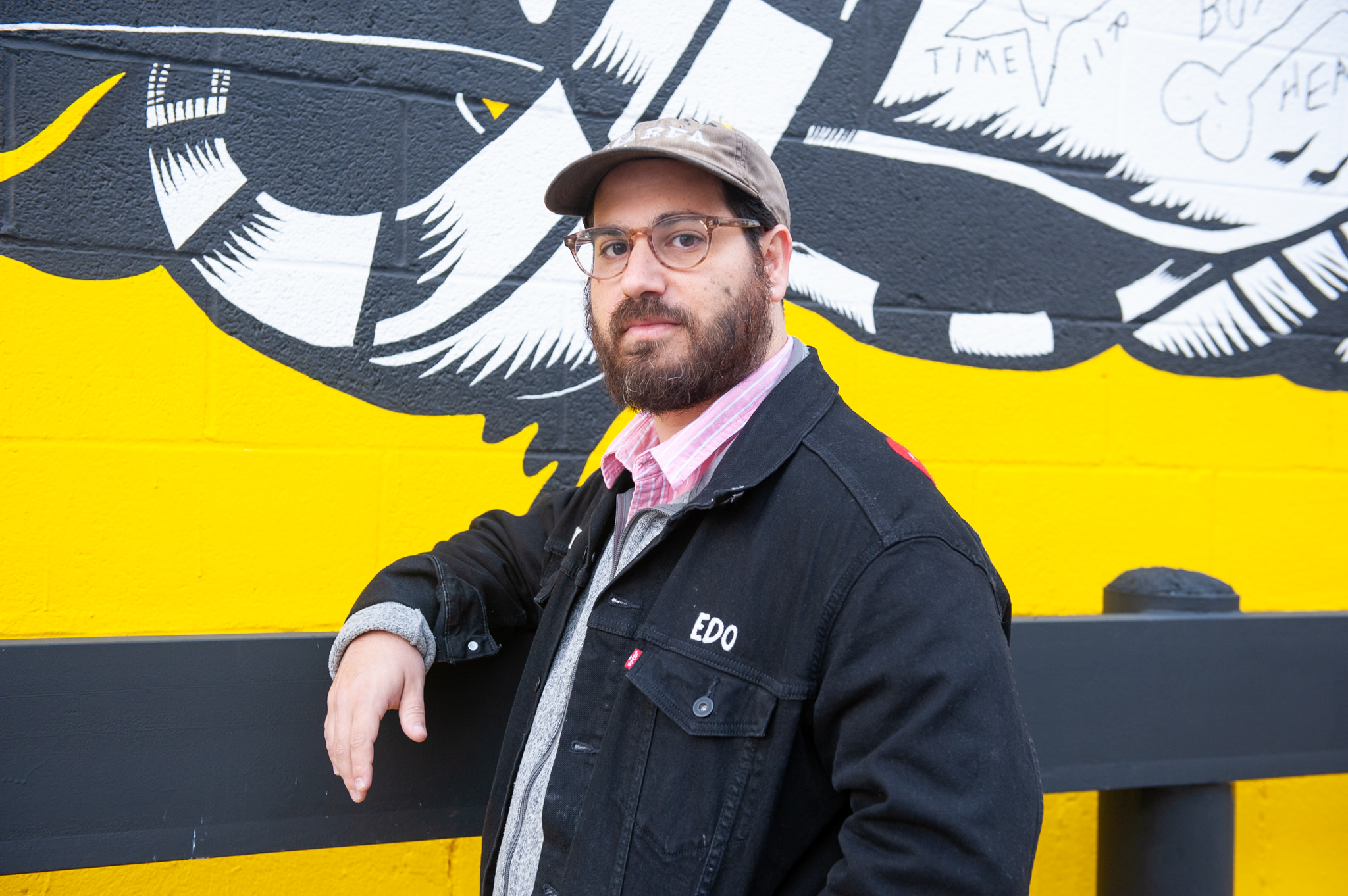 Photo credit: Lindy Drew / HOSTL
𝐻𝑜𝑤 𝑑𝑜 𝑦𝑜𝑢 𝑝𝑟𝑎𝑐𝑡𝑖𝑐𝑒 𝑦𝑜𝑢𝑟 𝑎𝑟𝑡 𝑤ℎ𝑒𝑛 𝑦𝑜𝑢 𝑡𝑟𝑎𝑣𝑒𝑙 𝑎𝑛𝑑 ℎ𝑎𝑣𝑒 𝑡𝑜 𝑠𝑒𝑡 𝑢𝑝 𝑠ℎ𝑜𝑝 𝑖𝑛 𝑑𝑖𝑓𝑓𝑒𝑟𝑒𝑛𝑡 𝑝𝑙𝑎𝑐𝑒𝑠?
“A big part of my practice is also working with bookmakers who make artist books for me. I never actually make the books; I just draw in them. I’ve made them in the past, but it’s very tedious, and I don’t have the patience for it. So I’ve been working on this one big book project for a long time. Book projects, in general, are great because I can easily fit them in a suitcase to take with me anywhere. This ongoing book project, I’ve taken all over the place. I don’t have to bring a bunch of canvases or oil paints either. Have you ever seen illuminated manuscripts? They are medieval-era books that were handmade before the printing press. A scribe would sit there, sometimes he was a monk, and they’d just hand-draw the most amazing miniature illustrations and write the whole Bible, line for line. My current book project has taken me years, but luckily, it’s not as long as the Bible. It’s a collaboration between me and my friend, Paul Legault, a poet based in New York who used to teach at WashU. And I’m illustrating his poetry. It’s a never-ending project. Maybe in the next 30 years, we’ll wrap it up. So whenever I have any chunk of time between projects, I’ll do a little bit of work on that. That’s why it’s become my go-to project when I’m at an artist residency.”
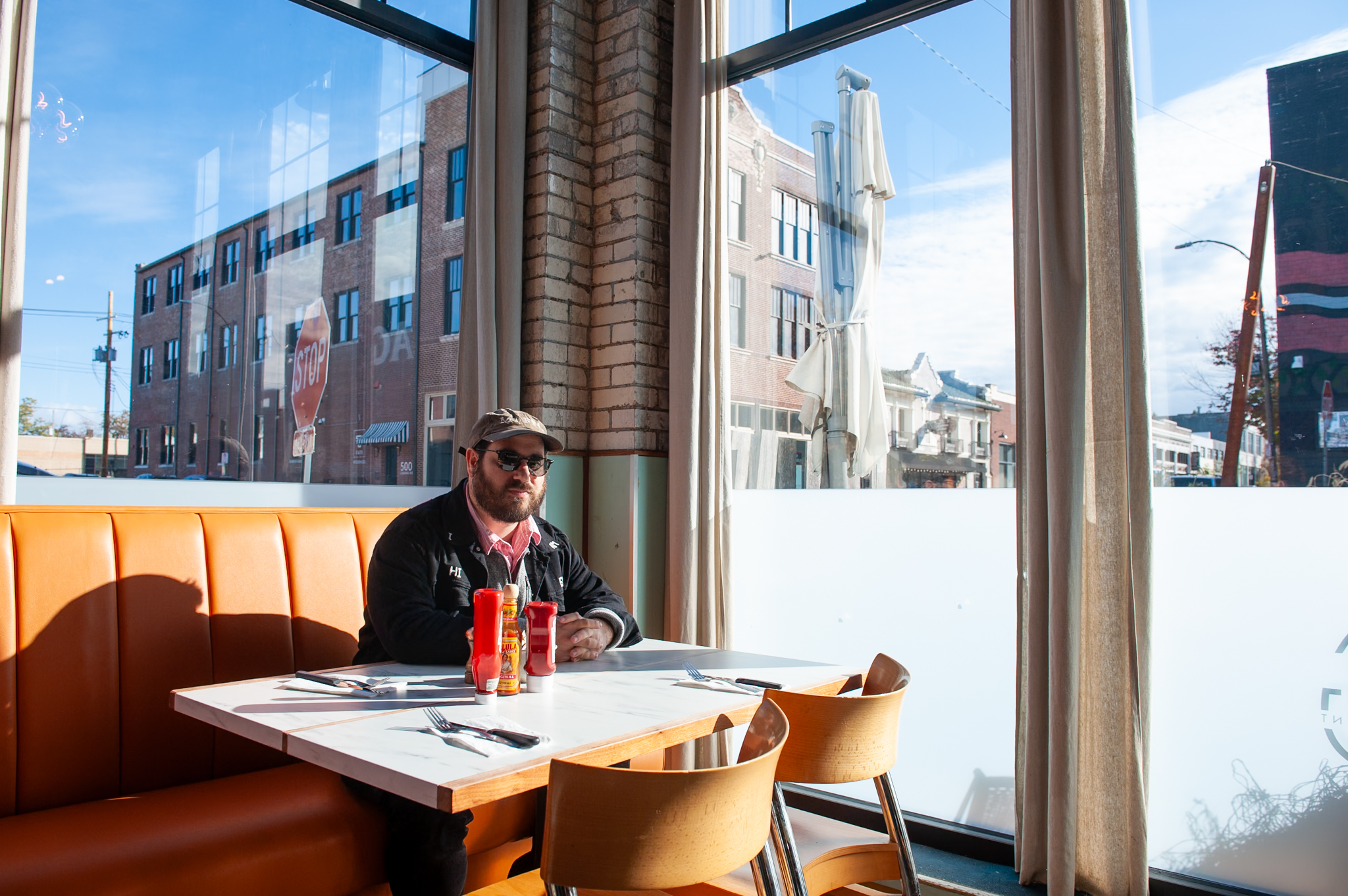 Photo credit: Lindy Drew / HOSTL
𝐷𝑜 𝑦𝑜𝑢 𝑐𝑜𝑛𝑠𝑡𝑎𝑛𝑡𝑙𝑦 ℎ𝑎𝑣𝑒 𝑛𝑒𝑤 𝑖𝑑𝑒𝑎𝑠 𝑟𝑢𝑛𝑛𝑖𝑛𝑔 𝑡ℎ𝑟𝑜𝑢𝑔ℎ 𝑦𝑜𝑢𝑟 𝑚𝑖𝑛𝑑?
“I used to work in a very intuitive way, doodling and drawing whatever came to mind. But over the years, I had to be more intentional about the things I make. Clients want to see sketches, so I have to plan out the composition. For most of my career, my work’s been hand-drawn. I have flat files in my studio filled with over 10 years’ worth of sketches and doodles and preparatory sketches for projects, artwork, prints, books, and all kinds of other stuff. It was only in 2024 that I finally broke down and bought an iPad. Now I’m sketching everything on a screen. What I’ve been doing lately is trying to figure that thing out.
I used to go to coffee shops like this one to just draw people in a little sketchbook I’d keep in my pocket. The whole reason I moved back to St. Louis was that my dad died right before I graduated. I came to help my mom and then ended up getting a job teaching. But before that, I was working three jobs. I had no time or studio to make my art. But I still wanted to keep my practice going. So I’d always have a pocket-sized sketchbook on me. And anytime I had five minutes or five hours, I’d go to coffee shops and draw. After two years, I had a couple of hundred drawings. Those became the basis for my first solo show and the first book I had published. That got the whole ball rolling. And that’s why it’s very important to me to keep making stuff. You take a break, and you never pick it up again. If you’re not constantly making art, your desire to make art atrophies. The art practice kind of dies and withers away.”
I’m always drawing and painting something. Right now, I’m working on a mural in The Loop at the Lewis Collaborative, a building that used to be a high school that Washington University developed to have office spaces and apartments for students. But if I’m not working on a mural on site, I’m either at my drafting desk in my studio or at a residency, sketching something for a few projects at once.”
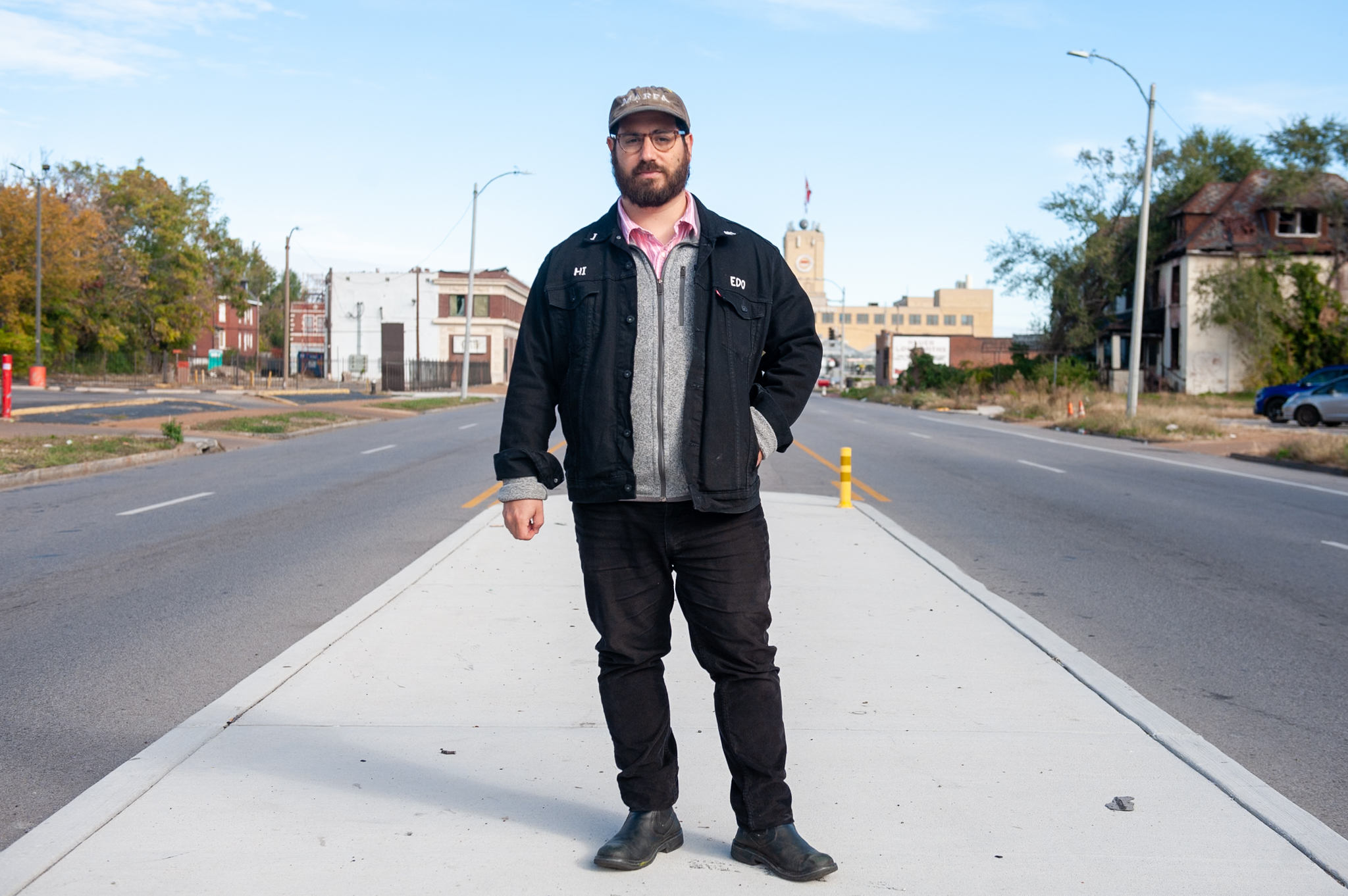
Photo credit: Lindy Drew / HOSTL
𝑊ℎ𝑎𝑡 𝑗𝑜𝑏𝑠 𝑤𝑒𝑟𝑒 𝑦𝑜𝑢 𝑗𝑢𝑔𝑔𝑙𝑖𝑛𝑔?
“I was interning at a gallery, getting paid zero dollars. And I was a teaching assistant. But the worst job was doing art restoration of terrible art for a local restoration business. The last project was to restore these ceramic nativity scenes for churches. Kind of bizarre. But I needed money. It was art. Kind of. So I’d work until three in the morning. I had those other jobs, too, whereas this one was taking up all my time and energy. So I realized it wasn’t worth it. Luckily, I got a full-time teaching job, so I could quit the other two. And it was so nice to go there that last day, show up with all the nativity scene figures, with the baby Jesus and the cow and the manger, and give it back to that woman. She looked at it, looked at me, and said, ‘You haven’t done anything. It’s not finished.’ I was like, ‘Yeah, I quit.’”
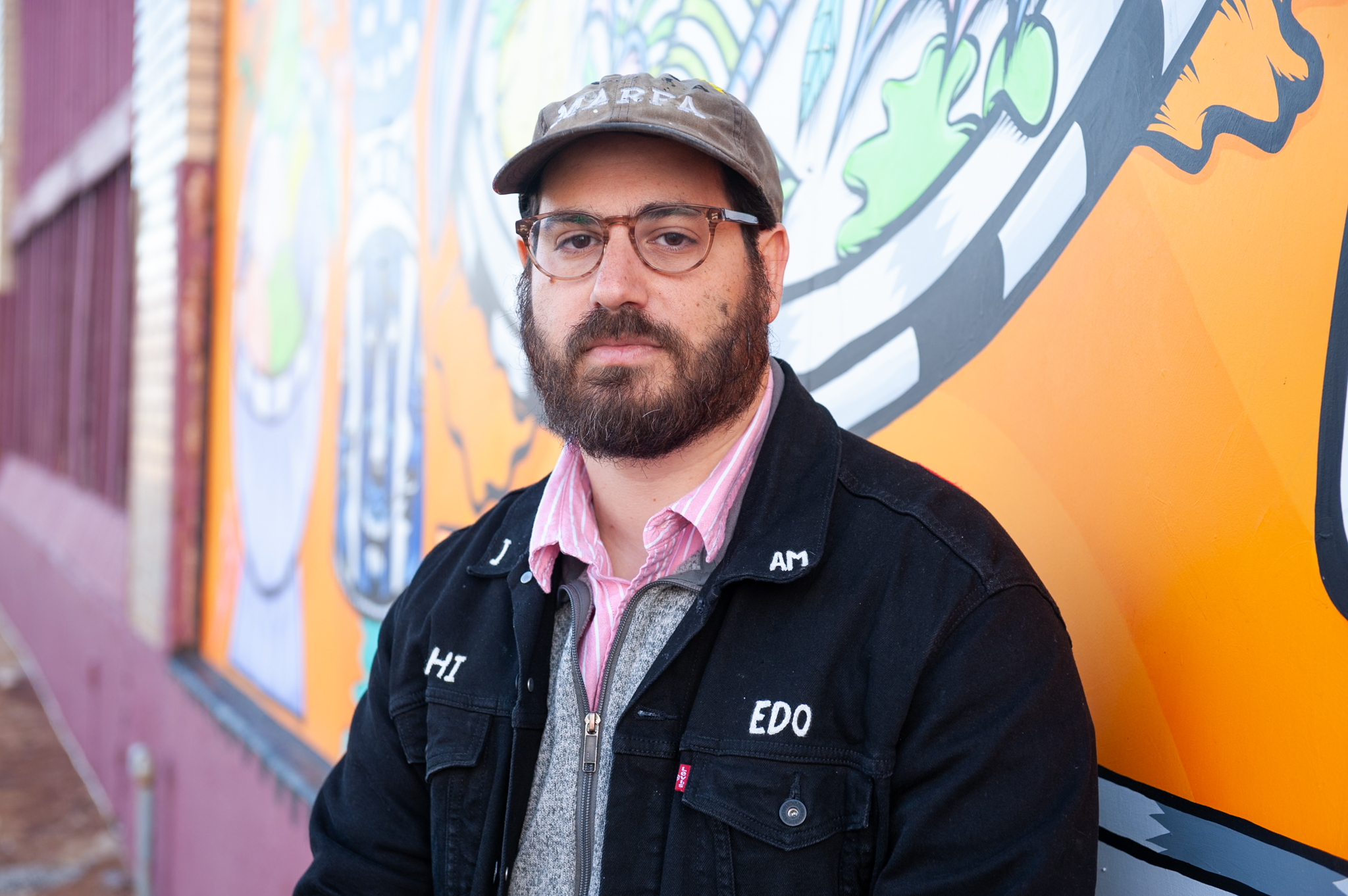
Photo credit: Lindy Drew / HOSTL
𝐶𝑎𝑛 𝑦𝑜𝑢 𝑡𝑒𝑙𝑙 𝑚𝑒 𝑎𝑏𝑜𝑢𝑡 𝑦𝑜𝑢𝑟 𝑑𝑎𝑑 𝑎𝑛𝑑 𝑦𝑜𝑢𝑟 𝑟𝑒𝑙𝑎𝑡𝑖𝑜𝑛𝑠ℎ𝑖𝑝 𝑤𝑖𝑡ℎ ℎ𝑖𝑚?
“Growing up, my family used to live in this ranch-style house in Scottsdale, Arizona. My memory of the place was that it had a pretty big studio space, and as a little kid, I’d watch my dad paint. All the paintings in our house were his — ones he either liked too much or maybe couldn’t sell. So I thought it was normal that everyone’s house was filled with their parents’ art. We ended up coming to St. Louis because my dad got a job here doing shoe design at a company called Trimfoot, which no longer exists. At the time, they were one of the last manufacturing companies for shoes in the region. And it’s ironic because now my art studio is in a building where they used to make shoes, too.
Both my parents went to art school, and they lived together in New York in the ’70s at the height of so many amazing things happening there. When my mom got mugged one too many times, they decided to leave. But I remember my dad told me this story where he sold one of his paintings to a restaurant. The restaurant had a Willem de Kooning on the wall, and they moved it to put his painting in its place. He was very proud of that. He quit making art when we moved to St. Louis. He got too busy at work designing mostly baby shoes. And there were four of us kids, so it was a lot of mouths to feed. So he put down his paint, and I literally picked it up. As a kid, I started painting on canvases and stuff. I wasn’t good academically in school, but art I was good at.
Dad ended up passing away from a stroke. Before that, he tried to help me out as much as he could. One of his old art school friends was a sculptor in Brooklyn, and my dad got me a job working with him, even though I had no experience making sculptures. I remember saying, ‘I want to move to New York like all my friends to be an artist.’ He seemed concerned, like, ‘How are we going to pay for that? How are you going to make a living?’ But he also understood that was the dream. So he lined up that job for me. He helped me out. He got it. He could be very encouraging. Unfortunately, he died not long after that, and that dream kinda died with him.”
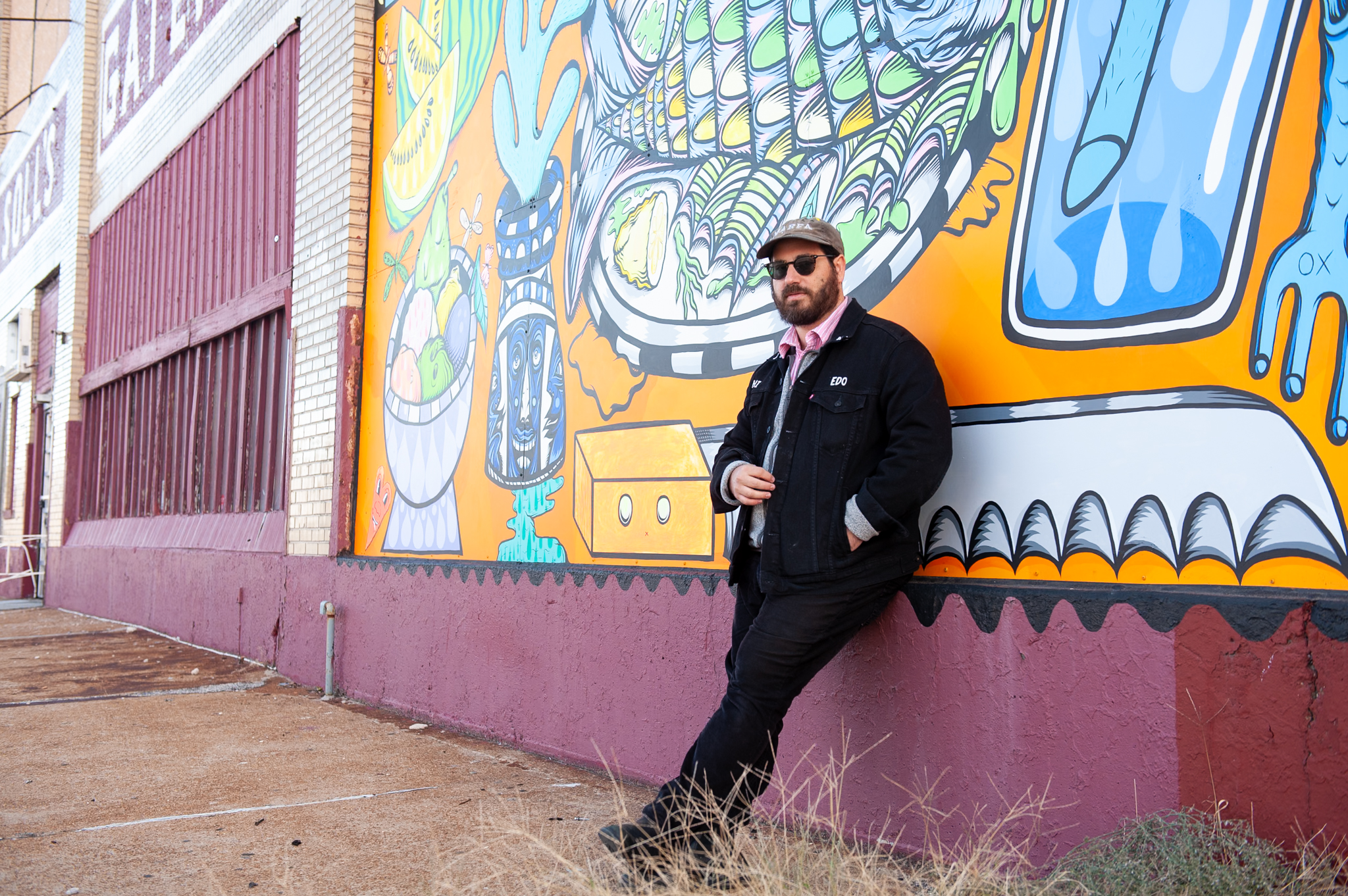 Photo credit: Lindy Drew / HOSTL
𝑊ℎ𝑎𝑡 𝑤𝑜𝑢𝑙𝑑 𝑏𝑒 𝑦𝑜𝑢𝑟 𝑑𝑟𝑒𝑎𝑚 𝑐𝑜𝑚𝑚𝑖𝑠𝑠𝑖𝑜𝑛, 𝑜𝑟 ℎ𝑎𝑣𝑒 𝑦𝑜𝑢 ℎ𝑎𝑑 𝑖𝑡 𝑎𝑙𝑟𝑒𝑎𝑑𝑦?
“My dream commission would be painting a mural-sized work in a museum. Did you see the 𝐵𝑒𝑐𝑜𝑚𝑖𝑛𝑔 𝑡ℎ𝑒 𝑆𝑒𝑎 exhibit by German artist Anselm Kiefer at the Saint Louis Art Museum? He makes massive building-sized paintings. Someone I know who works there said they brought in a special crew to install the work from Paris, where the artist lives, and it took weeks. Some of the paintings were even still wet. So something like that would be cool. I’ve done tiny things you can hold in your hand, books, and also bigger stuff. Someday, I’d love to publish the book project I’ve been making on and off for years now. But I’d really love to do a large commission. And it doesn’t have to be in a museum. It could be on the side of another building.”
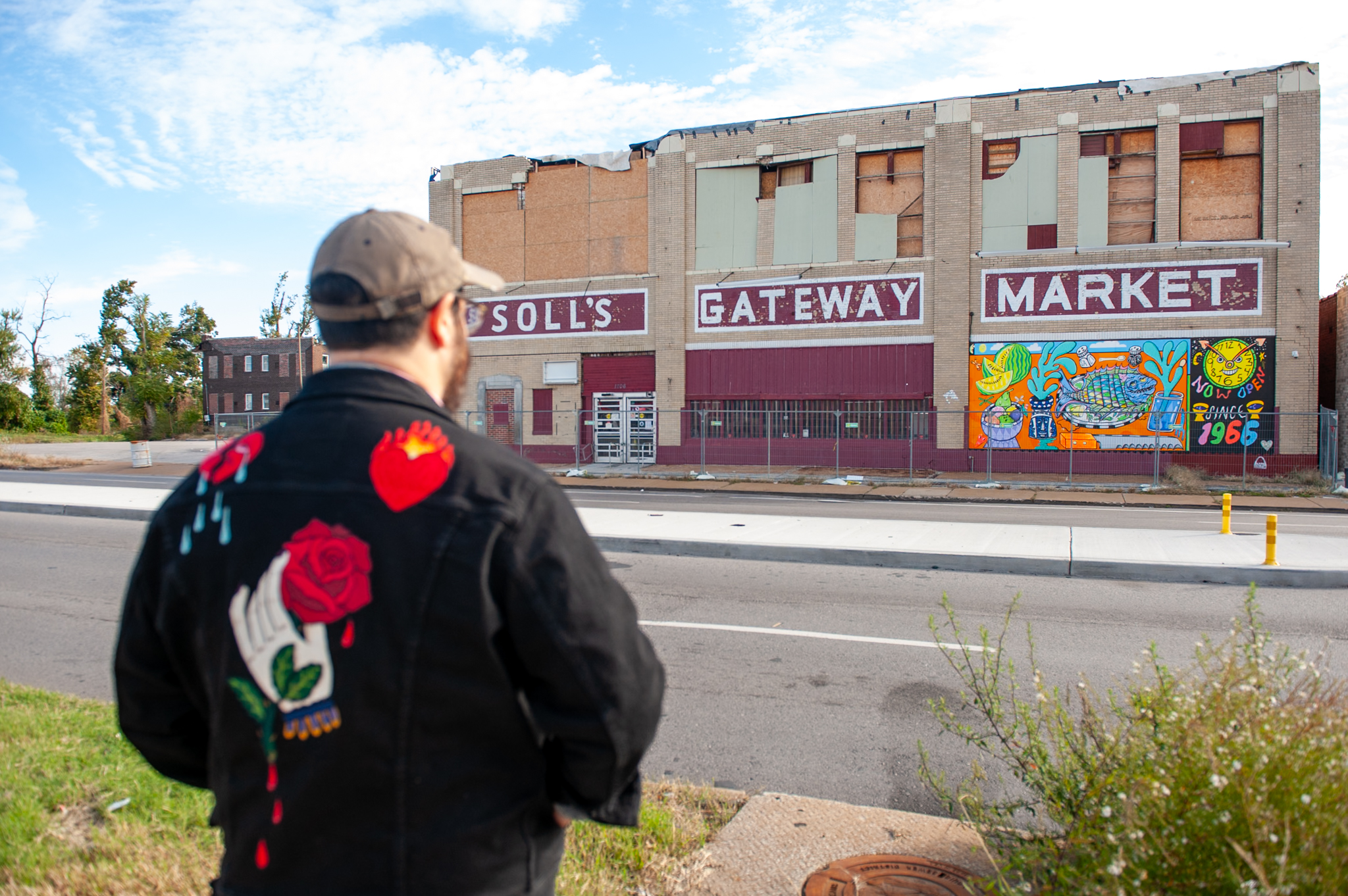
Photo credit: Lindy Drew / HOSTL
“After COVID, the Biden administration passed a bunch of relief bills, and St. Louis got recovery money through ARPA, the American Rescue Plan Act. Well, the Regional Arts Commission (RAC) convinced the mayor and the city council to allocate $1 million to do murals all around town. The idea was to spread the wealth and have two murals in every ward. So RAC had an open call for local artists who had to have lived in St. Louis since March 2020. A lot of muralists couldn’t apply because they lived outside the boundary of the City of St. Louis. Good for me, I’ve been living here a long time. So, 28 artists were selected, two for each of the 14 wards. And I was selected for the 10th Ward, which I reside in, and covers a big section from Forest Park to Central West End and a bit north of that.
My alderwomen helped with the artist selection process and tasked me with finding a site. She wanted a business or property owned by someone who wouldn’t otherwise have the means to afford a mural commission. I was searching the whole ward, and it took a long time to find just the right client. As RAC and I looked for buildings, we’d find one, try to contact the owner, but couldn’t track them down. Sometimes there was a ghost landlord situation. Or, the owners who would get back to us would be like, ‘I’d love a mural! But I can’t because my building is so old that I get historic tax credits to maintain the facade.’ During my search, I learned all kinds of weird rules like that.”
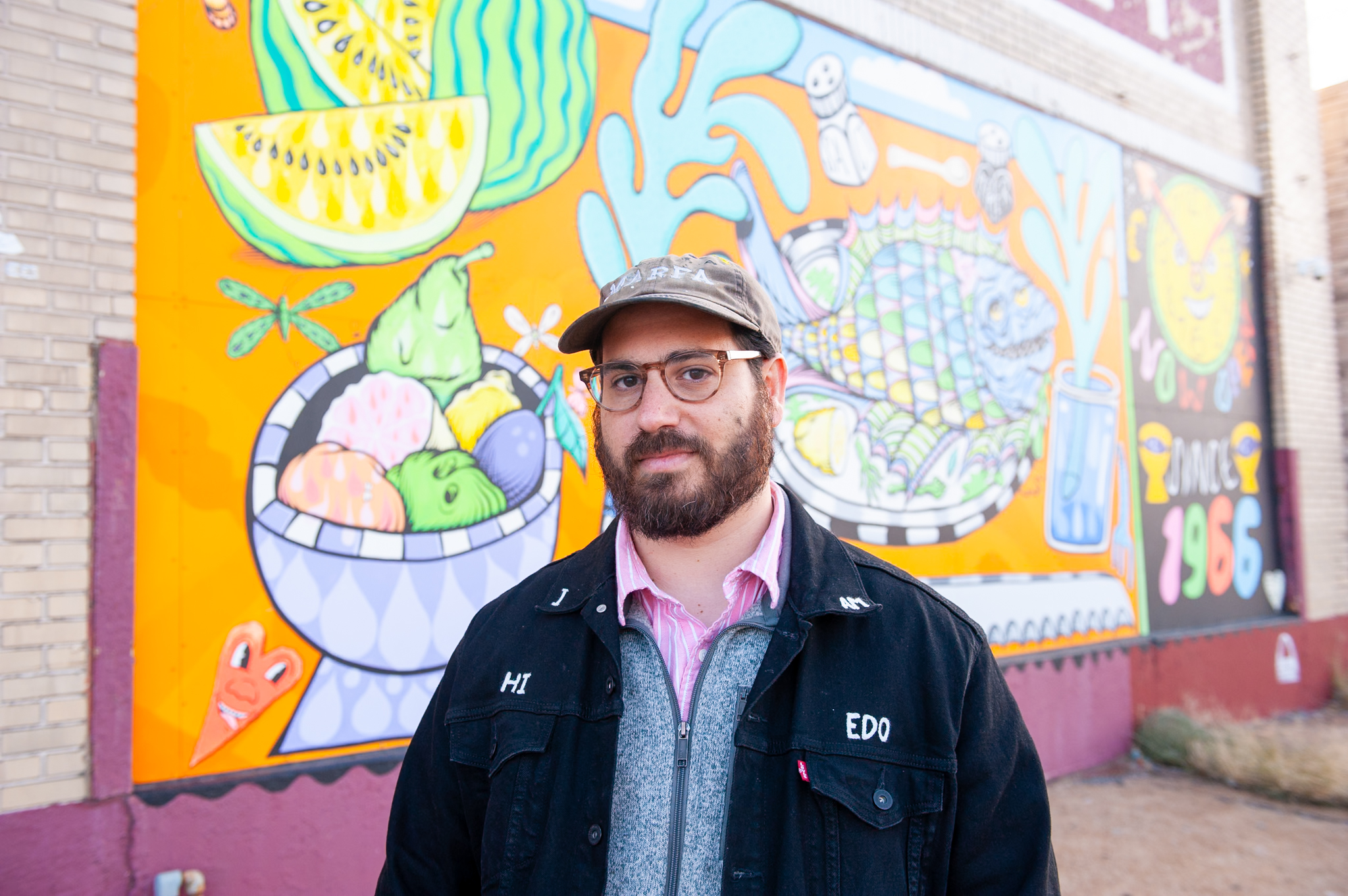 Photo credit: Lindy Drew / HOSTL
“We finally found a building owner who responded to our emails, excited about putting up a mural. And it turned out to be the owner of Soll’s Gateway Market, a grocery store on Kingshighway close to Fountain Park. You’ve probably driven by it 100 million times. So I drove over to what I thought was just a big boarded-up building, walked inside, and there was a whole f***ing grocery store packed with people shopping.
I learned from the owner that Soll’s Market had been around since 1966 and was a speciality grocery store serving people from across St. Louis who loved their selection of cut meat and other products. It also served as a meeting point for the Black community, and was a marker where families had been coming for generations. Before that, the building itself was a bread factory built in the 20s. And it’s been occupied consistently for 100 years. The current owner bought the building a few years ago. He’s from Pakistan, moved to America, and lived in the Portland area, where he owned convenience stores. He came to St. Louis because his daughter moved here. On May 16, 2025, the building got destroyed in the tornado.
At first, I was a little worried about the optics of the project. Like, ‘A white Jewish guy making a mural on a grocery store in the middle of a Black neighborhood in St. Louis? I’m not so sure I’m the right person.’ It’s important to be sensitive to these things, generally, but especially if you’re from St. Louis. Then I realized the owner is a Muslim immigrant from Pakistan, whose number one product is pork. I’m Jewish, and the store’s primary clientele are Black folks. All those contradictions and convergences made it feel like it was somehow okay. With the sign-off and enthusiasm from all parties, I decided that if I just made something good that we could all feel proud of, it would hopefully transcend everything else. So we agreed to do it.
The mural sketch went through many iterations. I met and interviewed all the employees, my friend photographed them, and I was really moved that so many had been working there for over 20 years. For others, it was their first job after going through difficult circumstances, like exiting the correctional system or recovering from addiction. It was hard for some to get work, and this grocery store offered opportunity without judgment. And a lot of interesting stories.”
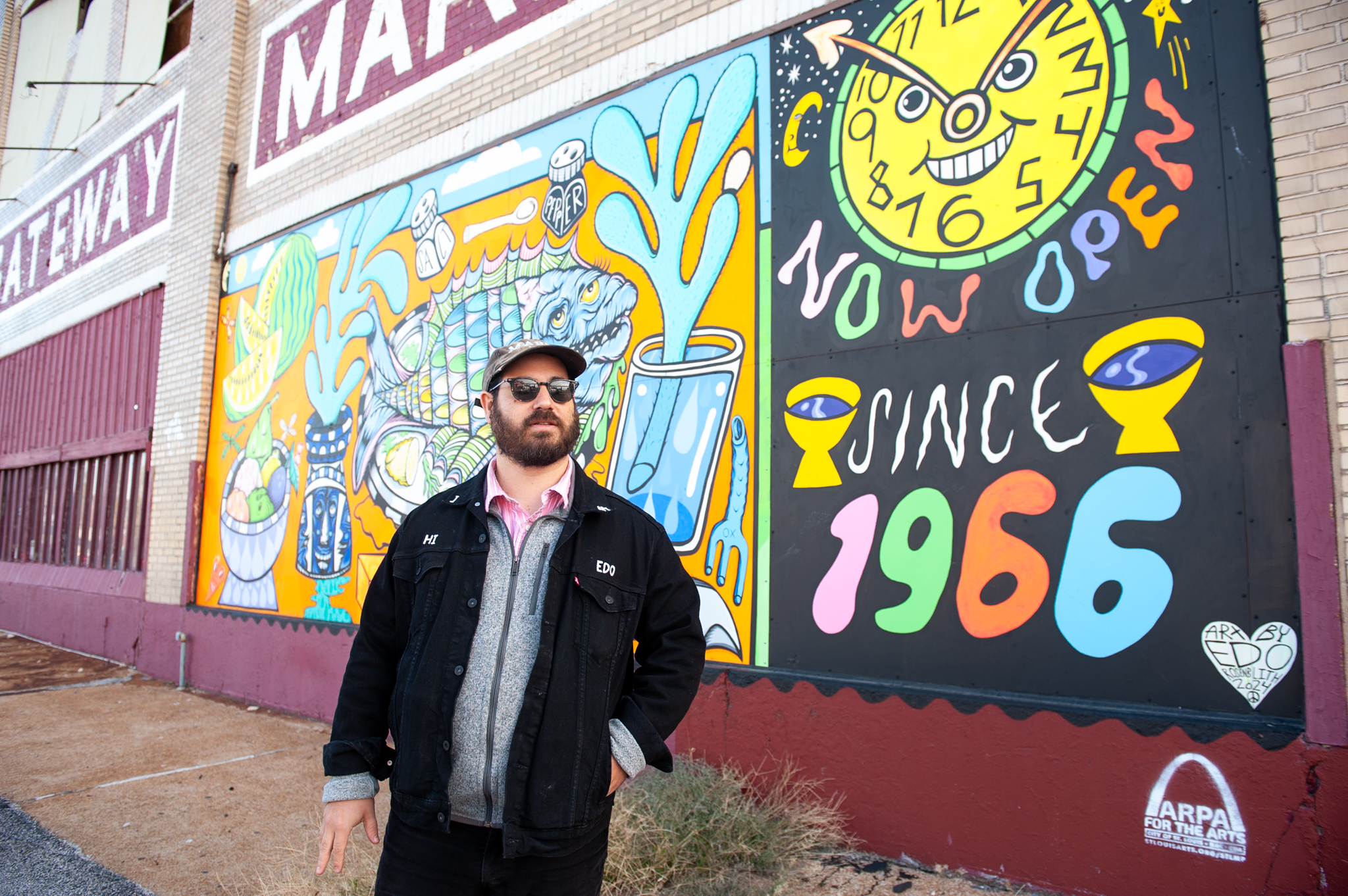 Photo credit: Lindy Drew / HOSTL
“My first idea was to make a mural that celebrated the employees. If you remember, during COVID, grocery store employees were considered essential workers. But when I showed the sketch to the owner, he didn’t like it. So I threw that all out the window. The issue was, if I did a mural of specific employees, and someone got fired or left, then what? So I decided to do a big still life of the speciality food, because that’s the essence of the store and what it provides for the community. In the end, the owner basically wanted a mural that acted as colorful advertising for his store. Okay, I could do that. However, it was tricky because I didn’t want it to be advertising. I wanted to make sure he was happy, but it still had to be art.
We started going back and forth on the design. Time was passing, and we had a hard deadline with RAC. So I ended up having to finish it in just two weeks. I told him, ‘I need to start making this now, or it’s not going to happen.’ And that’s what happens sometimes. An actual painting needs to start at some point, or it’s not gonna get finished. So I painted it. I had all these powder-coated aluminum panels in my studio that I painted over from an old project. They were made of the same material as a stop sign. And, put together, each panel created a mural that was 10 by 23 feet. So this project took up my whole studio. Then I had to hire a crew to come move it a few miles from the City Museum and install it on the side of Soll’s.
We ripped the old corrugated metal paneling off the market to realize we were installing a mural into an old window that had been covered up for decades. Many historic industrial buildings in St. Louis have these giant windows because they needed a lot of light to illuminate the factory floors. So these big, beautiful windows got boarded up over the years because of concerns about crime or other things. It was wild that day to literally peel back all these layers of history.”
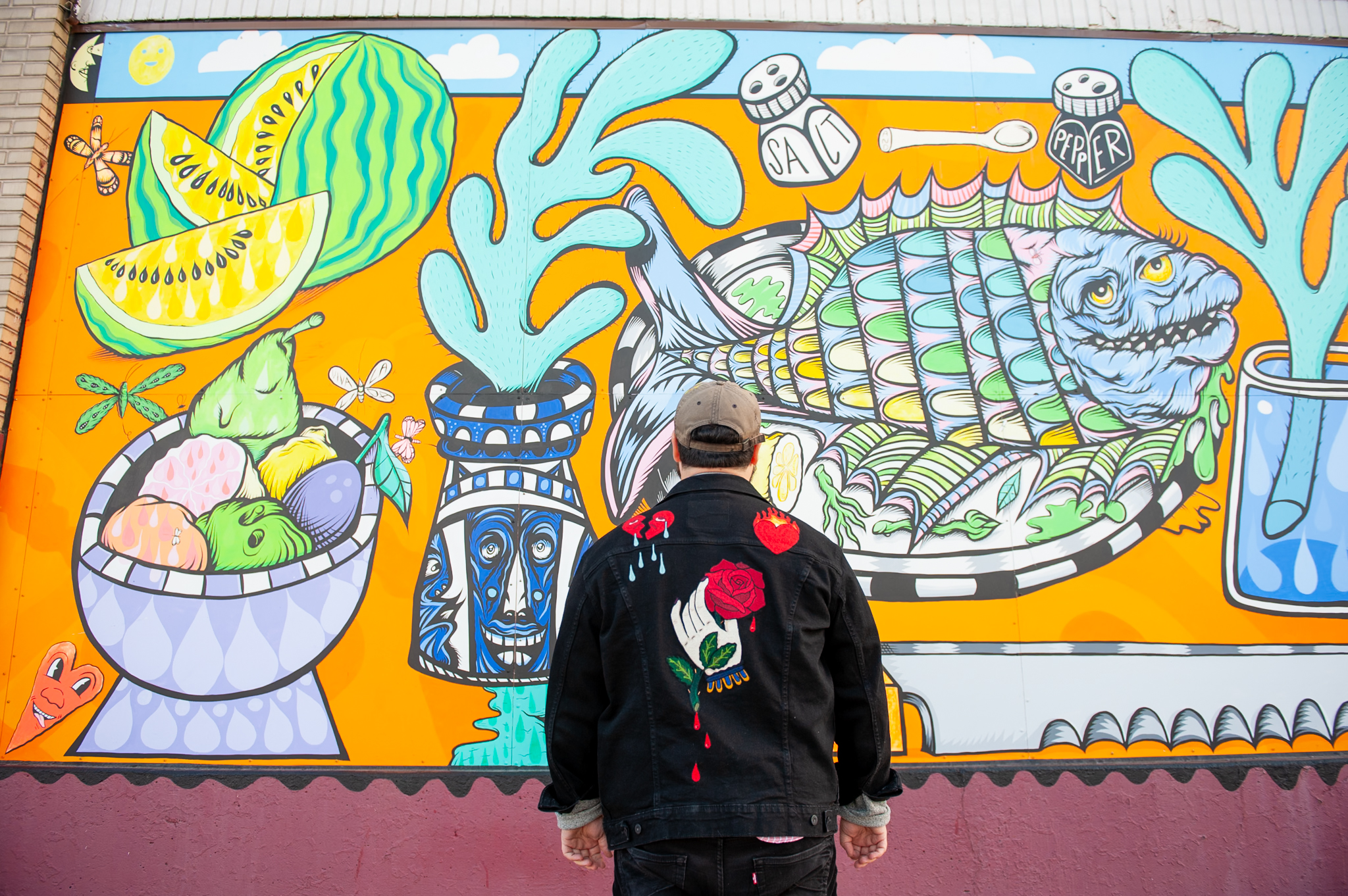 Photo credit: Lindy Drew / HOSTL
“It took my team and me a couple of days to install the mural, then I spent about a week or two doing a bunch of touch-ups. While I was painting, people would come by and look at me working. Well, I’ve probably done over 30 commissioned projects all around the city and county over the years. But this one, by far, was the most positive feedback I got from any project.
The Fountain Park neighborhood was so appreciative of using art to celebrate a central business in the community. It was such a nice thing. Before the tornado, Soll’s was incorporated in the the daily practice of shopping, and to have that routine made beautiful was something special. Folks would come up and say to me, ‘‘Oh, I have a barbecue shop.’ Or, ‘I have a church.’ Or, ‘I have a place. Can you do something on the side of my building?’ I was so touched. Usually, when I make stuff, I’m kinda wondering, ‘Is this any good?’ While making my murals, I don’t always get a lot of feedback. And this was real feedback from the people who lived there, which was really nice. Then I started making relationships with an entirely new community in North St. Louis. Overall, their feedback helped make me feel happy with the project.”
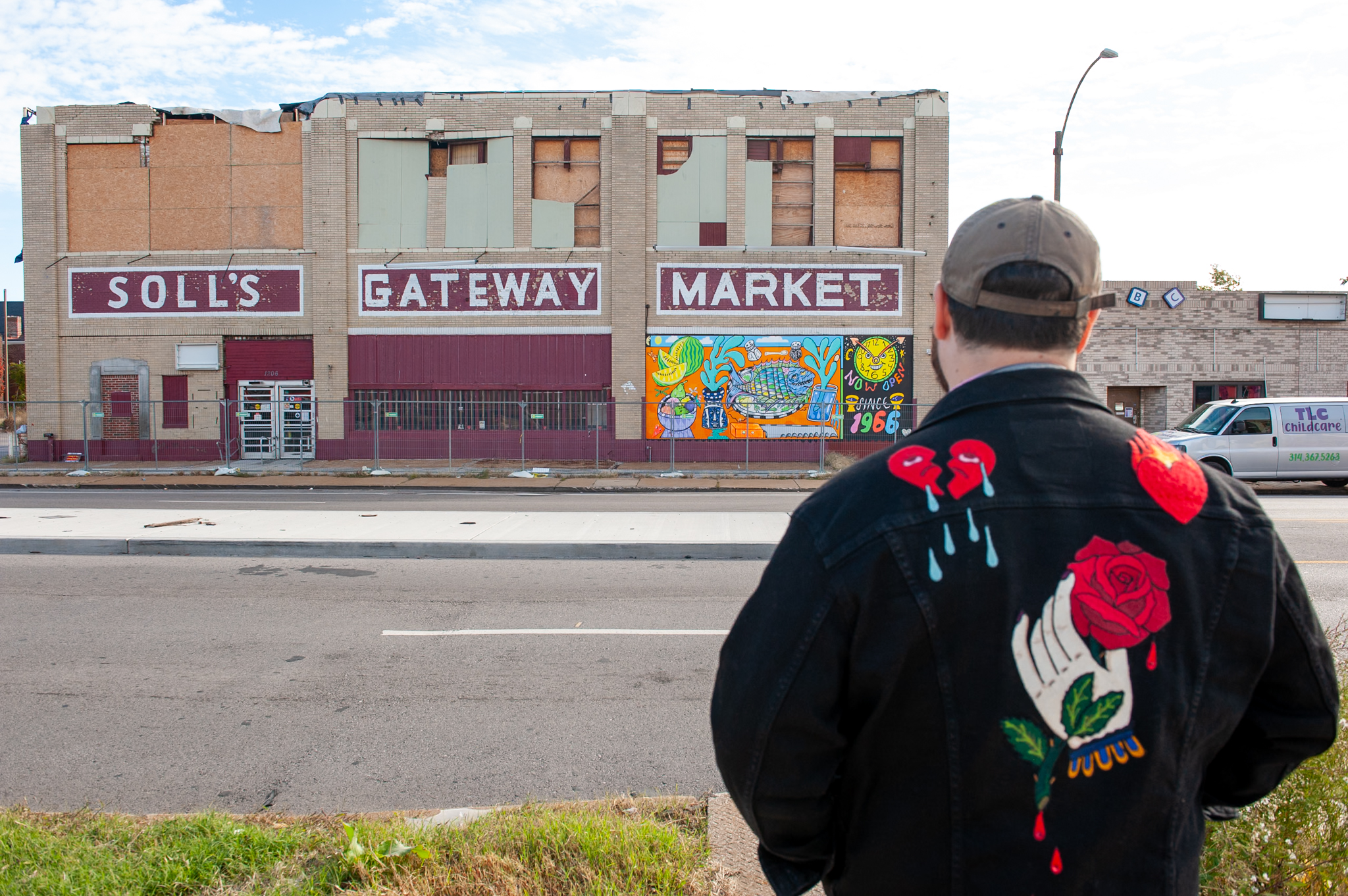 Photo credit: Lindy Drew / HOSTL
“Unfortunately, fast forward to when the tornado came and ripped off the roof, destroying the building. Because of the historic disinvestment, so many buildings were already on their last legs. There was little accountability from the ghost landlords, and city resources weren’t provided to maintain many of the properties. So the tornado just finished the job. That was another reason why I decided to make the mural on separate aluminum panels. Because if I had done it on the wall itself, the paint on the building was already chipping off. So it ended up being a good decision. Otherwise, the mural would have been destroyed like the rest of the building.
The owner called me up a few days after the tornado, like, ‘Hey, my building’s destroyed, but the mural is okay.’ For some reason, the tornado didn’t touch the mural. I mean, we installed it very well. We put it up there so it would never come off. And it didn’t. It’s secure. So the roof came off the building, and the windows were blown out, but the mural — fine. He told me he’d like to try to reopen and put the mural somewhere else. But, you know, easier said than done. So that’s where things are now.
For a long time, I didn’t have the heart to go see it. Then I finally did, and I was shocked. I assumed there would be a bunch of debris that hit it or something. But it’s totally fine. So now I figure the mural should be taken off the building because the place could collapse. But I’m not totally sure. Maybe if that doesn’t work, we can try to move the mural to another spot. We’ll see. It would be amazing if it could be saved and find a good home.”
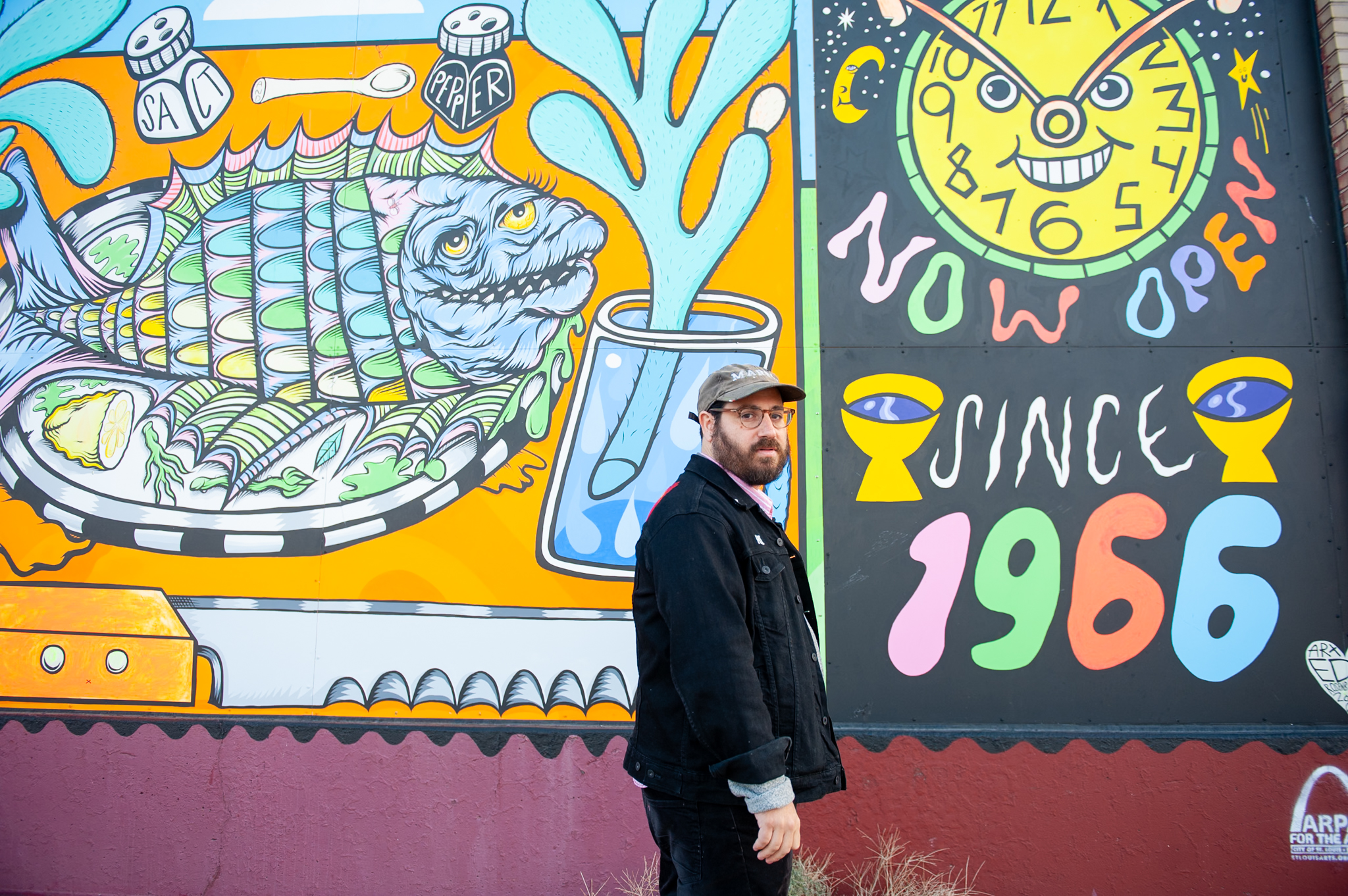 Photo credit: Lindy Drew / HOSTL
𝐻𝑜𝑤 𝑑𝑖𝑑 𝑦𝑜𝑢 𝑠𝑡𝑎𝑟𝑡 𝑡𝑜 𝑓𝑎𝑙𝑙 𝑖𝑛𝑡𝑜 𝑦𝑜𝑢𝑟 𝑛𝑖𝑐ℎ𝑒? 𝐵𝑒𝑐𝑎𝑢𝑠𝑒 𝑦𝑜𝑢𝑟 𝑎𝑟𝑡 𝑑𝑒𝑓𝑖𝑛𝑖𝑡𝑒𝑙𝑦 ℎ𝑎𝑠 𝑎 𝑣𝑒𝑟𝑦 𝑑𝑖𝑠𝑡𝑖𝑛𝑐𝑡 𝑙𝑜𝑜𝑘.
“Just by doing it, by repetition for years. I’ve been doing it long enough that by the act of doing it, you develop ways of working. And that informs what you make: ‘This works, this doesn’t work.’ So, subconsciously, I kind of work it all in. I don’t feel like I’ve developed my own distinctive style. But people tell me that I have. I guess I’ll trust others’ judgment.”
Edo Rosenblith | edorosenblith.com
About Humans of St. Louis
Humans of St. Louis (HOSTL) is a 501(c)(3) non-profit organization with the mission of sharing photographic portraits and first-person stories to highlight local needs, issues, and experiences from people in the St. Louis region. HOSTL gives followers an intimate look into the lives and struggles of the people of St. Louis, one photo and story at a time, and is the second most popular “Humans of” site in the U.S. after Humans of New York.

Follow Us On Social Media