
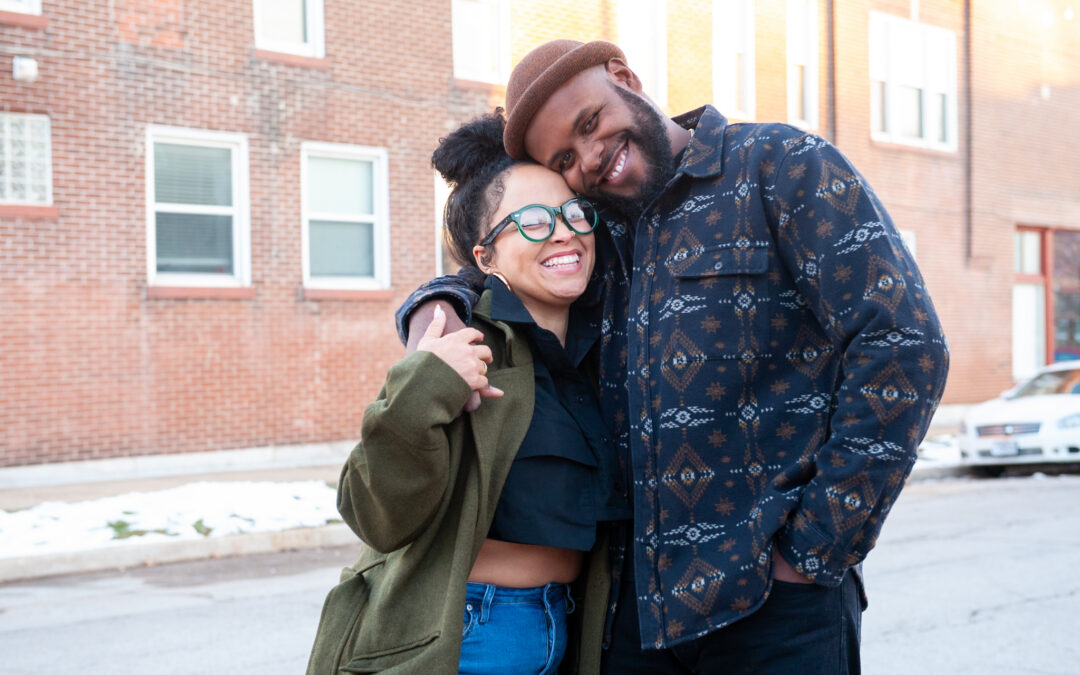
RAC is excited to partner with Humans of St. Louis to highlight stories from some of the talented creatives and artists who call St. Louis home. All stories and photography in the RAC + Humans of St. Louis series were created by and are credited to Lindy Drew, co-founder, lead storyteller, and book co-author of Humans of St. Louis.
Phillip Hamer & Valeria Rodriguez
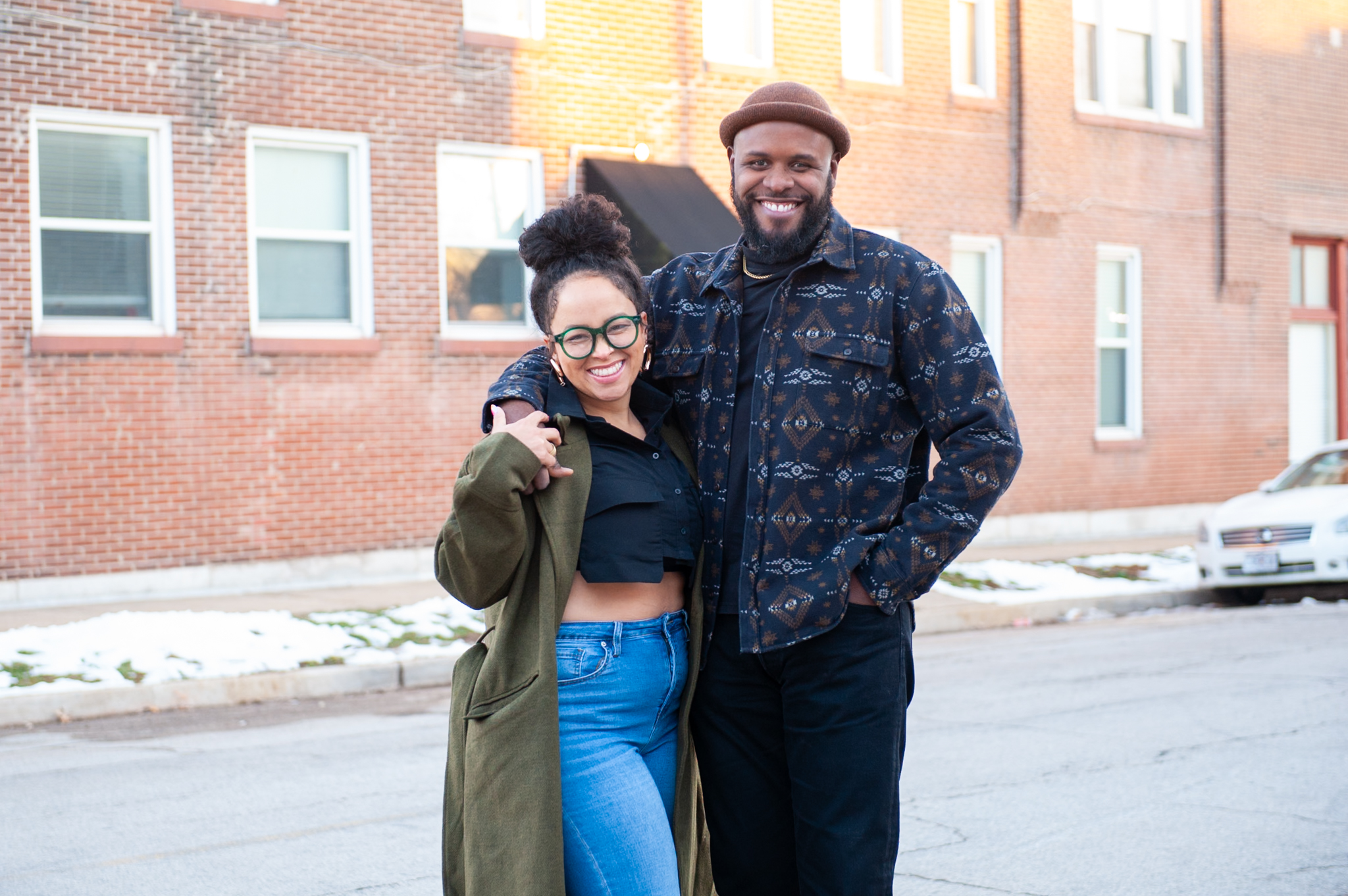 Photo credit: Lindy Drew / Humans of St. Louis
Phillip: “I’ve longed to have conversations with my grandfather since he passed away when I was 13. So I figured the next best thing was to have conversations with his children. I started doing audio interviews with my aunts and uncles. While my fiancée and I were still getting to know each other, I remember her telling me about how she came to this understanding: ‘We don’t know our parents beyond them being our parents, yet they’ve had entire lives prior to us existing.’ When I thought more about my elders and what their lives were like before I knew them, that was intriguing. So I took a month to individually interview and photograph my family, and I learned some really cool things about everyone. Like, how much I was aligned with one of my aunts who I spent a lot of time with as a kid. I used to visit her in Chicago. I’d spend summers at her house once she moved back home to St. Louis, too. She was like my second mom. Just talking to her, hearing more about her life before being a mom and getting married, it was like, ‘You were living life. You loved to travel. You were seeing things. Oh, you were on the same sh*t I was on!’
Through my aunts and uncles, I ended up getting words from my grandpa. When I started this project called ‘Home,’ I knew they hadn’t been speaking to each other about it. A question I asked each of them was, ‘What was one of your fondest childhood memories?’ And four of them ended up speaking about the same exact moment — being in the backyard of their childhood home, drinking lemonade and tea. And that’s what they were doing when my grandfather had told them to close their eyes, and he started to name different places. Then he said, ‘Imagine you were sitting with a friend having a lemonade or a tea with them. A rich man couldn’t live better than this.’ And four of them, literally verbatim, recalled the same story. For me, it felt like an affirmation of words from my grandfather. That was also one of the first photography projects I’d ever done where I didn’t feel nervous or have any insecurities about the artwork I was trying to do. It just felt natural. “…So I started doing more personal projects that included not only family but also showed the beauty of Blackness.”
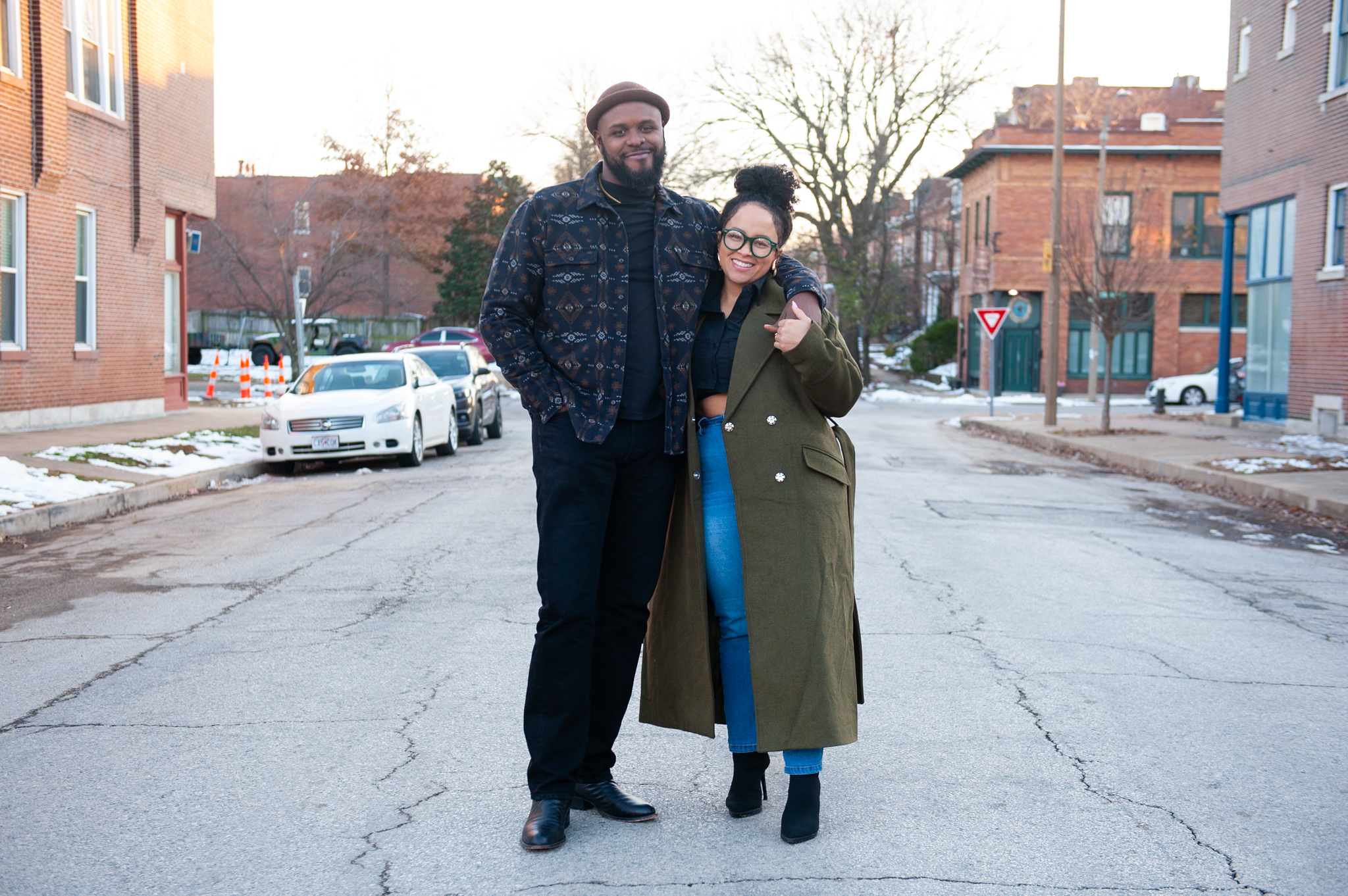 Photo credit: Lindy Drew / Humans of St. Louis
Phillip: “My wife and I were driving to Nashville when we got on the subject of cowboy boots, which got us talking about rodeos. Sure enough, while in Nashville, I bought my first pair of pecan, ostrich-skinned boots. It happened to be Juneteenth, and we learned that there is a Black rodeo in St. Louis. Of course, we’d miss it driving back. But I thought, ‘I’m going to find the next closest one, and we’re going.’ I looked it up, and it took us to Oklahoma. When I take random trips like that, I’m the type of person who loves to do research to make connections in the area and meet people. So for this one, I was fortunate to come across a young photographer named Jakian Parks. He grew up in the cowboy culture and has been adamant about documenting and preserving this culture. It has always been a part of his life. I learned these Black rodeos were dying out because of violence among the younger generation. But when the young Black cowboys started seeing the importance of the culture more, they did all they could outside of what the elders were doing to keep cultivating it.
It was the best-case scenario for Jakian to be the person we met. Came to find out he was one of EBONY Magazine’s Power 100 Youth, and he got some of the Black cowboys he worked with day-to-day to walk in Pharrell’s 2024 Paris show. How cool to meet someone like that and then be able to experience Black cowboy culture for myself. Of course, as a photographer, there was no way I was not taking a camera.
Taking pictures of this subject felt so foreign yet so familiar. Every turn, through everyone we met, there was never a situation that felt forced or unwelcome. The project started with simply getting to meet people, going to these rodeos, and learning more about Black cowboys in the Midwest. This is the third time going, and we’ve gone to the two biggest rodeos each year. We plan to show up at the rodeos more, but at smaller ones. Now I’m compiling work to put together a coffee table book. And I’m getting a better understanding of where to shift my focus when telling a story. Rodeos are happening every weekend. Some are in a small town, and it’s usually just a lot of people from the community. Most people don’t travel to go to those. So I just want to get a better feel for them, and see where I can find other stories that connect everything I’ve photographed so far.”
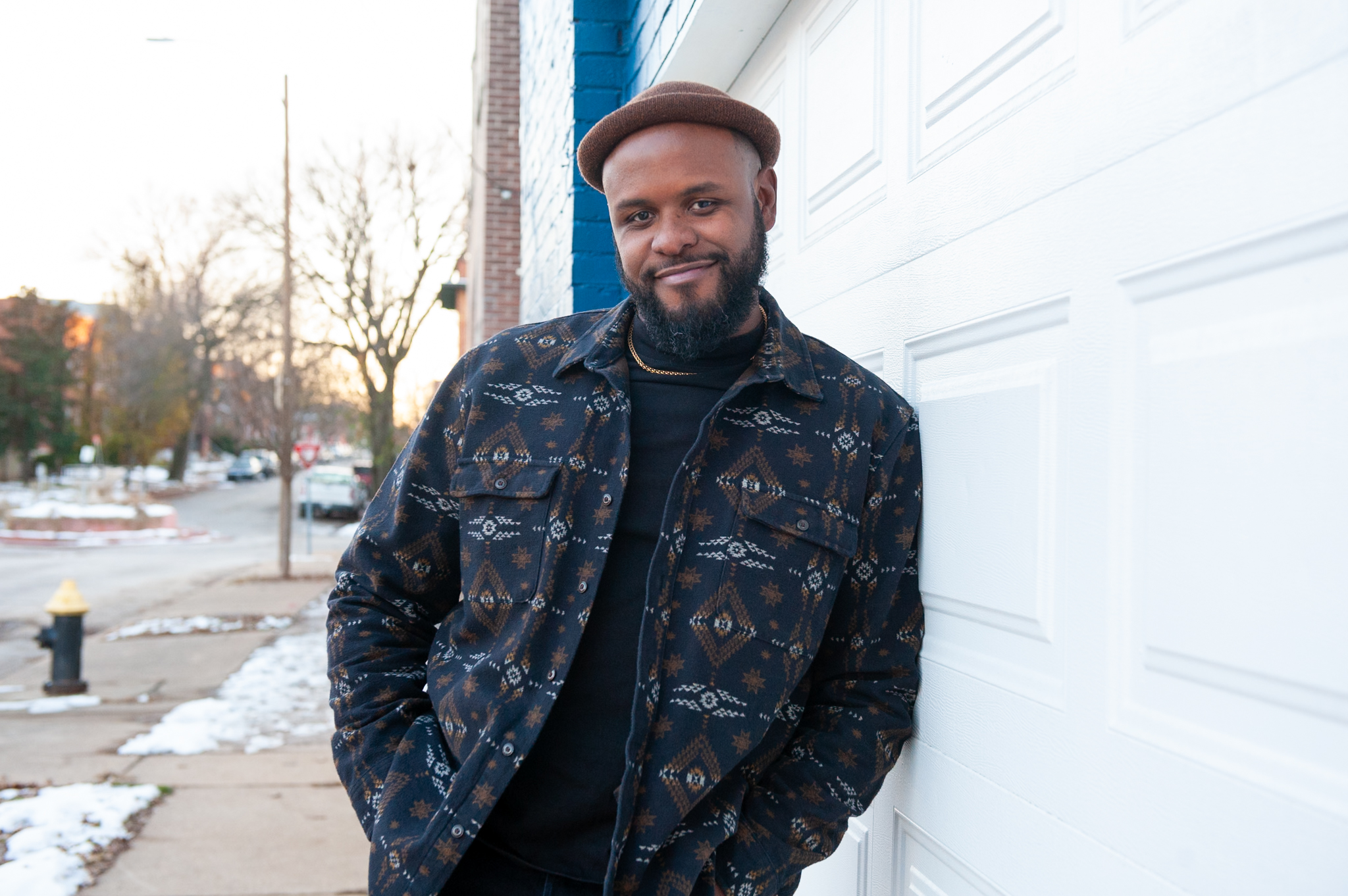 Photo credit: Lindy Drew / Humans of St. Louis
Phillip: “I’ve befriended a lot of the cowboys I’ve met through my documentary project. Actually, I got back into fishing, and through following these Black cowboys on social media, I also get to fish. So I’ll catch up with a few of them before heading to a rodeo, and go fishing with some when I get over there. One of my buddies, D-Bogus, was like, ‘Man, we got a lake on our land. I got 10 horses. We can just saddle some up, ride down, and go fishing on horseback.’ Yeah, I can’t wait to go back. My intention is to explore and have the courage to just keep going somewhere new. I especially like meeting all these people and getting to have different experiences that come about on a whim.
Outside of making portraits of these cowboys, I’ve also photographed in the arena. My first time in a rodeo, not knowing what was happening, Jakian came over to me and said, ‘I can get you in the arena.’ I wasn’t going to say no. So I got into this arena, turned to the guys, and told them, ‘Look, I’ve never been in one of these. I’m assuming that if this is where you are, and I’m over so-and-so’s shoulder, I’m gonna be okay.’ They were like, ‘Yeah, you’ll be all right.’ I said, ‘But if I’m somewhere I don’t need to be, let me know, and I’ll move.’ And they were like, ‘We got you.’ I will say you’re definitely coming out of the situation dirty at all times. There are all types of animals around, so you know there’s animal manure and stuff like that everywhere. But I can’t even think of a time when I even smelled any of it. I don’t know if it’s because of the excitement of being in the arena, but the smell hasn’t even crossed my mind.”
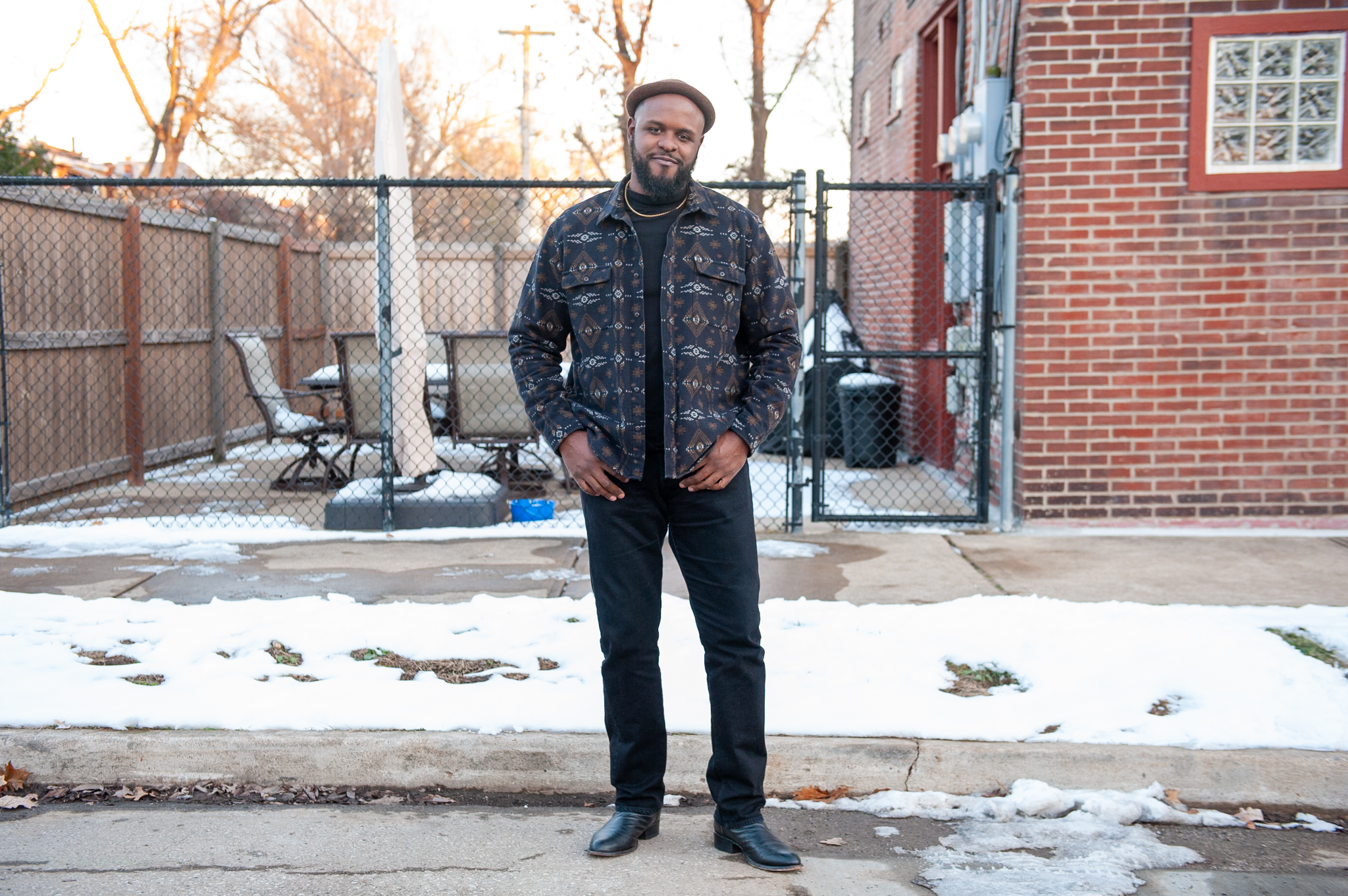 Photo credit: Lindy Drew / Humans of St. Louis
Phillip: “One of the things I found most interesting at the Black rodeos was meeting Black people with native ancestry. They identify as Black, and their native bloodline is evident in their bone structure and build. Older cowboys have been interesting to me, too. That’s a group I’ve been intrigued by because I get a lot of stories from them. My first year photographing in these spaces, I took a picture of a gentleman, and I could tell he had stories. I introduced myself, and he said, ‘You should come to the bulldogging competition tomorrow.’ I was like, ‘Great! My partner and I are gonna be photographing here all day tomorrow.’ He was like, ‘Oh, I’m not talking about tomorrow evening at the rodeo. I’m having a special bulldogging competition at my house in the morning.’ And he gave us his address. So I asked him his name, and he said, ‘I’m Clarence LeBlanc.’ I was like, ‘Nice to meet you.’
Well, the rodeo we were at is called The Roy LeBlanc Invitational. So I thought, ‘Let me look this man up.’ Turns out, he’s a rodeo legend. And the rodeo we were at was started by his father. A lot of white rodeos wouldn’t allow natives and people of color to participate back in the day. So the LeBlanc family started their own. Now it’s one of the oldest running rodeos in Oklahoma.
When we went back to the competition a few mornings later, I met an older man who had to be in his late 50s or early 60s, out there riding horses. I didn’t know exactly what happened, but he got into a fight with another guy. Later on, I saw him, took his photo, and we got to talking. I was like, ‘I saw you out at Mr. LeBlanc’s. And trust me, there ain’t no judgment. I’m the same type of man.’ He said, ‘That guy was talking about my horse. Two things I don’t play about are my horses and my family.’”
𝐴𝑛𝑑 𝑦𝑜𝑢 𝑠𝑡𝑢𝑚𝑏𝑙𝑒𝑑 𝑢𝑝𝑜𝑛 𝑎𝑙𝑙 𝑡ℎ𝑒𝑠𝑒 𝑐ℎ𝑎𝑟𝑎𝑐𝑡𝑒𝑟𝑠 𝑗𝑢𝑠𝑡 𝑏𝑒𝑎𝑢𝑠𝑒 𝑦𝑜𝑢 𝑤𝑒𝑟𝑒 𝑐𝑢𝑟𝑖𝑜𝑢𝑠.
Phillip: “Just because I was curious. It was as if we had a map and just threw a pin at it. That event was the soonest and the nearest to us, so we just showed up.”
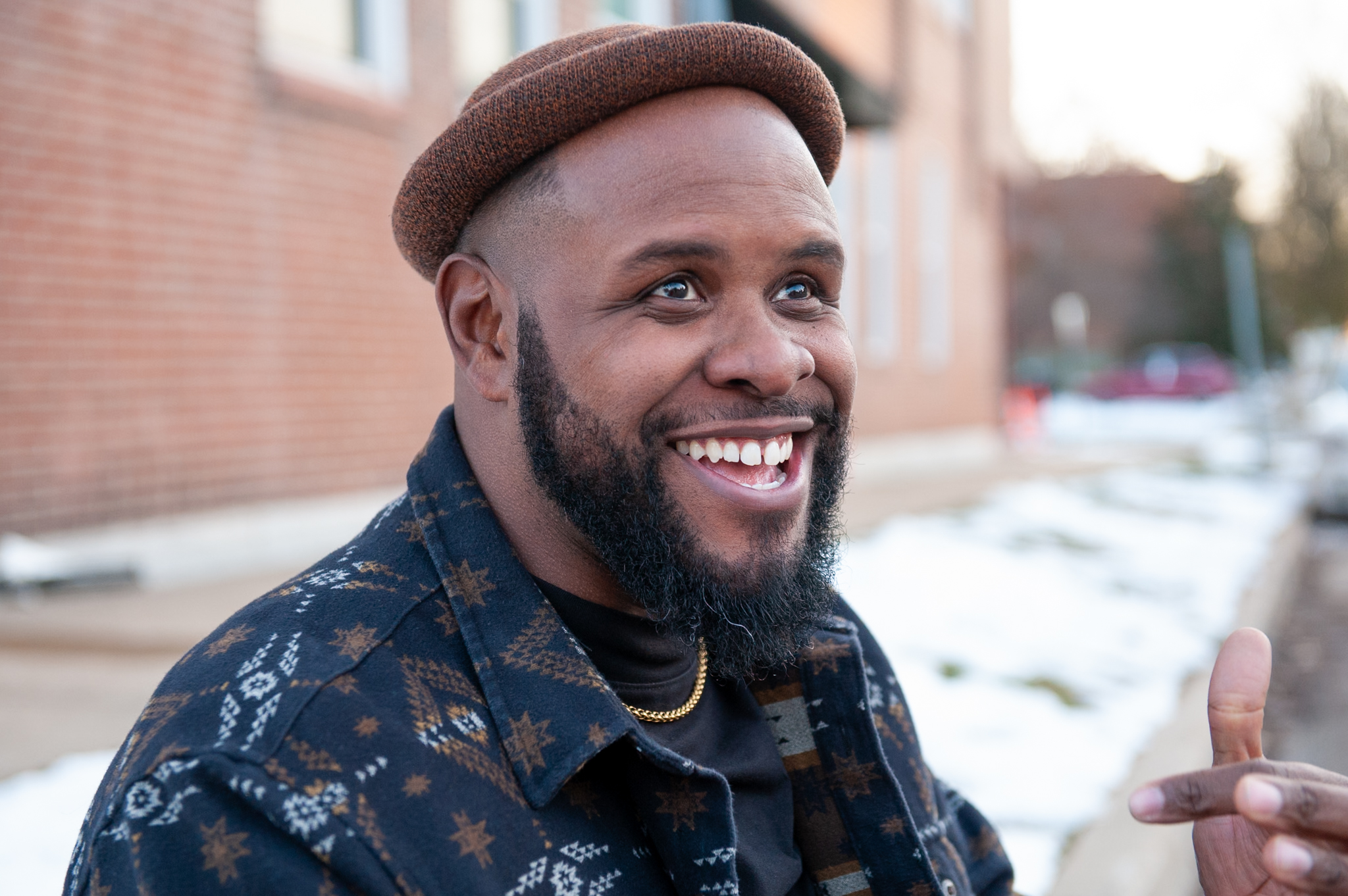 Photo credit: Lindy Drew / Humans of St. Louis
Phillip: “My buddy, D Bogus, has this beautiful stallion named Harry. He told me a guy he rode horses for owned Harry, and Harry was really thin and frail because the guy was only grazing him. He wasn’t taking proper care of him. My friend ended up buying Harry for like $2,000. He said, ‘When you look at his bloodline, this horse could have easily sold for 10 grand.’ D Bogus is a cowboy who runs in the races, and Harry’s now his racehorse. He also trots horses at the derby track in Oklahoma, and Harry is the horse he leads the other horses out with. So Harry is a very dominant, head-first horse. If he’s walking side by side with another horse, he’s always gonna try to make sure his head’s in front.
Well, a few years ago, Jakian started a youth camp, and we went out there for a week to volunteer. One particular day, I was riding Harry. We were having a good time riding around the kids at camp while they were all riding other horses, too. Then, on the next day, another one of the cowboys was riding Harry, just trotting him for 20 minutes in the arena to warm him up. Well, Harry was also aware that he was in the arena he races in. And there were all these other horses nearby, walking in circles. So, in Harry’s mind, he was preparing for there to be a race. I didn’t know that or know to think about any of that. So after about 20 minutes of my other friend trotting Harry, I got on Harry, like, ‘Let me ride.’ Now, mind you, I’d been riding Harry all day the day before. And I had a good time riding him as we went up and down the fence. So I got on Harry, and I could immediately feel him just quivering. I was like, ‘Whoa!’”
𝐿𝑖𝑘𝑒, “𝐻𝑜𝑙𝑑 𝑦𝑜𝑢𝑟 ℎ𝑜𝑟𝑠𝑒𝑠!”
Phillip: “Exactly. And he’s a stallion. So standing next to him, his back was almost level with my head. I was like, ‘Harry, we’re gonna stay here for about five minutes to calm down.’ After that, I gave him the reins a bit, and he was ready to take off. Again, I was like, ‘Whoa! Harry, chill out.’ So I got him to walk, but then he was trotting sideways. And as soon as I gave him the reins that time, he took off. I think I was on him for five minutes until I realized, ‘We’re gonna have to do this another day.’ I knew that I didn’t have enough experience for that. And more than anything, I was in this arena with all these kids. Still, I love any opportunity I get to get on a horse.”
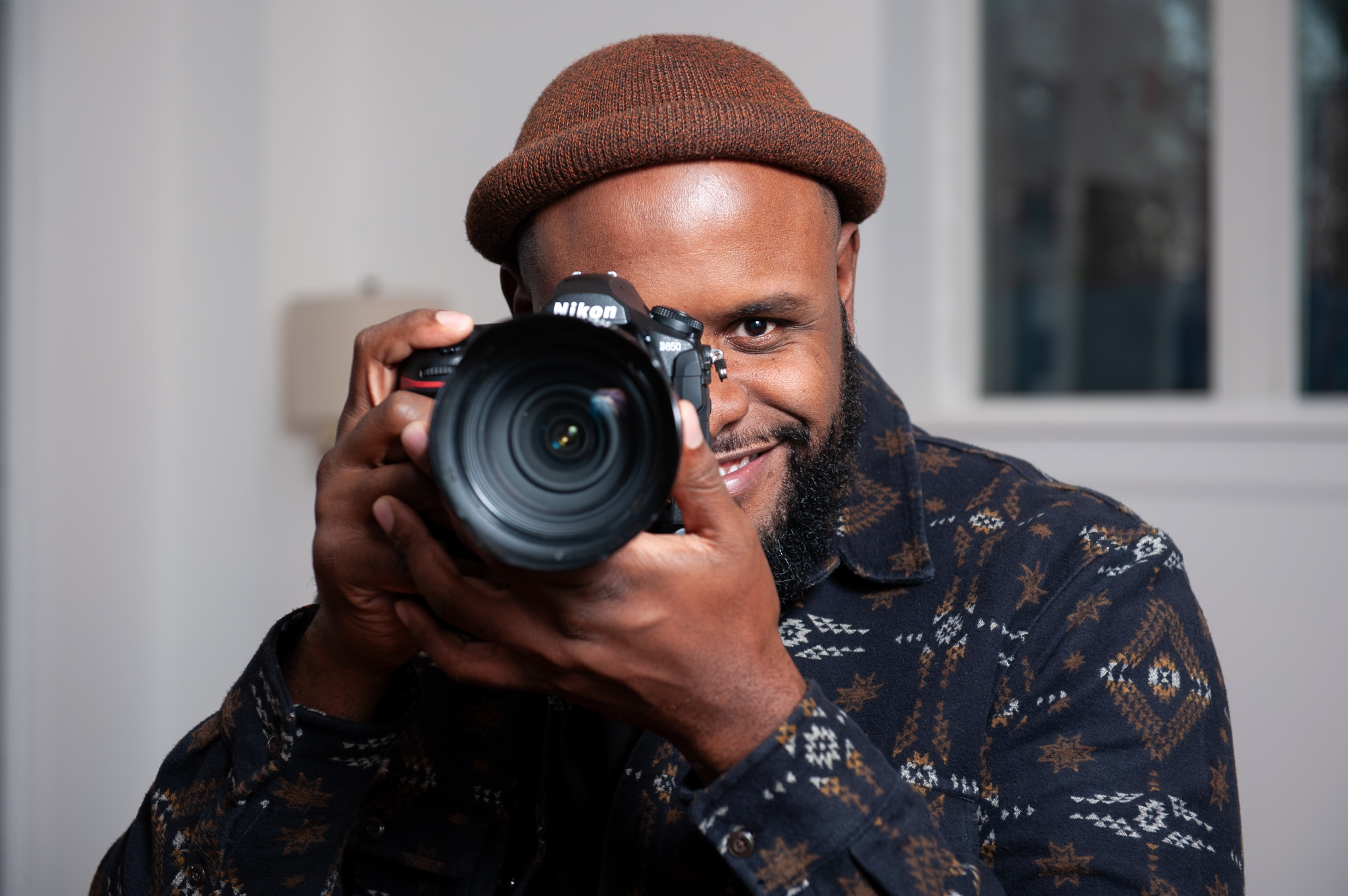 Photo credit: Lindy Drew / Humans of St. Louis
Phillip: “At this point in my series on Black rodeos, I want to capture more of the younger guys just because they’re keeping this history going. I’d come to learn that some have gang affiliations, and that was a part of some violence that was starting to kill the culture. At the same time, the riders have the wherewithal to revive it by putting those sorts of detrimental situations to the side. Within the last eight years, there’s been a resurgence to cultivate the culture. And they’re doing all they can to remove the negativity that was causing issues. At the same time, if you win a race, it’s major bragging rights. And you can see some of the tension in how they trash-talk and all that. But they leave the arena after a good race and keep it moving.
A lot of riders take part in the Pony Express, a modern-day race very specific to Black rodeos. It’s an homage to the Pony Express mail riders, and it’s even more specific to Black rodeos in Oklahoma. The race runs two teams at a time in an arena, whereas, if you were to go to a Black rodeo in Texas, there’s one team in the arena, it’s timed, and whoever has the fastest time wins. But this race is made up of a team of six, and everyone’s on horseback. Each team has a baton, and they race four barrels with one barrel in the center of the arena. The last rider with the baton is the drop man. So he’s dropping it in the center of the barrel. Whoever drops their baton first wins the race. Imagine you could have the lead, but if you miss the barrel and another rider comes from behind you and drops their baton in, they win.
In Oklahoma, two teams make up 12 riders on 12 horses in the arena. They’re all in one corner while the other guys race. And once they come to a certain point, two of the guys kick out of the corner and meet as they turn a barrel to pass the batons. It’s competitive and exciting, but you can also see how it’s very dangerous. I’ve seen horses flip people over. People fall off them. There are moments when horses are running at full speed, and the cowboys are all riding side by side, reaching over their opponents to get the baton to their teammates. And the team names are great, like The Country Boys and The Young Fly Cowboys. It’s been cool to meet them, see how they practice, and learn what they do to try to improve their racing. I’m going to start focusing on photographing the teams to tell more of their stories. Because they’re going to be the ones that carry this tradition on to the next generation. Without them or their experiences or the troubles they’ve faced, we probably wouldn’t even get to witness this whole experience.
Thus far, it’s been all me funding this documentary project. I haven’t found backing. Outside of wanting to create a coffee table book, it’s just something I’ve fallen in love with photographing. So I go to these rodeos any opportunity I get.”
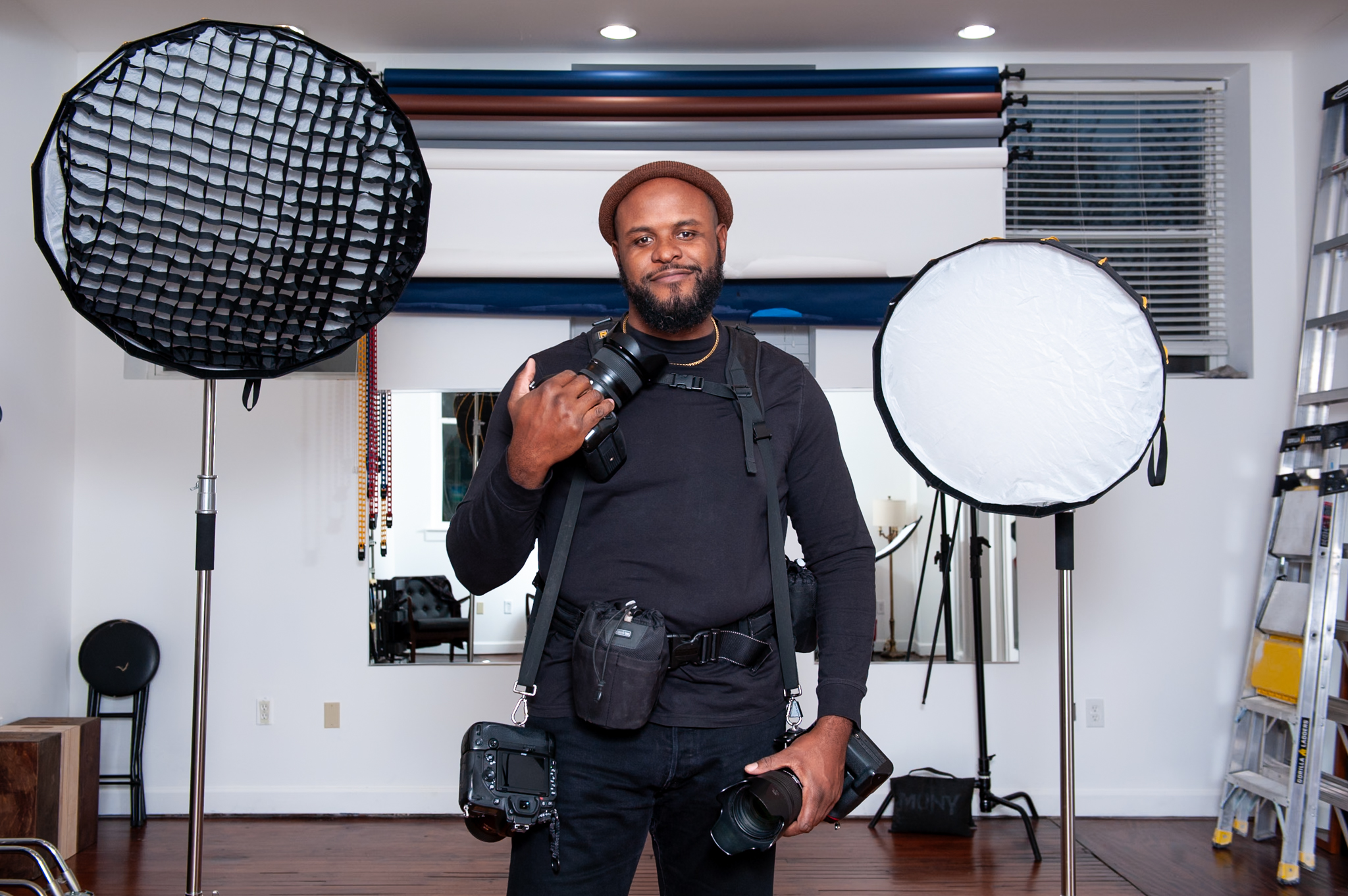 Photo credit: Lindy Drew / Humans of St. Louis
Phillip: “My mother was my gateway to photography. She studied it for two years in college. I don’t recall her ever having much interest in traveling or doing photography projects, but she loved taking photos. And she photographed our family a lot. My mother kept National Geographic books in our home, and I vividly remember not reading the articles, just looking at the photos and being enamored by seeing all these people and places from around the world. I do, however, remember my mother always having cameras. Back when you could buy a four-pack of disposables at Walgreens, she’d easily have them at the house. And she used to give them to me when I’d go to Chicago for the summer to visit my aunt.
I can’t really think back to the first time I took a photo, but I know I fell in love with photography in middle school when I took a mass communication class. I went to Carr Lane Visual & Performing Arts Middle School, where we had a darkroom. And I got to develop my first photo in seventh grade. I kept cameras in middle and high school, and photographed my friends. From then on, I knew I wanted to do photography. It never crossed my mind to do it as a profession until college, though. And that’s crazy to me to love something so much and never think about it as a career. It never crossed my mind that this is what people do for a living.
I actually went to college for athletic training because I was also interested in massage therapy. Finishing up my first semester, I was getting ready to test for an anatomy class. But I was like, ‘There’s no way I’m gonna remember this sh*t.’ I’d fall asleep in that class. Sure enough, I came out of that class one day while a friend of mine and one of his classmates were running across campus with cameras. I asked, ‘What are you doing?’ My friend said, ‘Homework.’ ‘What major is this?’ ‘This is mass comm.’ I can still see him looking at me like, ‘Why are you asking me all this?’ But I’d just come from anatomy, not knowing what the hell I was gonna do. Running into him right outside that building was God’s grace.
I had an hour and a half before my next class, so I went right to my advisor and changed my major. Second semester of my freshman year, I started in mass comm and worked in radio and television. I was also doing so much photography that my English professor asked me to shoot her wedding. She said, ‘It can be expensive to hire photographers, and we don’t have the money to hire a pro. You do great work. We’d love for you to photograph our day.’ Looking back, some of the images were terrible, some of them turned out really great. Nevertheless, my love for photography was always there.”
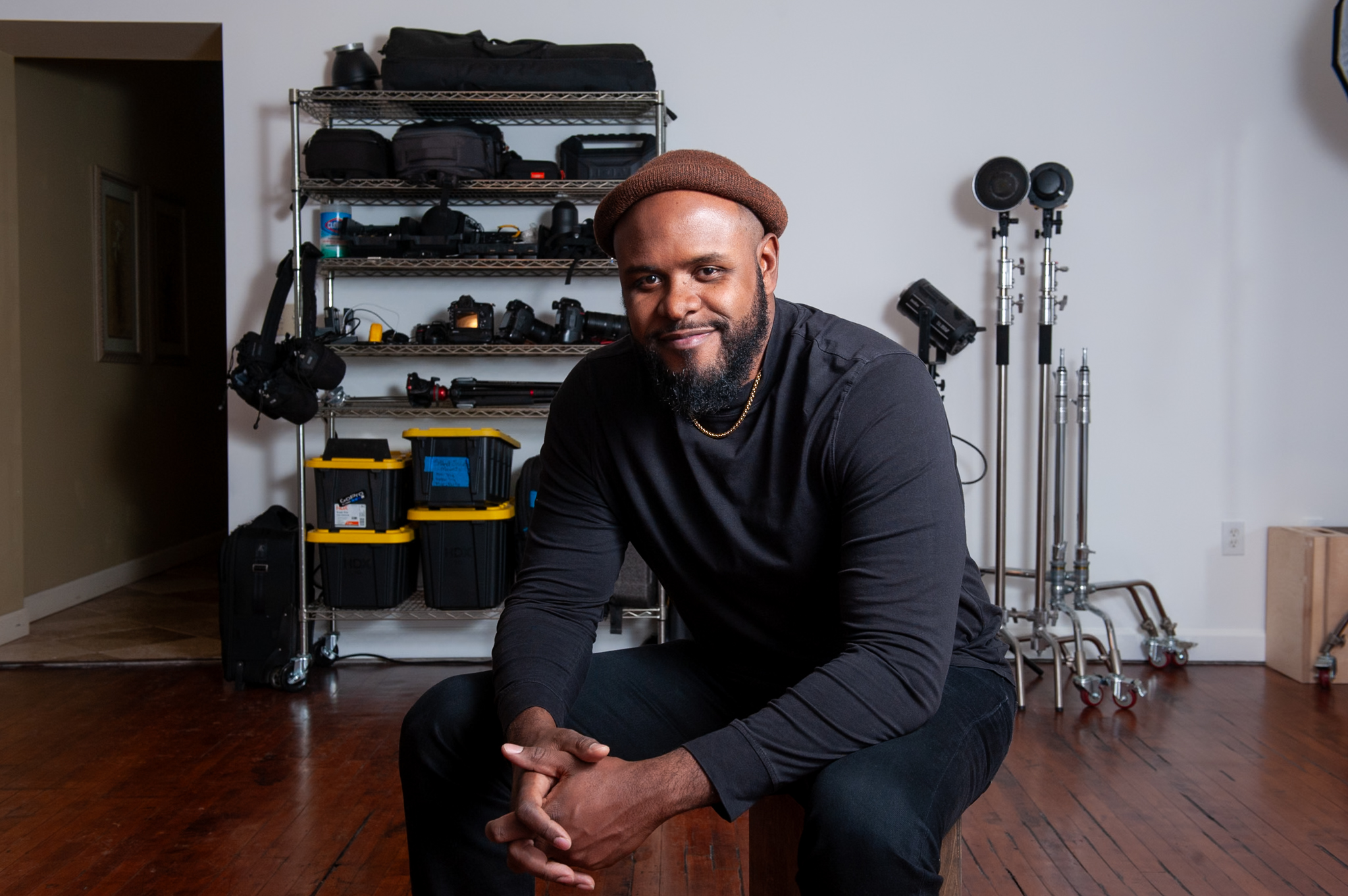 Photo credit: Lindy Drew / Humans of St. Louis
Phillip: “Doing all the work I was doing during school, I wanted to pursue photography as my career, but I just didn’t know how I was going to do it. I told myself, ‘I’m going to figure this out one way or the next.’ Senior year, I was looking into interning with ITV and was about five minutes from calling to get more information when my buddy, Kwofe Coleman, called from The Muny. He’s one of my best friends, and he became my boss. I actually started working at The Muny as an usher in the summer of 2007. I’ve worked as a driver. I worked as backstage security. So Kwofe said, ‘We want to offer you an internship in photography.’ I came home to St. Louis that summer, and the position was very unique. Because when you’re interning, you’re usually working under someone, learning from someone who has experience. But I wasn’t working under a photographer or anyone who had experience as a photographer. I was the photographer. And I stayed there for nine years.
At one point, I was making photo and video content for The Muny, but I was doing it from a really crappy laptop, and they were asking me to turn things around quickly. I’d tell them, ‘This doesn’t work that fast. Turnaround can’t be that fast.’ Kwofe began to help with editing, understood, and said, ‘Oh, I see what you mean.’ That internship lasted for two weeks, and then they offered me a position as the staff photographer. My first summer out of college, after interning for only two weeks, I got a full-time position. And I was the first staff photographer that The Muny ever had. Before that, they’d always outsourced photographers. So I got to grow my team. I got to have my own interns. And that’s where I cut my teeth and really learned my chops as a photographer working in theater. Even now, when I look at my work outside of the theater, I can see the influence the theater has had. As much as I love black and white photography, I myself cannot grasp doing good black and white photography or seeing my work in black and white. Turns out, I prefer color. I also have a niche for shooting in low light. And a lot of that came from photographing the shows, the sets, and backstage, and not always being able to use flash.”
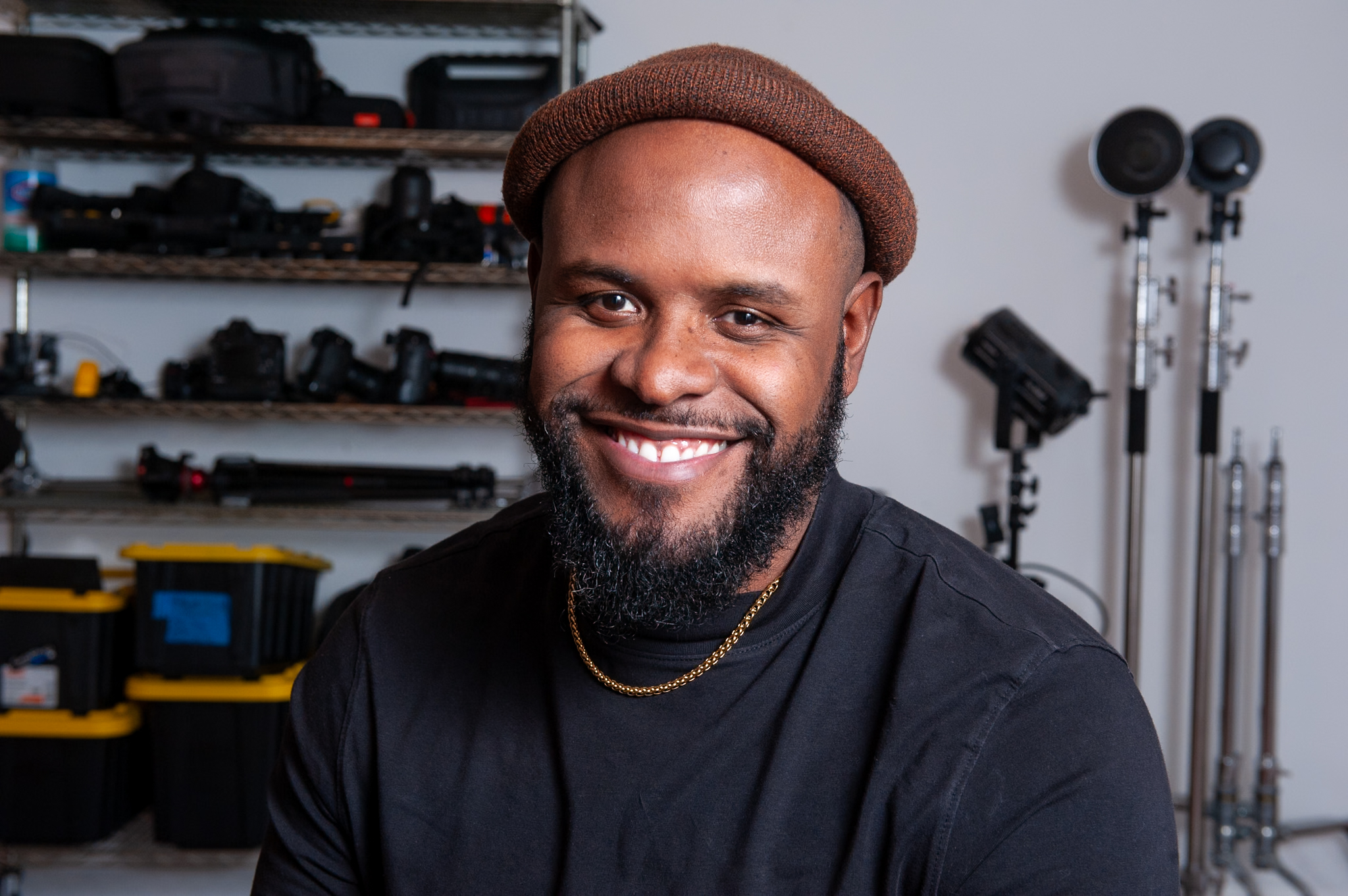 Photo credit: Lindy Drew / Humans of St. Louis
Phillip: “One of the most challenging productions I had to photograph was 𝑆𝑖𝑠𝑡𝑒𝑟 𝐴𝑐𝑡. Because the actors and actresses were primarily white faces in all-black clothes. They were being lit, but you have to find this balance of exposure. At times, the lighting was way too bright for what you’re seeing. And what I’ve enjoyed most about photographing theater, which varies with the expertise of the lighting and set designers, is that everything is being lit for you. Of course, you run into issues where, if there’s a lot of movement happening and if it’s not lit well, you’ve got to find a workaround. But I got to capture shows from my own viewpoint and vantage points while being able to convey the artistic values and viewpoints of the lighting and set designers, too. I fell in love with theater from being able to photograph it. And I’ve come to love certain designers because you can really see the difference in how they choose to use lighting when they’re working on live productions.”
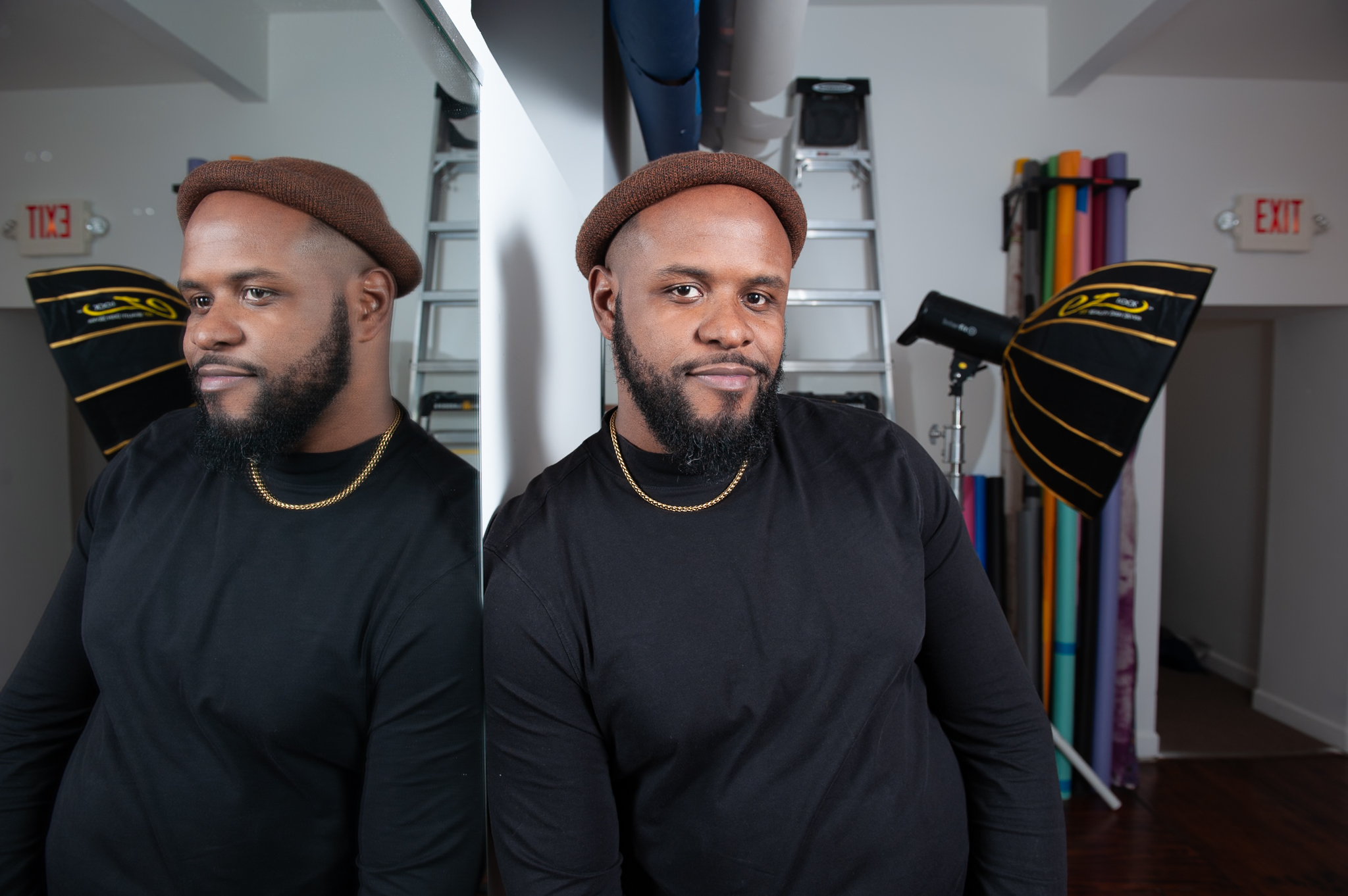 Photo credit: Lindy Drew / Humans of St. Louis
Phillip: “Because I went to a performing arts school, I did theater growing up. Once you get behind the stage, seeing so much of the ins and outs of theater, you start to understand all these artists and creatives work together to put on a production. The lighting designer is completely different from the set designer. The set designer is completely different from the costume designer. The costume designer is completely different from the hair and makeup designers. The props designer is completely different, too. And at a place like The Muny, everything happens at such a fast pace. There’s no other theater where productions happen like the way they do there.
My role in there had always been to capture the moment, and I’d been given the freedom to explore my ideas even when we had to sell the productions in a short time frame. Think about it: the shows run for a week at a time. Everyone’s learning the shows 11 to 14 days prior to putting them on stage. So I was having to capture content during rehearsals to help promote the show leading up to it. Beyond that, because I’m interested in what people do and how things happen, I was backstage seeing all this fantastic stuff, but we were really only visually catering to what happened on stage. That’s when I asked, ‘Can I start photographing what happens backstage?’ I photographed the stagehands doing their job. I photographed the actors and actresses in their dressing rooms getting into their wigs and makeup. I photographed people’s portraits. To this day, it’s one of the albums that is seen the most. And as we were doing this, we started seeing theaters on Broadway doing backstage photography, too.
One of the projects I did was called Characters In Frames. I had a huge rinky-dink frame that I hung from a light stand with fishing wire, and I’d photograph cast members. Being that we couldn’t use flash, I’d set up some continuous lights. And when people passed by in between scenes, they’d take portraits in the frame. Like, ‘Still be in character and take a portrait of who your character is.’ It became such a thing that one of the stagehands ended up building me this beautiful gold frame with crown molding. And getting your picture taken became a thing everybody looked forward to. Then, same thing, years later, we saw a Broadway show doing characters in frames. But it was nice to be able to document and have free rein to do it how I saw fit.”
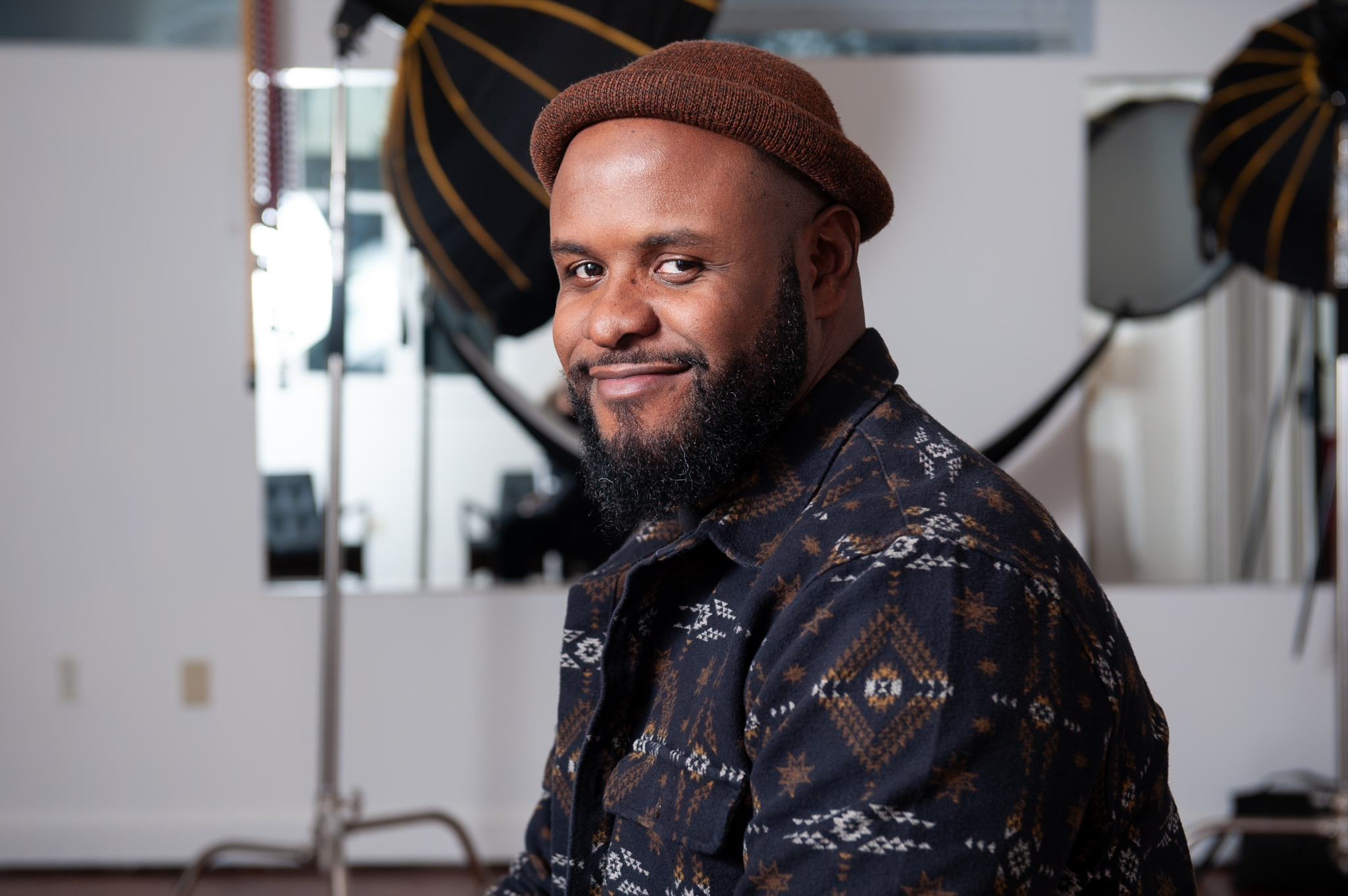 Photo credit: Lindy Drew / Humans of St. Louis
Phillip: “I finally decided to finish working at The Muny, and I’d never had a panic attack in my life until then. I like to plan. I like to research. But I’m not like a big planner. So I made the decision that I was leaving after the 2019 season in October. But it never crossed my mind that, ‘Oh, you’re leaving right after the season. You’ve been busy as hell with the season. You’ve had no time to prepare yourself for what’s next after.’ None of that crossed my mind until I was like, ‘Oh my god, what am I gonna do?’ So October came, and I had a panic attack. And I sat down. Now, I’m a weed smoker. I don’t smoke nearly as much as I used to. But I told myself, ‘I’m gonna stop smoking for a month. I’m gonna sit my ass down, and I’m gonna figure this out.’
I started crunching numbers to see what I needed to do and how I needed to bring money in to make it all work. Once I wrote everything out, I was like, ‘This isn’t that bad. Now I gotta figure out where the money comes from.’
My whole life, people always told me, ‘Take the leap. You’ll never know until you jump.’ So I took that leap. And sure enough, that same month, a photographer named Eric Woolsley called. I knew him through working at the theater. He’d shoot specifically for the design team. He built his career in St. Louis, photographing for multiple theaters here in the city. So he called me up and said, ‘I want to invite you out to lunch. I’d love to talk to you about some things.’ And then he told me, ‘I’m taking a full-time position at Opera Theater of St. Louis. I’d like to recommend you to all these other theaters I’ve photographed for.’ So that ended up being St. Louis Shakespeare, Webster Conservatory, and New Jewish Theater. I’d also started building a relationship with The Black Rep. Plus, The Muny kept me as their photographer when I went freelance. I found work because I took that leap, and someone was able to catch me.”
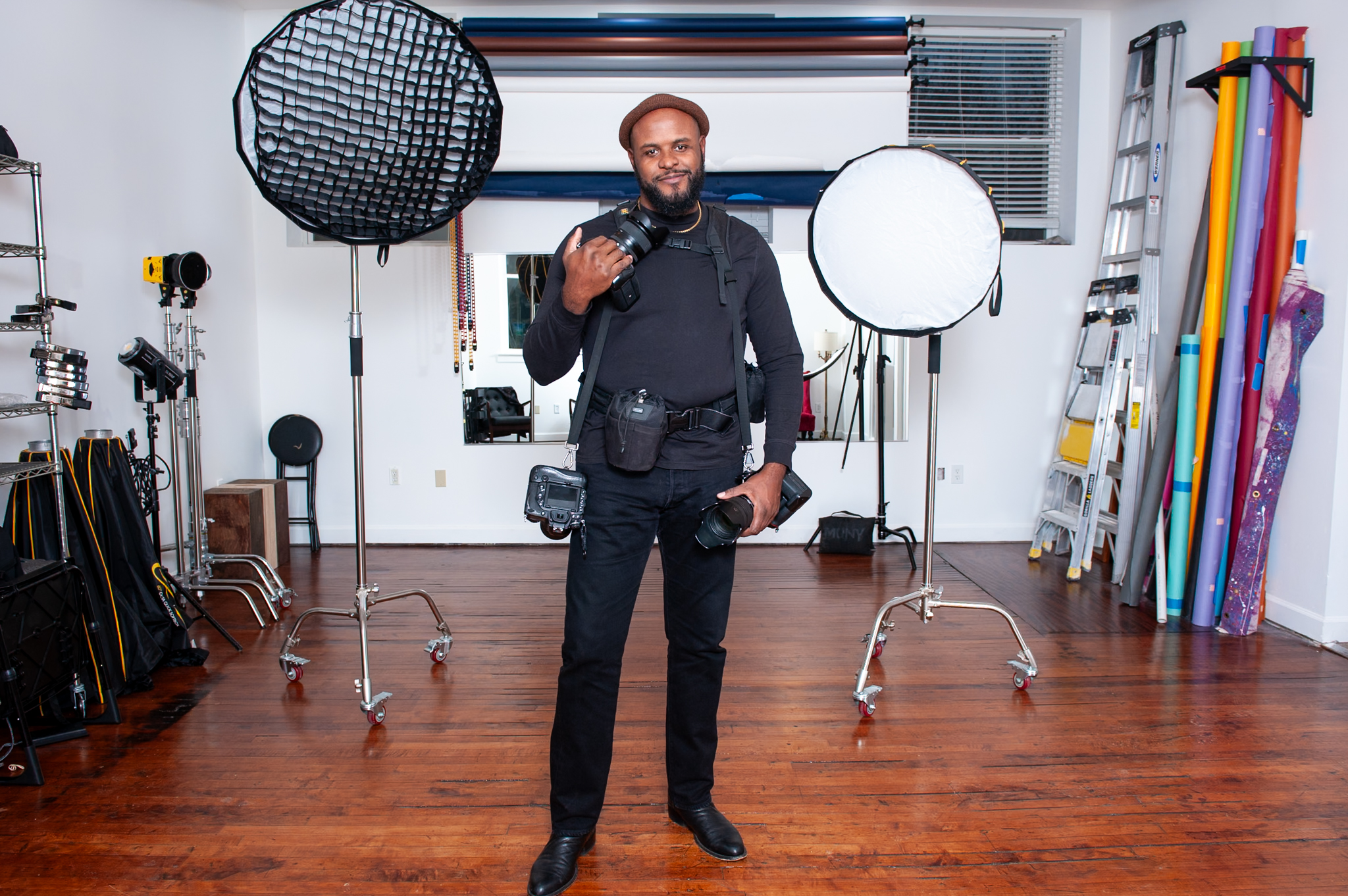 Photo credit: Lindy Drew / Humans of St. Louis
Phillip: “Freelancing was all happening during talks of COVID hitting other countries, and then we got hit with everything here in March 2020. I’ll never forget, I was driving to New Orleans to photograph the Mardi Gras Indians. I’d been reading up about them over the winter. I found a tribe that said, ‘We’d love for you to come down.’ So I was driving to stay with one of my best friends from college, who lived there when a State of Emergency was issued. I ended up being at his house for a few days because sh*t was hitting the fan. Everything shut down. Then I drove back home, and we were in a full-blown pandemic.
Navigating that and figuring out how to get government assistance and things of that nature, I remember sitting down with myself, thinking, ‘If I have to find a job doing something else to suffice, I’ll do it. I’ll come back to photography. But first, I’m going to try to make it work.’ And from then on, I never had to find another job. I got a call mid-June from The Muny. And then the calls never stopped coming. Of course, I had to make a major pivot and start doing more video work. A lot of theaters were pushing out video series to their audiences just to keep a buzz around what was happening in the theater scene.
Now, before the pandemic, I had purchased some lighting from a woman on Facebook Marketplace. Her husband did video work and passed away unexpectedly. So she had all this audiovisual gear that she didn’t know what to do with. She told me she just needed to price it, but that she was going to sell the rest at some point. And I never heard anything back from this woman. That year came and went, and in the middle of doing so much video work, one day I ended up driving past the neighborhood where I met that woman to get those lights. I looked at her parents’ home where I met her, and something just came to me telling me, ‘Call that woman.’ I went home, went through a year of messages on Facebook, and found her. I wrote, ‘I know it’s a shot in the dark, but I remember you said you had a lot of other gear you wanted to sell. Do you still have it, and are you trying to sell it?’ She said, ‘Yes. I live in Chicago, and I’ll be in St. Louis this weekend. Come over to the house. Take whatever you want.’ I was like, ‘I can take whatever I want?’ She said, ‘Whatever you want, you can have.’
I went to the house, and she had so much gear that I had to borrow a friend’s truck. I asked the woman, ‘Would you be okay if I just took it all off your hands, and whatever I can’t use, I can give away?’ She said, ‘Take it all.’ So, from just looking up what I was planning to buy, I ended up with about $15,000 worth of equipment. And it was all items I’d been looking into purchasing, from mics to drones to camera lenses. She said, ‘I just want a hug. I’m thankful it’s going somewhere, and it’s going to get used. This was all my husband’s. This is what he loved doing.’ For me, as I was coming up on that one-year anniversary, that was affirming. Like, ‘You’re doing what you’re supposed to be doing.’”
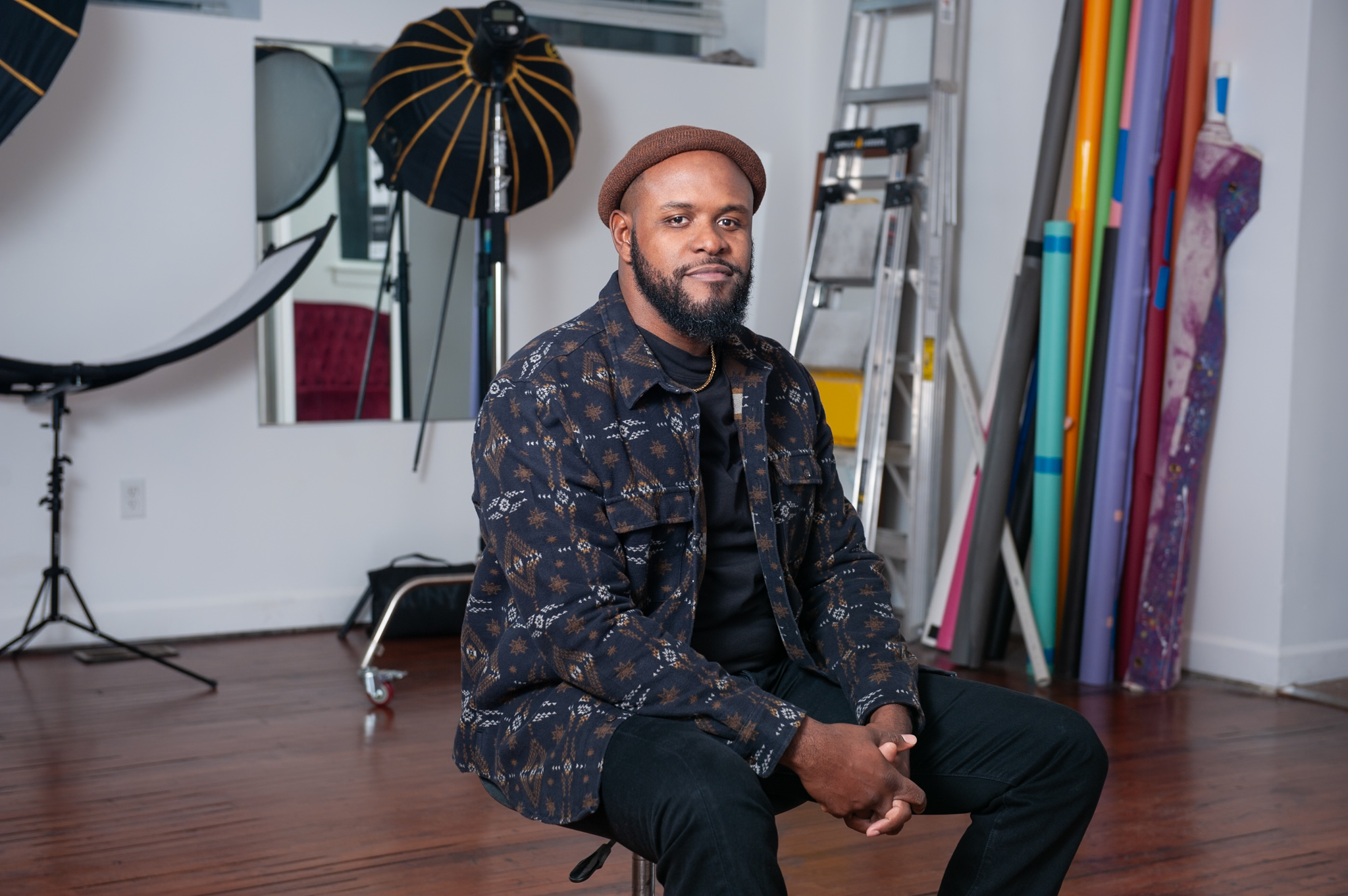 Photo credit: Lindy Drew / Humans of St. Louis
Phillip: “I consider myself a people photographer. I love photographing people more than anything. I’ve never had an interest in food photography, object photography, or nature photography. I love photographing people because I like meeting people. And I like to learn from people. I like to hear people’s stories. I’m a firm believer that when you look at the history of us as people and think of the history of how knowledge is carried, it’s from person to person. So, as much as we can dive into books and learn from reading, there’s nothing like learning things from people who have had firsthand experiences. And photographing that has given me such an opportunity to learn about people’s lives.”
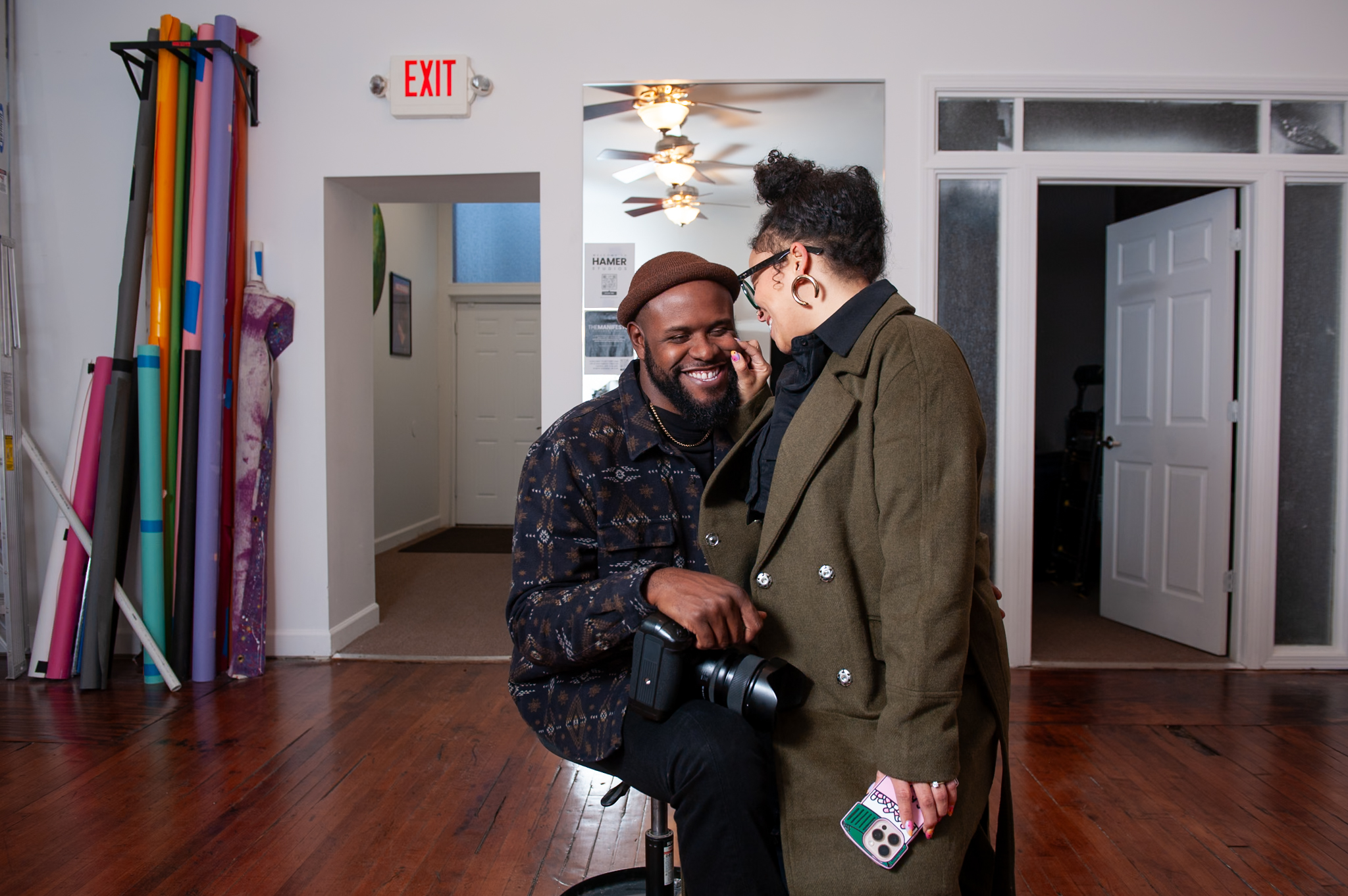 Photo credit: Lindy Drew / Humans of St. Louis
Phillip: “We had no plan to open a studio. We were living in our loft Downtown, and it was purchased by a new owner who was a slum lord. Some guy from London. He didn’t even live in the States. He just used an address in Miami. So he bought the building sight unseen and was just not taking care of it. When I moved in, it was great those first few years. But once he purchased it, it started going downhill. We got roaches. We had a gnat infestation. It was too much. I found the owner’s number and called him every time anything happened. Still, we were going to try to tough it out one more year.
For this place we’re currently in, I photographed the owners’ wedding and then their baby shower. I also shot events for the company the wife works for. So we had built a relationship. Well, I was shooting an event for them in December, and out of nowhere, the wife asked, ‘Where do you live? I told her, ‘Downtown. We love our loft there, especially because we have a live-work space. But our building is really going to sh*t.’ She said, ‘We have a unit available in one of our buildings at the beginning of the year. We enjoy renting to people we know. There may also be an opportunity for a commercial space below to have your studio.’ I was like, ‘Okay, we’ll talk about it.’
So we went by the building, and they showed us the apartment above and then this space, which was puke green. The hardwood floors in the downstairs place were in bad shape. There were blotches of epoxy all over. The previous renter had used it as a workout spot. Still, we were like, ‘We’ll take it.’ The selling piece really was this studio. The owners were getting ready to have their baby, and a few things were still up in the air. We sent an email to say, ‘We’re ready now to make this move, but it’s important we speak about the commercial space. It truly is the selling point for us. We do need a space to work out of.’ It’s one thing to go a few months and not have a studio, but past six months kind of starts to create an issue. They said, ‘Okay, we’ll let you rent it all, but only if you take it as is.’ And rightfully so. They didn’t have the time to put a facelift on this place as they were expecting their first child that month. So we took it. And it’s been a learning process. I learned a lot about depending on other people. And as much as I like to research things, I’ve learned even more about rehabbing because I had no clue about what I was doing when it came time to fix it up. But, you just do the research and get things done.”
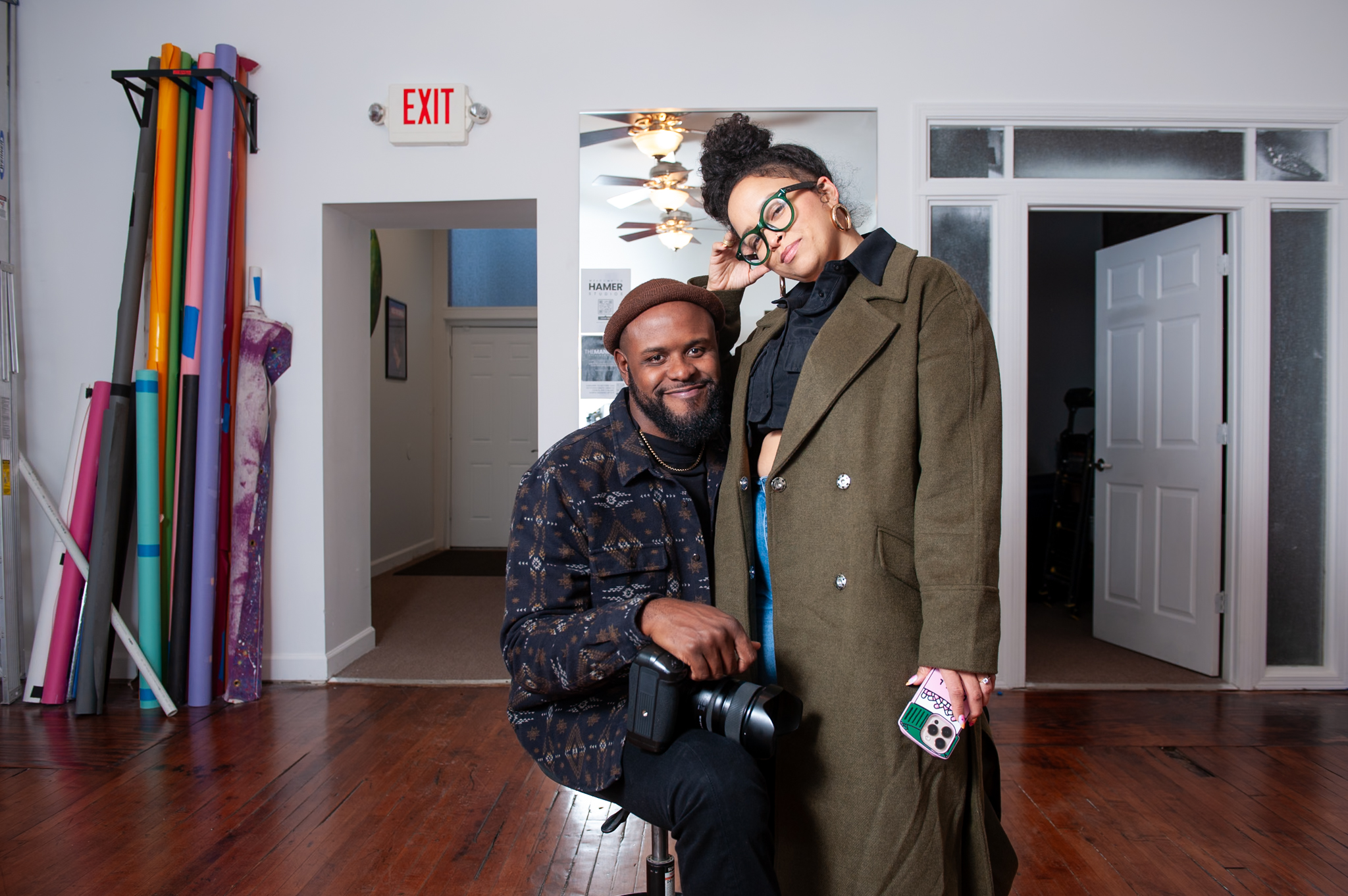 Photo credit: Lindy Drew / Humans of St. Louis
Phillip: “We had to clean, sand, stain, and seal the floor. So we did all of that. When we first started, my uncle was helping. And part of what we realized out the gate was that the floors were just really dirty. Between the tornadoes in May 2025, him only being available on the weekend, and The Muny season coming around, work on this place kept getting pushed back. It got to a point where we set a date to open because we were planning a soft opening. And we were like, ‘We just got to figure this out.’ The two of us literally got the floor sealed five days before we opened. We finished painting the walls the week before. Luckily, the landlords were like, ‘Whatever you want to do, it’s yours to do.’ So whenever we got the opportunity to come downstairs here and get some work done, we’d do it.”
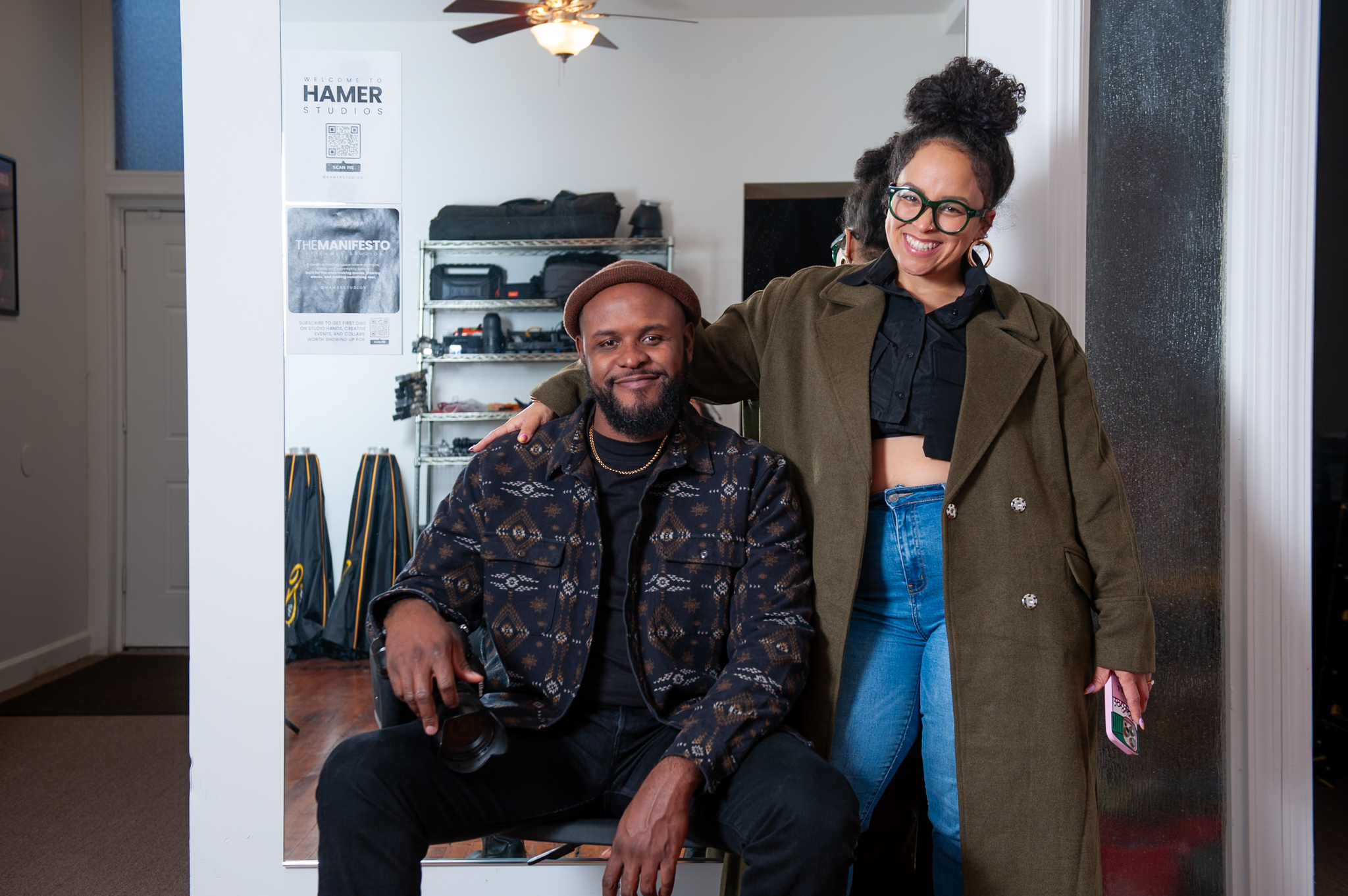 Photo credit: Lindy Drew / Humans of St. Louis
Valeria: “Time with other creatives is important to us because we love community. We thrive in community. We built our careers in community. We’d been wanting to spend more time with our creative friends, and we realized we were only seeing them in workspaces. Fun spaces, but workspaces. We’d just have a moment here and there in passing because all of us were working. So we created this space, The Manifesto, with the intention of bringing our fellow creator friends together. The Manifesto is our hub. And it’s a nice catch-all. Because we also want to manifest that this space is rooted and based in friendship and connection. Now we can work out of here and host meetups and hangs. Because we both work for ourselves, we’re also adamant about working with people we enjoy working with. Like, ‘If I don’t f*ck with you, I’m not coming in to work with you.’ Also, so many of us creatives work for ourselves, but we’re all part of this community, and some of us want to build together.”
Phillip: “So the idea for The Manifesto was all Ms. Rodriguez.”
Valeria: “A lot of times with businesses, you set a mission and vision, but the manifesto part is about the intention behind it. We’re a group of people of color and then some, aiming for experiences that are purpose-driven. Look, work is gonna happen no matter what, whether we’re partnering or by happenstance when we end up in the same spaces. So we thought, ‘Let’s just bring our friends together. Let’s elevate each other. And let’s prioritize our relationships so we feel safe talking about all the things that matter when it comes to what we do.’ Now, some see us as the auntie and the uncle of the group. I don’t feel like I’m that old to have that title or responsibility, but we are. And since we don’t have kids right now, we’re frolicking with the yungins, I guess. Even though they’re just a couple of years younger than us. A lot of friends also have children, so we’re straddling the in-between, and we get to include everyone.
People are always asking us to mentor them, or it’s like, ‘Hey, can you teach me?’ And I can tell them, ‘Now that we have a space, we’re here. Let’s talk business. Or just come kick it with us.’ And it doesn’t have to be too formal. I could kick off my shoes, or I could be fabulous. Be whoever you want to be. And for us to be able to barbecue or do karaoke, it’s a little more elevated than just being outside in the summer.”
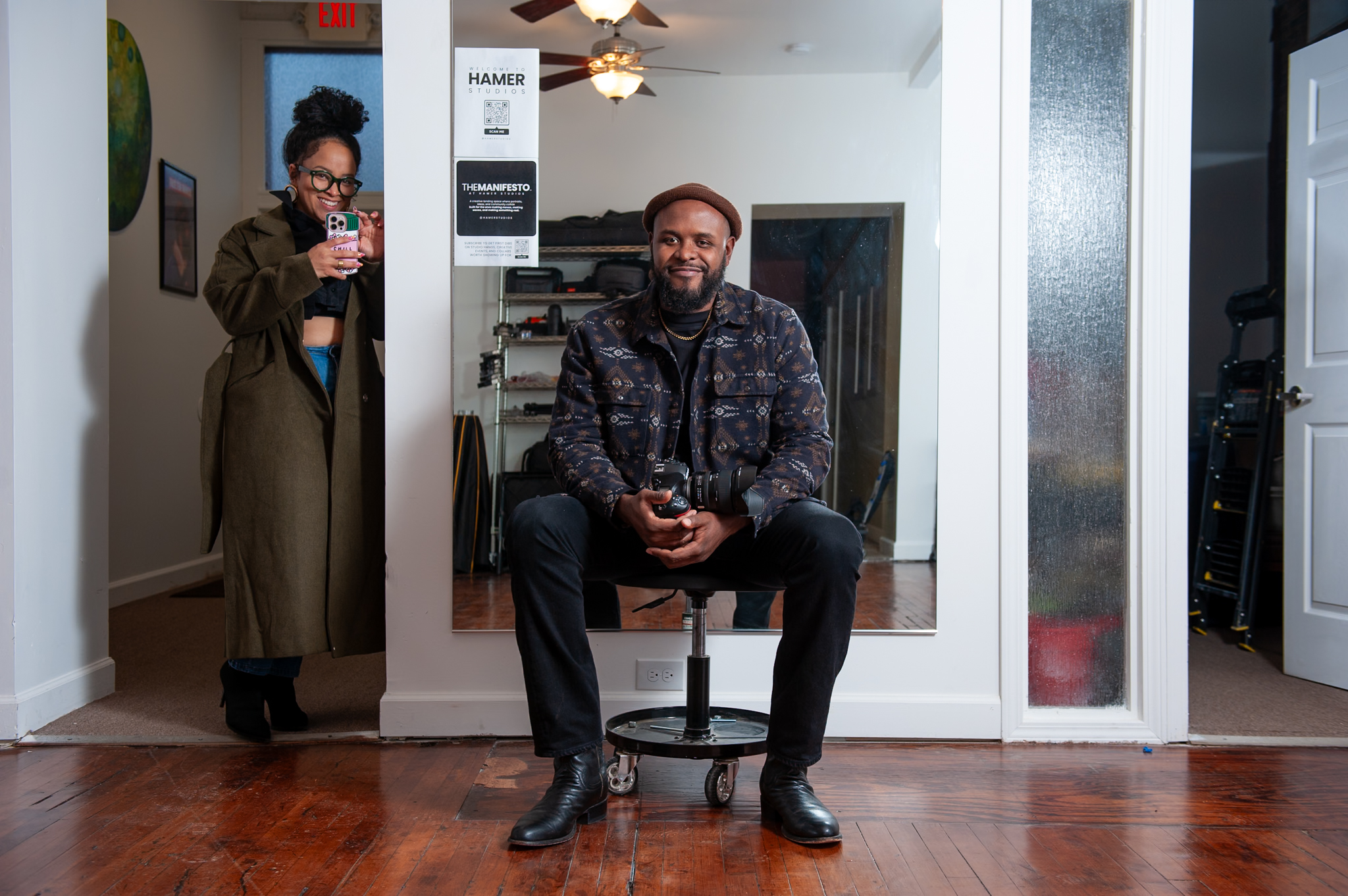 Photo credit: Lindy Drew / Humans of St. Louis
Phillip: “I need to be better about posting on social media. It’s just not my thing. I get bursts of inspiration now and then. But she’ll say, ‘Send me the content, I’ll take care of it.’ I’m really thankful I have such a phenomenal partner who does such phenomenal work. And it’s something she enjoys doing, so that opens up time for me to just be able to photograph.”
Valeria: “Phil and I are both different entities; we’re just under the same roof. With him, if you want mentorship, you can come here and get mentorship. What does that look like? His structure makes sense: ‘You can use my equipment, you can use my space, and I’m here if you need me. Ask me questions. If you don’t want me to jump in, cool.’ For me, I work with a lot of small businesses and organizations. Sometimes I’m asked to be a speaker, so it’s like, ‘Y’all can come meet me in this space where we don’t have to feel rushed. I have everything I need. And my partner does photography and video if you need.’”
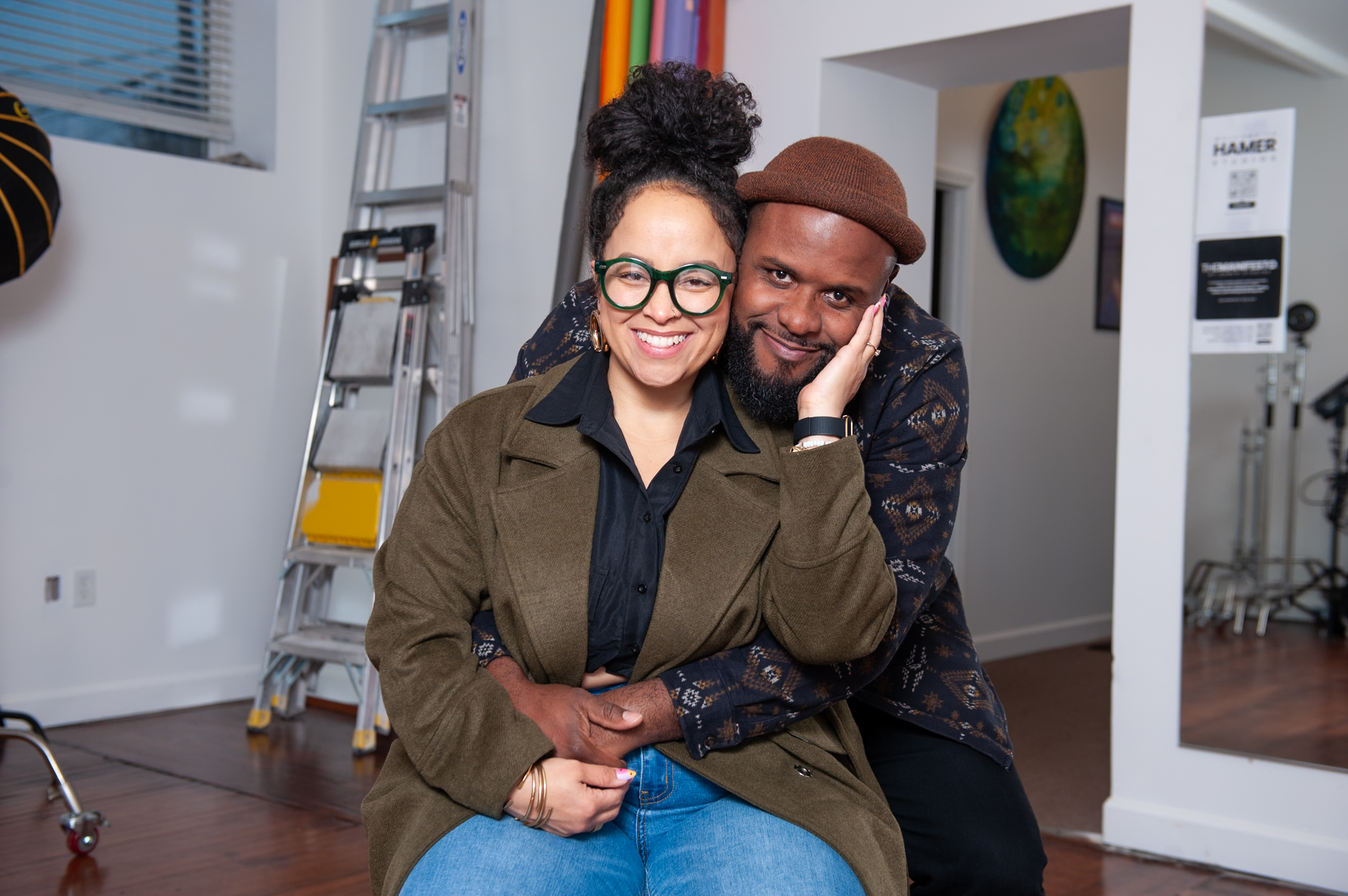 Photo credit: Lindy Drew / Humans of St. Louis
𝐼𝑡’𝑠 𝑠𝑜 𝑖𝑚𝑝𝑜𝑟𝑡𝑎𝑛𝑡 𝑡𝑜 ℎ𝑎𝑣𝑒 𝑐𝑜𝑛𝑣𝑒𝑛𝑖𝑒𝑛𝑡 𝑚𝑒𝑒𝑡-𝑢𝑝 𝑠𝑝𝑜𝑡𝑠. 𝐴𝑠 𝑎 𝑐𝑟𝑒𝑎𝑡𝑖𝑣𝑒, 𝑖𝑡’𝑠 𝑎𝑙𝑤𝑎𝑦𝑠, ‘𝑊ℎ𝑒𝑟𝑒 𝑎𝑟𝑒 𝑤𝑒 𝑔𝑜𝑖𝑛𝑔? 𝑊ℎ𝑖𝑐ℎ 𝑐𝑜𝑓𝑓𝑒𝑒 𝑠ℎ𝑜𝑝? 𝑊ℎ𝑖𝑐ℎ 𝑤𝑜𝑟𝑘𝑠𝑝𝑎𝑐𝑒?’
Phillip: “We want things to feel like home. Even prior to her and me living together, and when I had the live-work space on my own in Downtown, I thought a lot about how women would feel there. It wasn’t only my home, but a place I worked out of. And I didn’t want it to feel like, ‘I’m inviting you to come to my house to take photos.’ I was very intentional about making sure my home felt like a home and making sure the studio felt like a studio. And that when people came in, specifically women, they didn’t feel uncomfortable. I had modifiers hanging up. I made sure my backdrop stand was set up and my gear was out. Just coming into our new spot here for the first time, I thought, ‘I can see the space. Let’s make it all white walls and nice hardwood floors.’ For me, it feels warm, comfortable, and homey.”
𝐴𝑛𝑑 𝑐𝑜𝑛𝑣𝑒𝑟𝑡𝑖𝑏𝑙𝑒.
Phillip: “Yeah, as you can see, so much stuff is on wheels. So it can be moved and shifted as necessary to maximize things. And because this space is shared with the owner, I wouldn’t feel comfortable renting it out and leaving. So whoever’s renting the space, they can also use my gear and get me as their assistant because I’ll be here. If you’re highly experienced and just want someone to come set up your things so you can focus on photographing, I’m here to do that. If you’re not as experienced and you want to learn how to work in a studio and improve your lighting, you not only have me as an assistant, but I’m also around to give advice and lend a hand.”
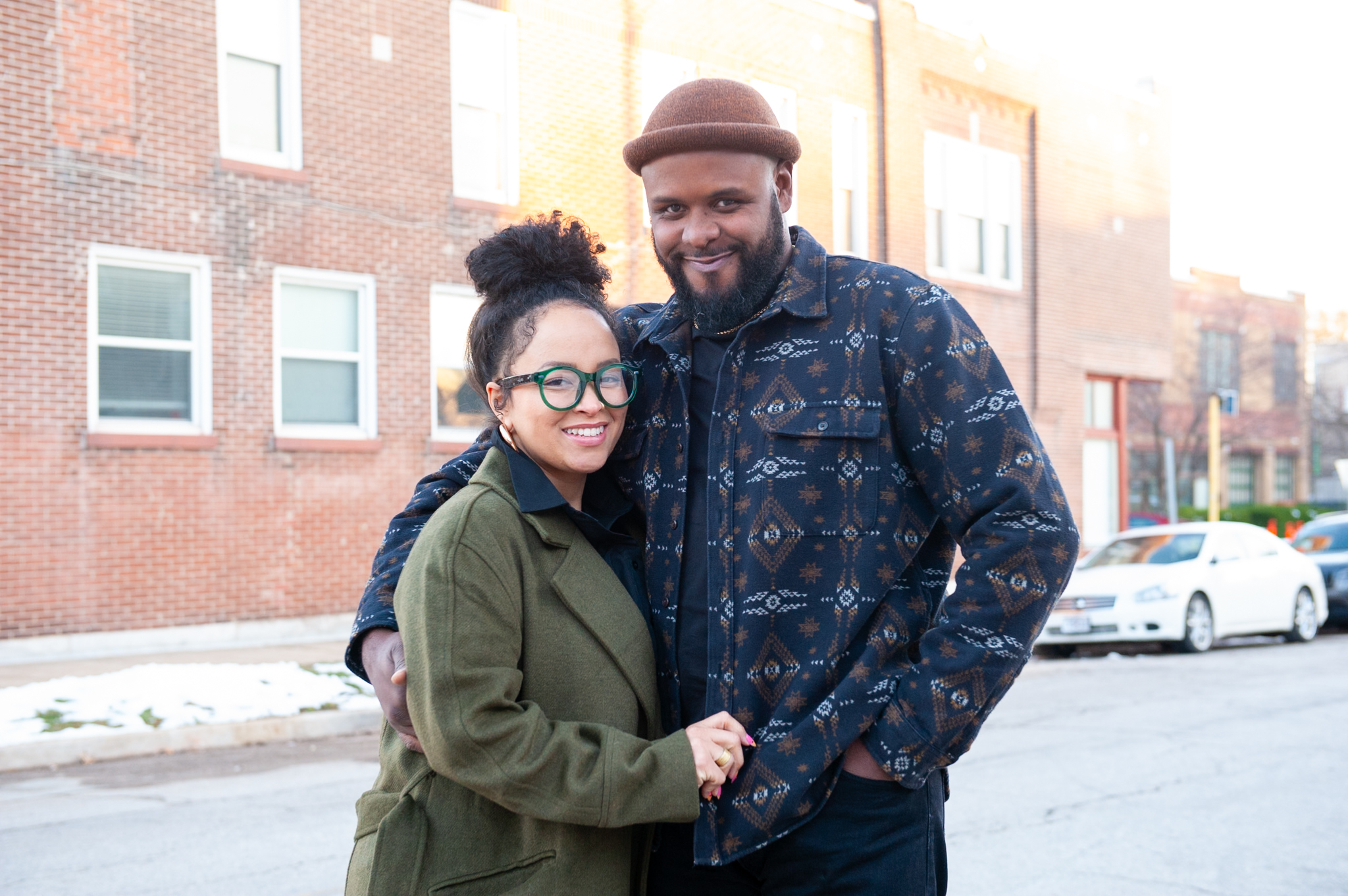 Photo credit: Lindy Drew / Humans of St. Louis
Phillip: “When I started doing photography in this city, it felt to me like a lot of people were kind of keeping things to themselves, like there wasn’t enough work to go around. But over the years, I’ve seen a lot of younger photographers blossoming with an openness and a willingness to collaborate with one another, grow with one another. I’ve built a career in photography here in St. Louis; however, I want to be friends with more photographers. I’m especially intrigued by seeing work that younger photographers are doing in this city. My project about Black rodeos has been a creative outlet for my world. But when you choose to build creative portions of your life as a career, you can find yourself creating solely to make work or make work for others. In the last year, I found myself coming to a place where — and I’m thankful for you being here, because it allows me to put it on record and say it out loud as well — where I need to begin growing my chops again. I know I was always able to grow my chops through creative projects. So I’m excited about what else will happen this next year. Between an unplanned move, planning our wedding, and building out The Manifesto, that’s all been the focus. I know for certain this space will create flexibility for us to make more creative content. And to the young photographers out there, I’d love to work with you.”
Phillip Hamer, www.philliphamer.photography | Valeria Rodriguez, www.valeriar.com
About Humans of St. Louis
Humans of St. Louis (HOSTL) is a 501(c)(3) non-profit organization with the mission of sharing photographic portraits and first-person stories to highlight local needs, issues, and experiences from people in the St. Louis region. HOSTL gives followers an intimate look into the lives and struggles of the people of St. Louis, one photo and story at a time, and is the second most popular “Humans of” site in the U.S. after Humans of New York.

Follow Us On Social Media