
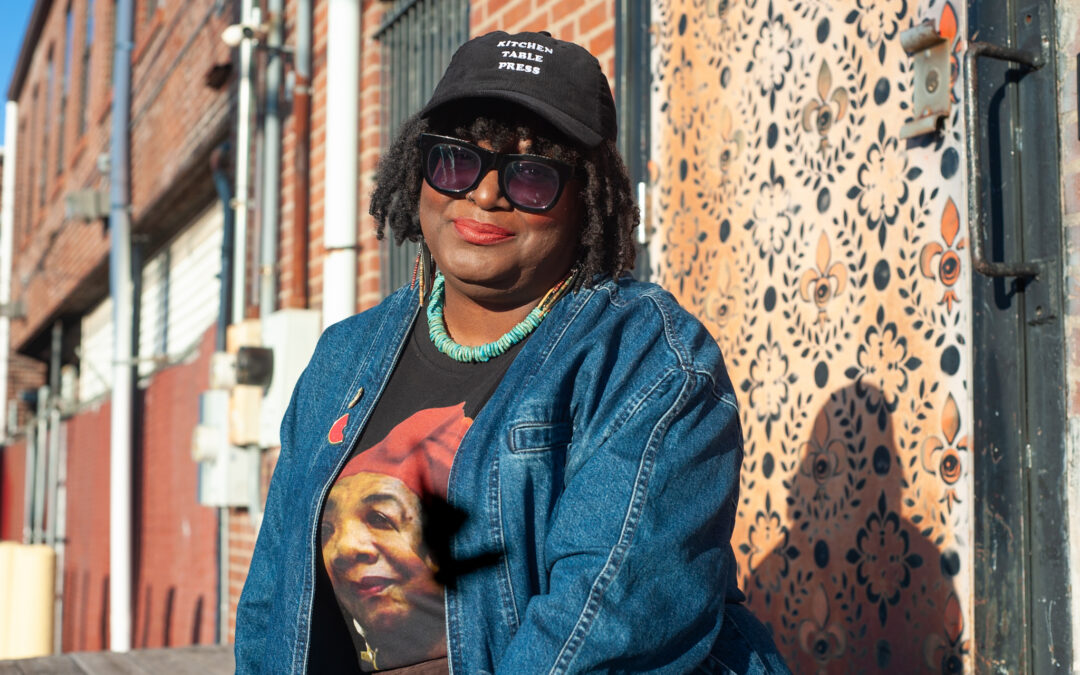
RAC is excited to partner with Humans of St. Louis to highlight stories from some of the talented creatives and artists who call St. Louis home. All stories and photography in the RAC + Humans of St. Louis series were created by and are credited to Lindy Drew, co-founder, lead storyteller, and book co-author of Humans of St. Louis.
Zenique Gardner Perry
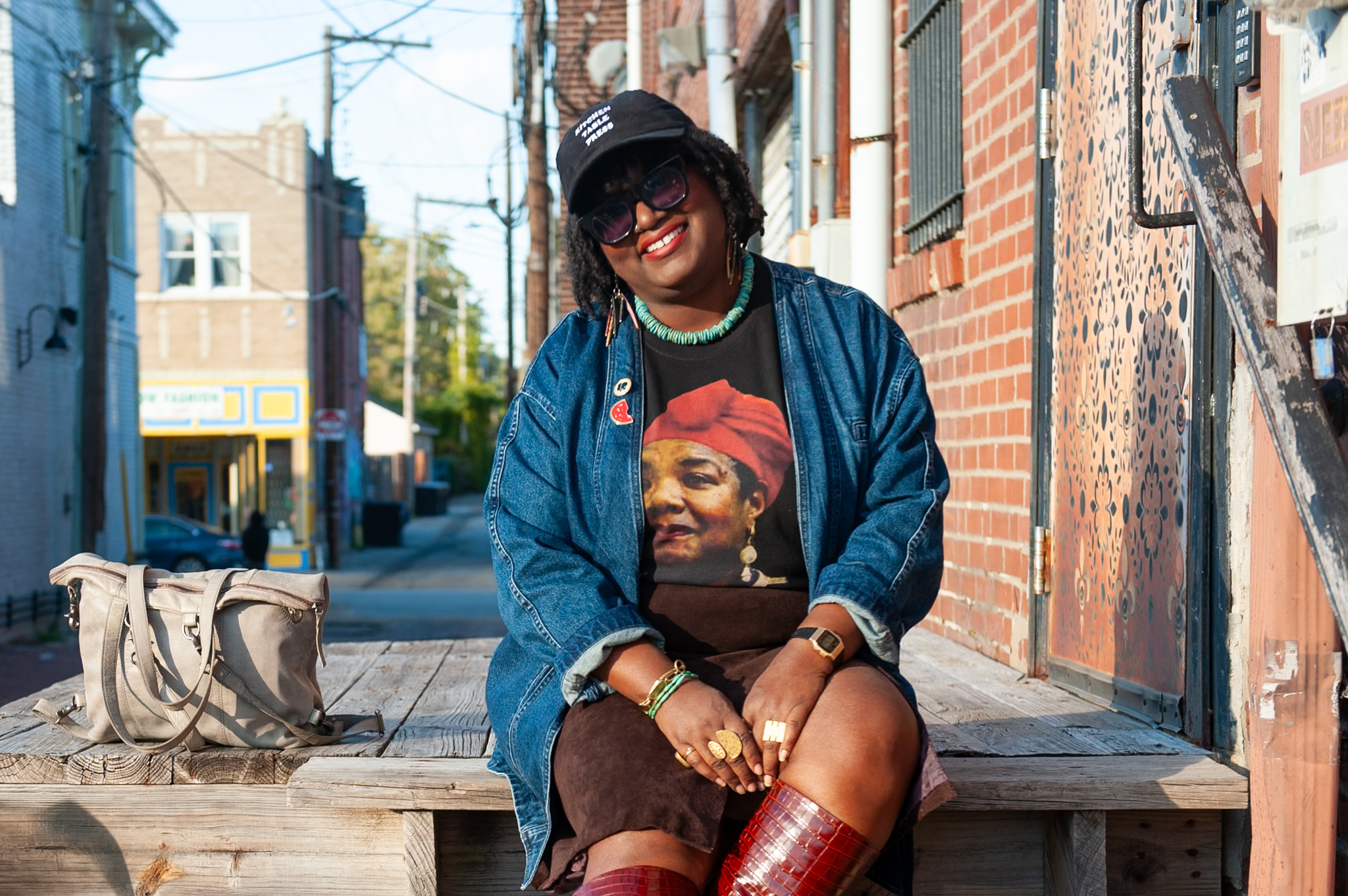 Photo credit: Lindy Drew / Humans of St. Louis
“It takes skill when it comes to writing a memoir, an essay, or narrative poetry about something personal in your life. A lot of my stories have come out of a place of hurt. And when you’re writing from an emotional place, you need to sit with it for a while. When I started the MFA program at Washington University, that’s when I really got to focus on my writing. There was just me to think about, so I had an opportunity to work on my creative nonfiction. That summer, Covid already hit, George Floyd happened, and I started my program virtually in the fall.
At the time, the publishing industry was also coming to terms with how white it was. All these publishing houses and writing entities were thinking about how they could diversify to be more equitable businesses. So they started creating imprints where they were thinking more about Black and Brown stories. Well, Columbia Journalism School put out a call for writers, and someone sent it to me like, ‘You should apply.’ I almost didn’t, but I ended up doing it. And I was one of the folks selected. It was sweet because, from some of my journal entries, I had wanted to tell the story about why I moved back to St. Louis.
I had been living in Philly for 12 years and knew I wanted to return home to be with my mom. She’d been living in Bevo Mill for over a decade and was raising my 16-year-old nephew. In 2014, you know, Michael Brown Jr. was killed. Well, around Thanksgiving, Darren Wilson, the cop who shot him, got acquitted. That same weekend, my nephew got out of the house to hang with some friends. And he ended up being one of the four boys who got in a fight with a Bosnian man, hit him over the head with a hammer, and killed him. The Bosnian community protested, saying that Black folks were retaliating against them and ‘they’ve killed one of ours.’ Mayor Slay promised to prosecute the boys to the greatest extent to make an example of them, and my nephew was detained and locked up.
“…My mom, who was dealing with all this by herself, went to live with her mom in Holly Hills. But before that, she had built a community in Little Bosnia. She was a former teacher at Long Middle School, so she already knew a lot of the children, families, and their stories. And they knew my nephew because he had grown up in that environment, too. After the incident, my mom would go home sometimes, and the neighbors would tell her, ‘Come home, Mary. This is your home.”
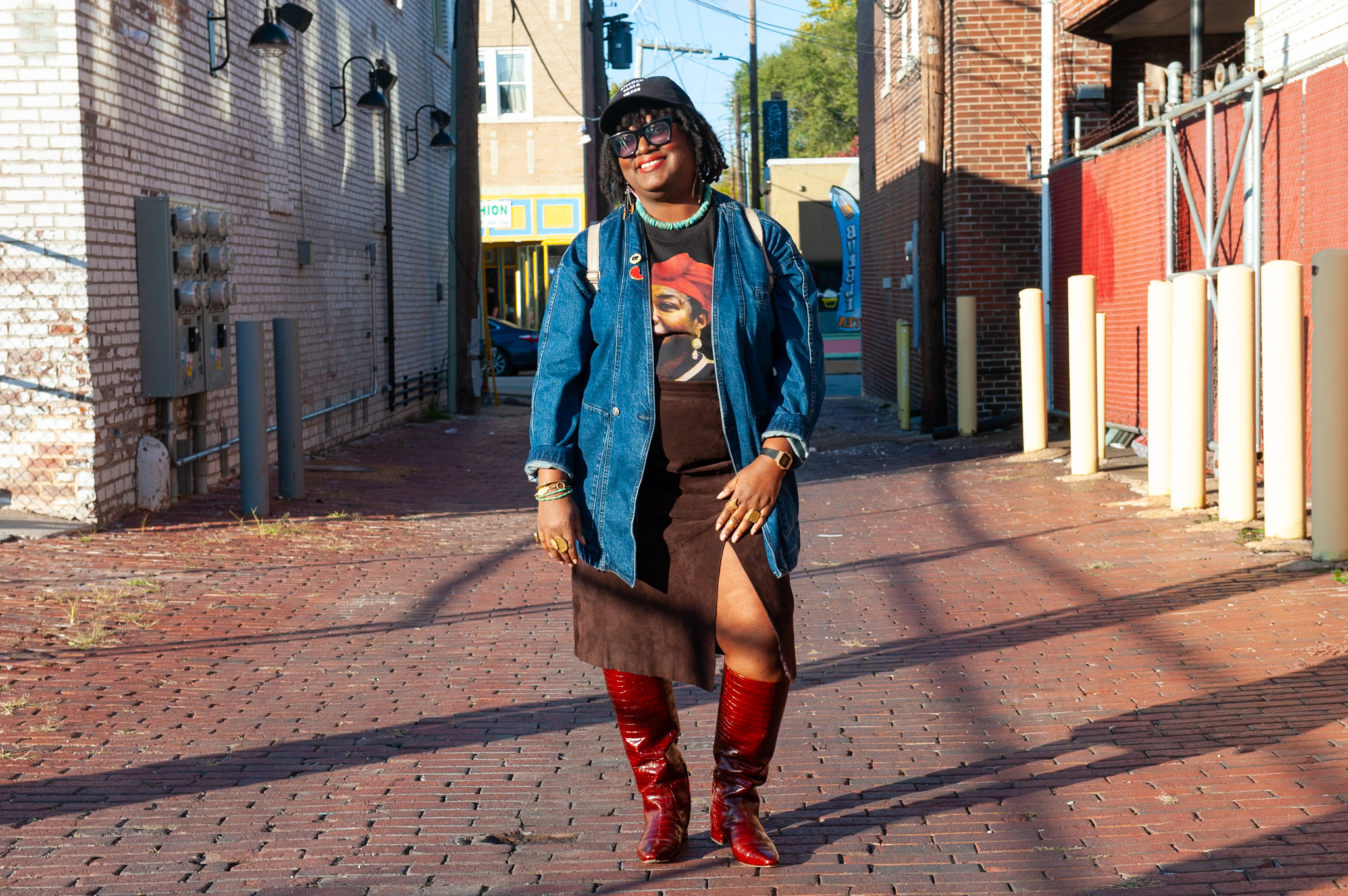 Photo credit: Lindy Drew / Humans of St. Louis
“When I moved back to St. Louis, it was my mom and I navigating this whole criminal justice system. Three years later, my nephew got sentenced to 35 years. That’s just the tip of the iceberg. There were a lot of things I had to make sense of over that time. So I knew I wanted to write a story about those first few months back with my mom and the things I noticed about her at that time. Like, how she didn’t let herself cry. Anytime she’d get emotional, she might start crying, but instead she’d pray. My mom’s a pastor. So she was allowing her religiosity and spirituality to hold her grief until days after that first hearing when she had to testify in court.
I got a taste of working with an editor from the Columbia Journalism School, which was wonderful for my writing, but the story was just so heavy. In the process, I became overwhelmed because I was a student focused on writing this and other things. Well, in my program at Washington University, these big authors would visit, we’d submit a story, and they’d give us feedback. I’ll never forget Aisha Sabatini Sloan was one of our visitors, and I told her how stressed I was. I felt like I was getting a lot of pressure from my editor to complete the story. But I was like, ‘I’m not sure I’ll be able to do it on their timeline. I think I’m going to pull out of it.’ And she said, ‘No, it’s your story. You tell them what you need. If they can’t wait for it, there are other people who will publish it.’ And that was the richest advice I’ve ever gotten when it comes to being a writer. Like, ‘Girl, no. We ain’t finna do this.’
I ended up having a conversation with my editor and told them, ‘I feel like I’m under a lot of pressure.’ I had already gotten a monetary award, so I said, ‘I’m happy to send the money back. I didn’t cash the check because I wasn’t sure if I’d be able to do everything in time.’ But he said, ‘No, Zenique. Put the check in the bank. What time do you need?’ And I learned that when people want your story, they will fight for you. They’ll give you the space you need to create the story the way you want.”
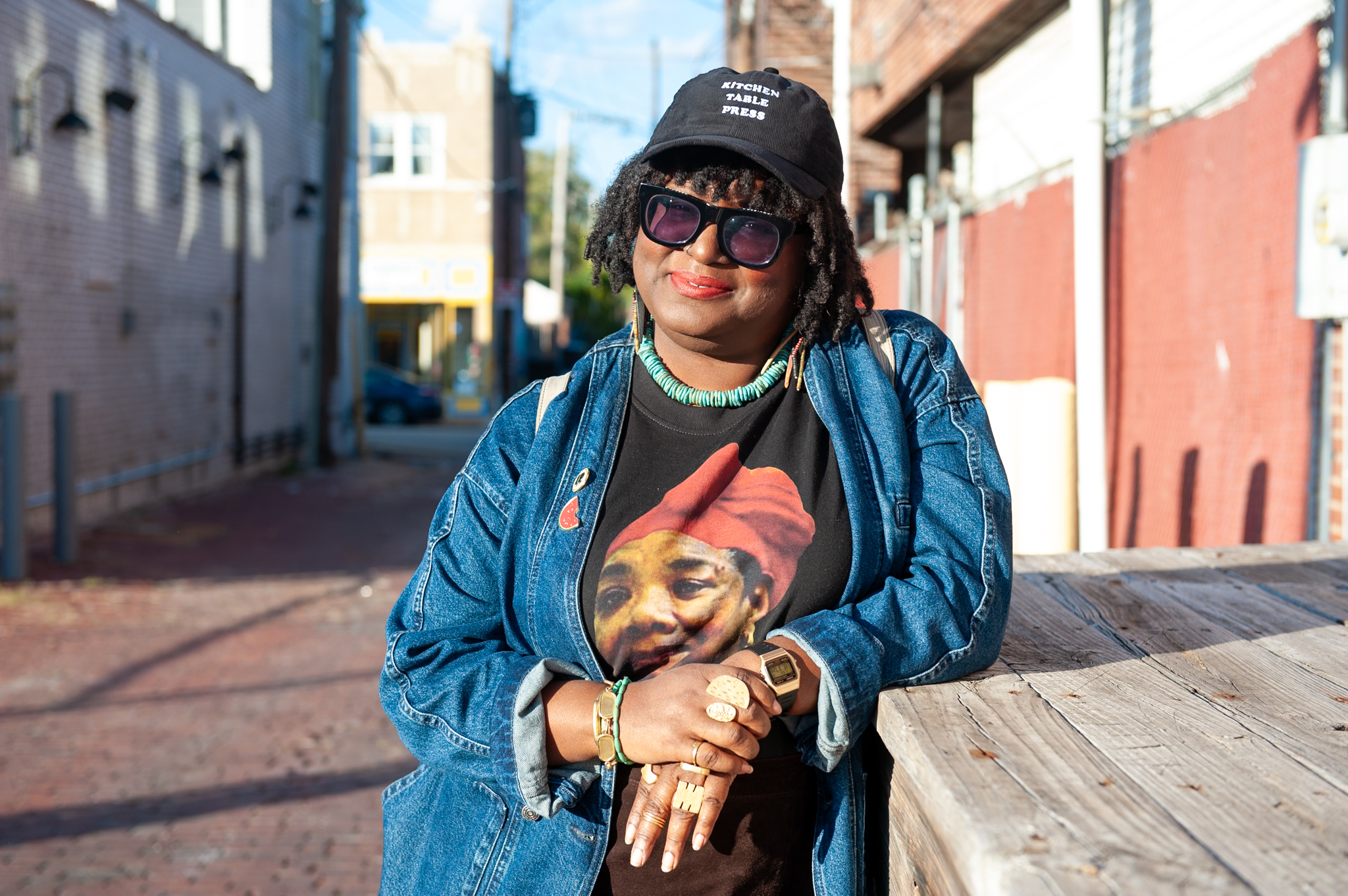 Photo credit: Lindy Drew / Humans of St. Louis
“While advocating for more time from my editor, I won a second award, the Illuminating Black Lives Fellowship, which was the gift of time at a writer’s retreat center in Eureka Springs, Arkansas, called The Writers’ Colony at Dairy Hollow. If you ever need space to write something, this place is wonderful. So this two-week retreat was coming up, and I went with a plan to complete the story. Every time I go on a retreat or residency, I always finish a piece, and it gets published right afterwards. So I went during my first and second year at WashU, finished the story at 3 a.m. one night, and cried my eyes out. I texted my mom, ‘Mom, I finished a story.’ I told her how thankful I was for her. She told me how thankful she was for me. And then it got published in The Delacorte Review, a long-form narrative nonfiction literary journal. It’s the longest story I’ve ever published to date. It’s the most emotional and personal piece for sure. And I had to fight about its title.
I was able to keep one of the titles mutually agreed upon when it was published in print. But for the online version, they wanted something more like a journalistic byline. And I had to tell them, ‘No, we won’t publish it online then.’ I expressed how important it was to maintain a level of dignity in this story I told and not do something exploitative. They wanted some salacious headline, like, 𝑇ℎ𝑒 𝐻𝑎𝑚𝑚𝑒𝑟 𝑀𝑢𝑟𝑑𝑒𝑟: 𝑊ℎ𝑒𝑛 𝑎 𝑇𝑒𝑒𝑛 𝐺𝑜𝑒𝑠 𝑊𝑟𝑜𝑛𝑔. I mean, that was basically the headline here in St. Louis: 𝐻𝑎𝑚𝑚𝑒𝑟 𝐾𝑖𝑙𝑙𝑖𝑛𝑔 𝑖𝑛 𝐵𝑒𝑣𝑜 𝑀𝑖𝑙𝑙. And I said, ‘We should use the same title we always have: 𝑊ℎ𝑒𝑛 𝑀𝑜𝑚𝑚𝑎’𝑠 𝑃𝑟𝑎𝑦𝑒𝑟𝑠 𝑊𝑒𝑟𝑒𝑛’𝑡 𝐸𝑛𝑜𝑢𝑔ℎ.’ Because one of the things I know that happens to families of perpetrators of violence is that we get treated as if we’re the perpetrators ourselves. I always say we’re like the silent victims of a crime. Sure, sometimes you can see the writing on the wall. But usually, the families are just as blindsided as everyone else experiencing the news of whatever crime their family member or loved one committed. And a lot of times, the public doesn’t know how to access compassion for families of the perpetrators of violence.”
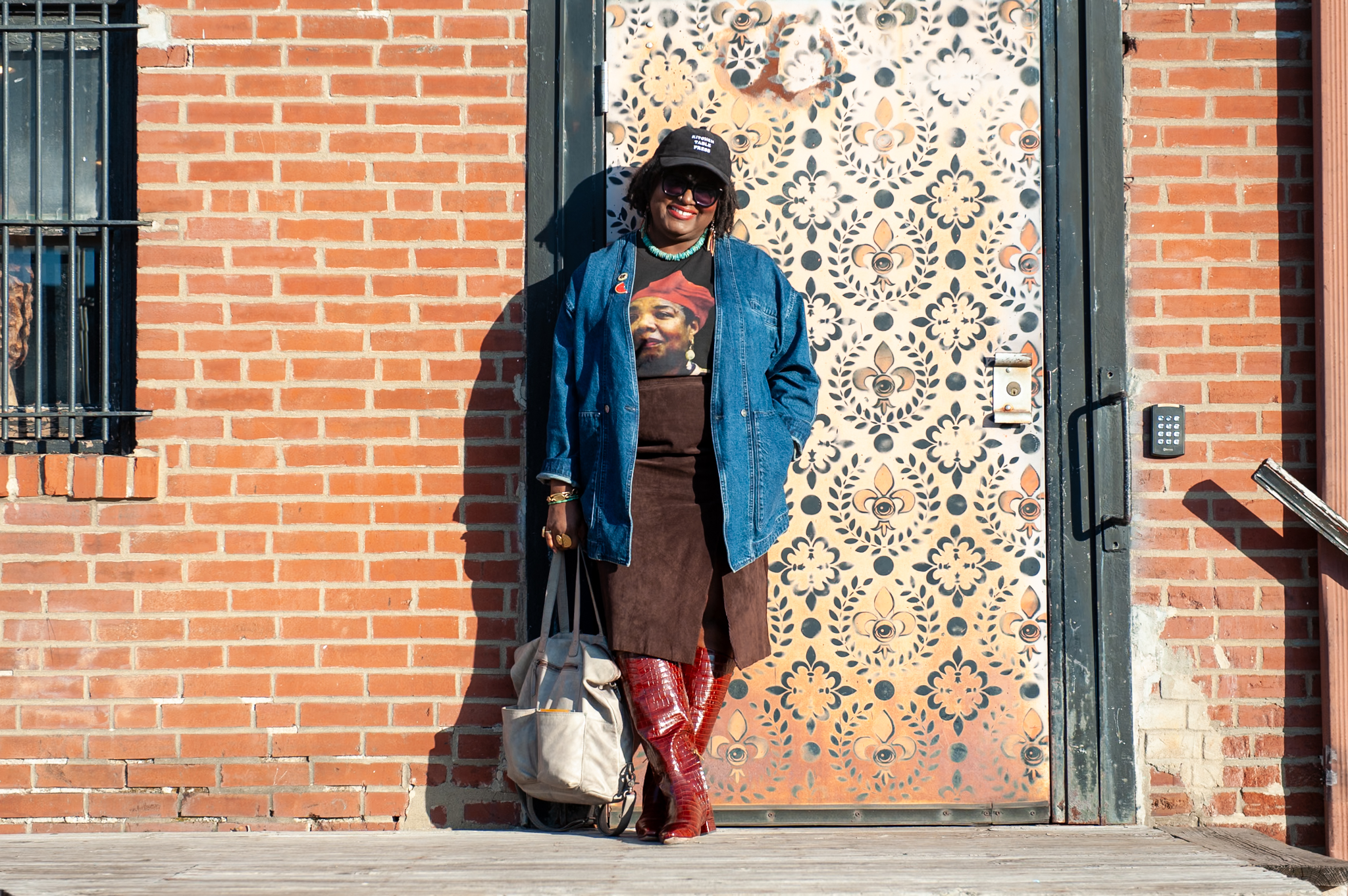 Photo credit: Lindy Drew / Humans of St. Louis
“While I love writing and the writing process, I also help people shape stories, tell their own stories, and figure out how to get their stories into the world. Ironically, I’d been working with formerly incarcerated people for years. For several of the years I lived in Philadelphia, my baby brother was locked up in prison here in Missouri. Out of a desire to connect with him, I ended up teaching a writing class for the Institute for Community Justice (ICJ), which announced its closure earlier this year. But this incredible program was part of Philadelphia FIGHT, an organization that provides information and resources for folks living with HIV. So the ICJ had this program supporting folks on the inside who were HIV positive and coming home. I had just finished my undergraduate program and had time. So I taught a class there.
A lot of times, those who are incarcerated, formerly incarcerated, working class, or historically marginalized don’t think their stories matter. And in the process of writing, there’s room for personal redemption, to reflect and have space for introspection, and to figure out, ‘How do I reconcile? How do I forgive myself? How do I forgive others? Who do I need to reach out to?’ I use these prompts to help them figure it out.
Fast forward a few years later, after I returned to St. Louis. My baby brother had long completed his prison sentence, I’d just graduated with my MFA from WashU, and I was hired as an English Writing professor for the Prison Education Program at Saint Louis University. While it was a semester-long appointment, I only taught for four weeks at the Missouri Department of Corrections in Bonne Terre. In that last week, my students were working on an important project with some really difficult stuff and arrived to class so sad and weepy. We were doing creative nonfiction. They were excavating their life stories, mining the details of their pasts. And we were thinking together about how to mold that into a narrative, a story.
The class was made up of 23 men who had done all kinds of things in the world. “…I refrained from looking at their records because I didn’t want to think about their histories. I just wanted to see them as my students; to have in front of me who I came to know, their potential, and that’s it. When they had to write their first drafts, they were feeling all the feels. So I did a meditative exercise to help them quiet their minds beforehand.”
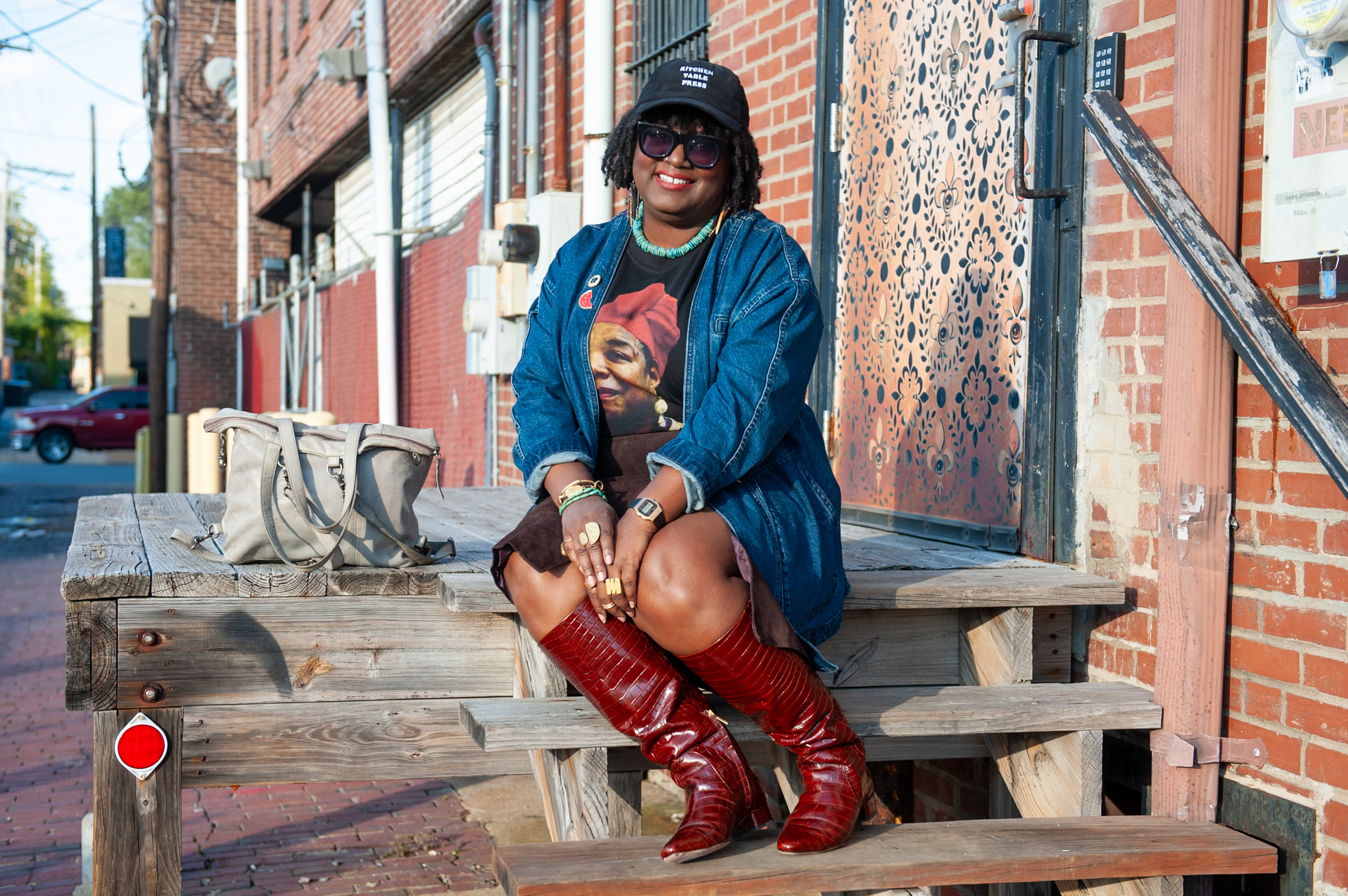 Photo credit: Lindy Drew / Humans of St. Louis
“When I left that day of teaching, I got an email from the Prison Education Program director asking to meet her on a Zoom the next morning. I thought, ‘Something happened.’ Sure enough, when we met, she told me the prison said they did not want me to come back because I assigned a book that was inappropriate. The book, 𝑇ℎ𝑖𝑠 𝐽𝑎𝑑𝑒 𝑊𝑜𝑟𝑙𝑑, is written by Ira Sukrungruang, an amazing author. And I found out about this particular text because he did a reading and book talk with students from WashU’s MFA program while I studied there.
The book is a memoir in which the author talks about how his wife wanted a divorce. In it, Ira tackled his food codependency, described himself as a fat Asian man, and really started thinking about Asian male desirability. He was also jumping into bad habits of sleeping with women and things like that. Ultimately, it was the sexual content they deemed inappropriate for the students. I guess it made sense, but in thinking about stories, I don’t focus on what’s salacious. I think about how they provide such rich reality.
When I talked about it with the SLU Prison Education Program staff, they were so good to me. They knew the pushback was also likely because the prison had never had a Black woman work in that program before. Ya know, I had been to prisons for years, visiting my brother and cousins. So I put so much thought into how I showed up. I dressed professionally because I knew all the guidelines of going into that space. In hindsight, I should have gotten some boiler suits to wear every visit. But I feel like I could have stripped myself down and it still wouldn’t have mattered. Looking back, I still blame my appearance for the racism, discrimination, and misogynoir that they put on me as a Black woman teaching men in that facility.
Thinking more about that book, I let Ira know I had gotten put out because of it. He wrote back that he was really sorry. The book is good, though. The way it’s written, there’s a pattern he uses and things he had to explore to get to the end to understand his own worth. That I really appreciated.”
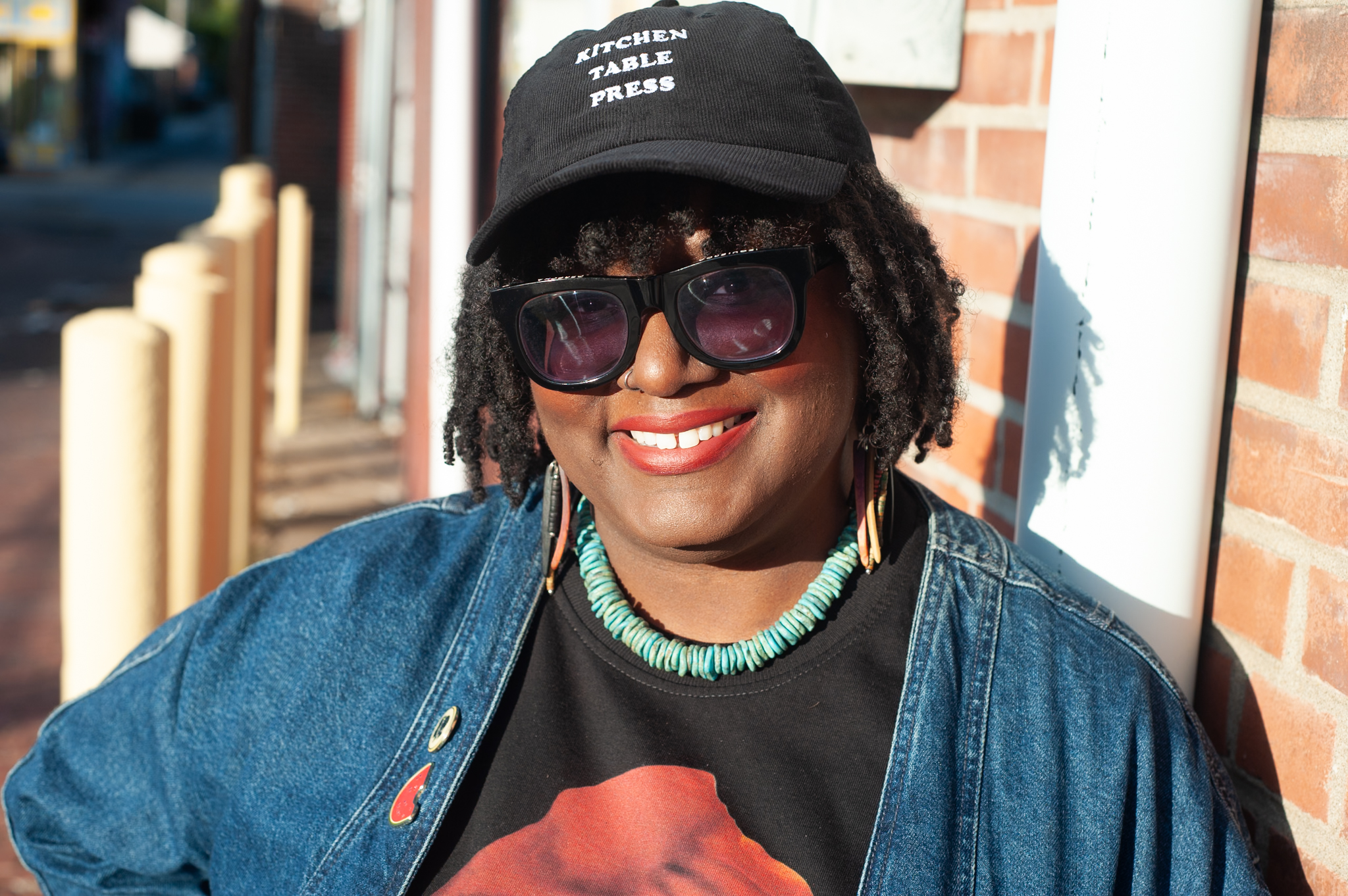 Photo credit: Lindy Drew / Humans of St. Louis
𝐷𝑖𝑑 𝑦𝑜𝑢 ℎ𝑎𝑣𝑒 𝑎 𝑚𝑜𝑚𝑒𝑛𝑡 𝑤𝑖𝑡ℎ 𝑡ℎ𝑒 𝑠𝑡𝑢𝑑𝑒𝑛𝑡𝑠 𝑡𝑜 𝑠𝑎𝑦 𝑔𝑜𝑜𝑑𝑏𝑦𝑒?
“No, I didn’t get to speak to them directly. They did find a different facilitator — a white man who carried out my syllabus — so the students didn’t have to lose a whole semester of classes. I was able to work through him and, of course, there were no problems. The program continued to pay me for the rest of the time, but it was really sad. I’m still in touch with the professor who hired me, though. One day last fall, we met for coffee, and he told me, ‘Zenique, I had to sit in at the prison the other day, and your name came up. Some of the students asked if I ever talk to you. And I told them we were meeting. They said, “I still think about her stories, how important they were, and what she did.”’ I was like, ‘Thank you so much for telling me this.’ One day, I’m going to write a story about that experience, too.”
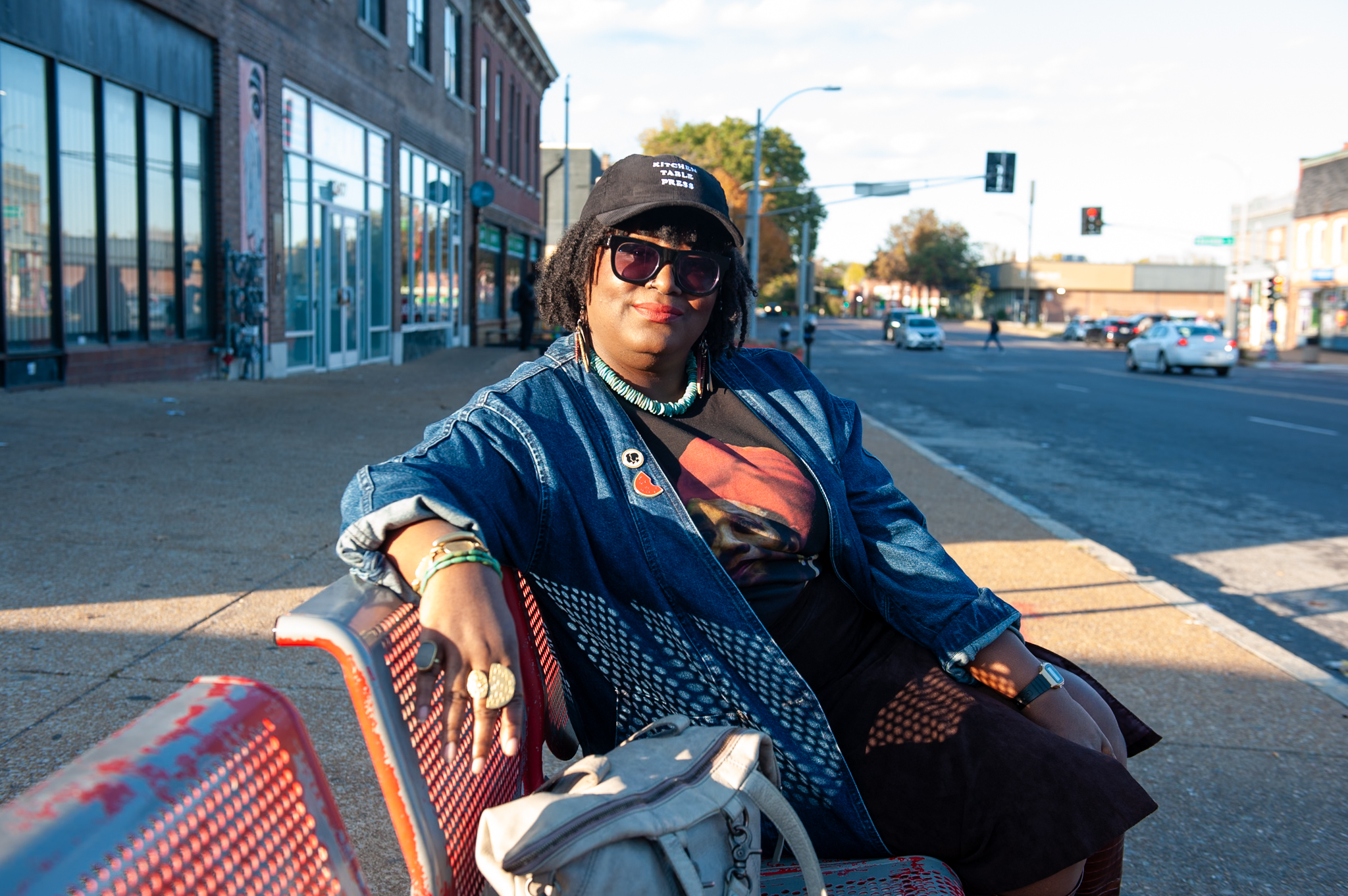 Photo credit: Lindy Drew / Humans of St. Louis
“Now I’m writing stories that I’m hoping to pursue an agent for. The first one came from a prompt from one of my classes in school that I never intended to see the light of day. But from this one writing prompt, I started writing a story about my nephew, and I ended up writing more and more.
So, I have four siblings. I’m the eldest girl, and we have an older brother. I also have many niblings, my nieces and nephews, and my sister, who’s a year younger than me, is a mom to five of them. Her eldest was the one who got locked up as a teenager while living with my mom. Shortly after that, my mom visited my sister, who was living in L.A., and we found out one of her kids was getting homeschooled, which, for reasons I won’t get into, was very strange. So I said, ‘Momma, why don’t you bring my niece home to St. Louis?’ And she did. My husband and I ended up taking her in, raising her, and putting her through school. She was 11, and now she’s 21. She was the first of my sister’s kids to come live with us.
A few years later, my sister’s younger son also came to live with us. He was the love child of my sister and an undocumented Guatemalan she met in L.A. When they eventually split up, my nephew went to live with his father, who lived in a home with his large Latino family. When he got sick with a brain tumor, he got sicker. And since he was undocumented, he got hooked up with this hospital doing something experimental on his body to cure him. They kept him alive for a long time. But when he died, my nephew was six years old.
My husband and I kind of knew at some point that it made the most sense for my nephew to live here in St. Louis. Now, he had been immersed in his Guatemalan household, and he was bilingual. So how could we preserve this as he came to live with his Black family? We enrolled him in St. Cecilia School & Academy to make sure he was still learning and connected to as much of his culture as possible. He entered as a 1st grader, and recently matriculated to high school. Plus, he’s not only learned Spanish but Japanese, too. Today he has a great sense of his heritage, which especially matters to me.”
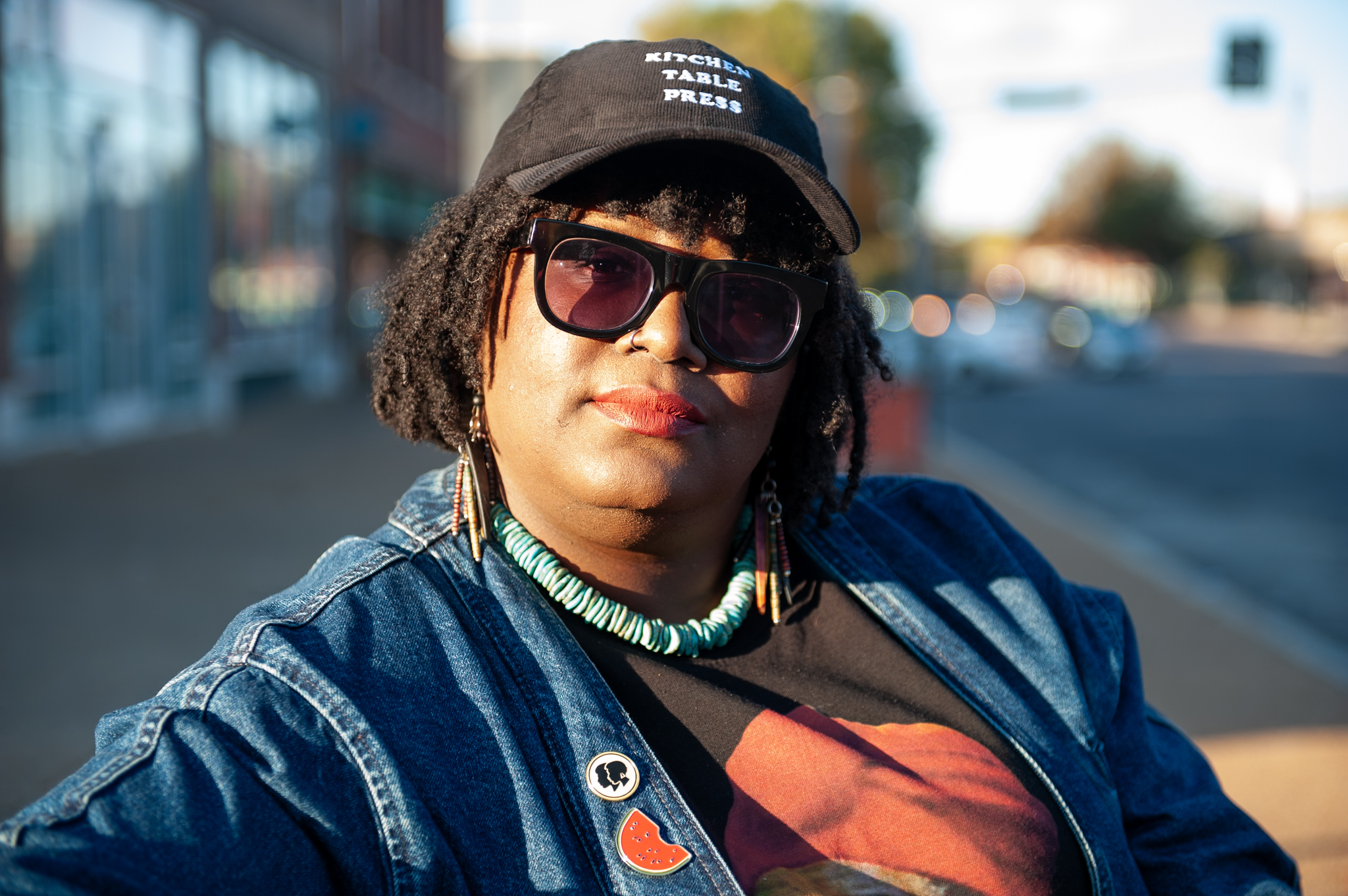 Photo credit: Lindy Drew / Humans of St. Louis
“Now, my sister had two additional children after my niece and nephew. Their father was an aspiring rapper from St. Louis who was physically and verbally abusive. Eventually, my sister wasn’t doing well at all and had to move back to St. Louis. As far as I knew, she’d never had a substance use problem, but she had struggled with mental health issues. While she was out West, we’d send her money, and she’d stay in shelters, get put out of one, and go to the next. At some point, our aunt, who is a nurse, said, ‘If I run into them and see a problem, I’m gonna report it. And you’re gonna have to deal with it from there.’ Well, when she met up with them, she was full of compassion, and sent them on a train to St. Louis.
I picked up my sister and her kids from the station, and they reeked like they’d been living on the street. A woman traveling with them, and who had been so worried, gave me the warm handoff. I said, ‘Thank you, we got it from here.’ Oh, I was so relieved that she and her kids were all here, even though it was a huge undertaking. Upon arrival, my sister and her two youngest went to live with my mom.
My nephew had been with us for about six years when my mom and his two younger siblings moved into our house a couple of summers ago. And my husband’s boundary, because he’s also a social worker, was that my sister could not come with them. So then she was unhoused in St. Louis and had to get herself together. She had no other options. She was making bad choices for the longest time, and she’s much better now. She got connected with Places for People, which really helped shift things for her and saved her life. And children are pretty much always going to choose their parents, even when their parents might not choose what’s best for them. It’s hard, and it’s hurtful. It hurt my feelings. I’ve been hurt many times by the children choosing their mom in good, bad, or indifferent circumstances. Like, if it’s Mother’s Day or Easter, and they say, ‘Can you take us to the store to get a gift for our mom?’ I say, ‘Okay.’ Still, it’s just always an emotional journey.”
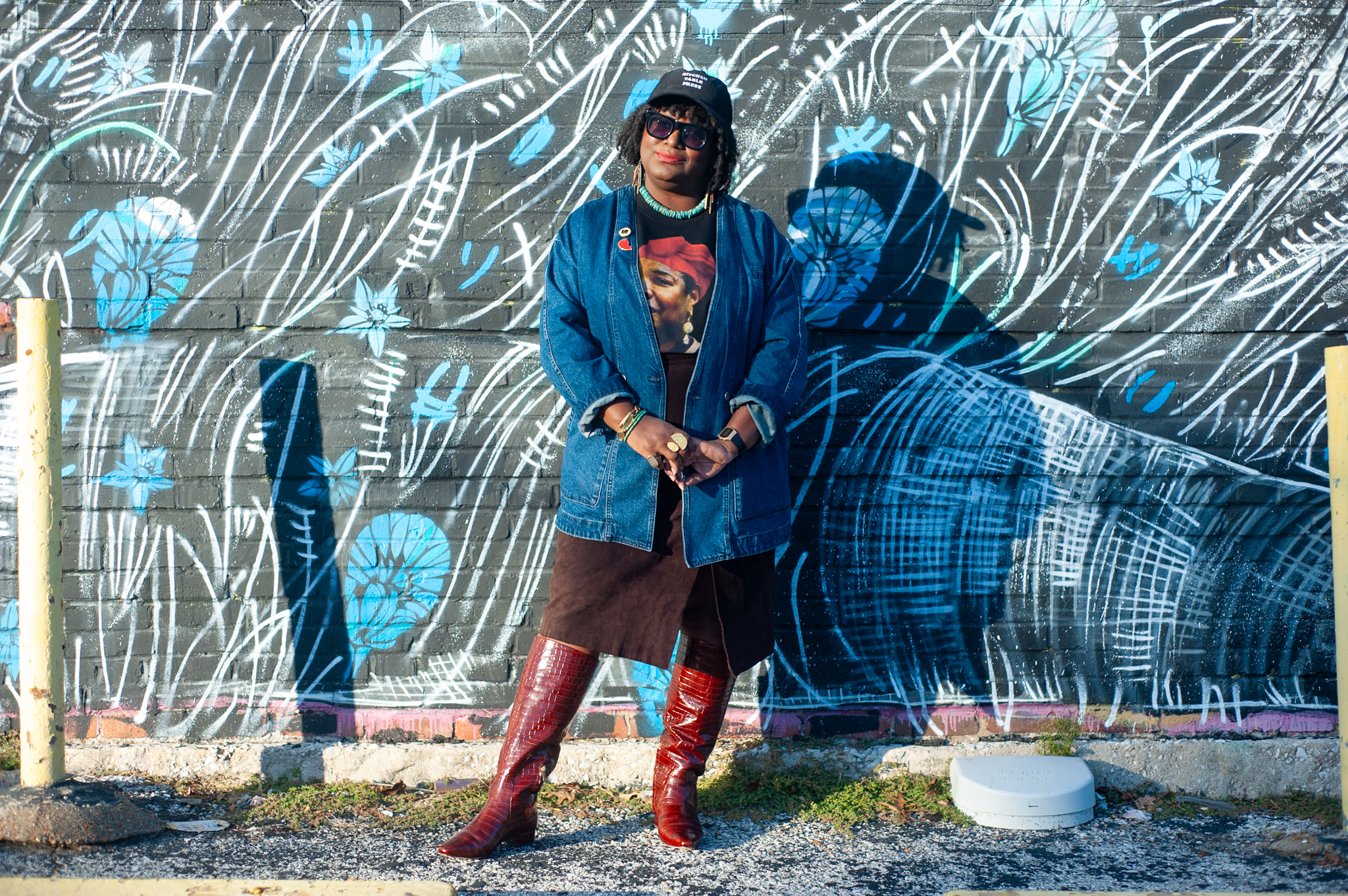 Photo credit: Lindy Drew / Humans of St. Louis
𝑌𝑜𝑢’𝑣𝑒 𝑑𝑜𝑛𝑒 𝑠𝑜 𝑚𝑢𝑐ℎ 𝑡𝑜 𝑔𝑒𝑡 𝑡ℎ𝑒 𝑘𝑖𝑑𝑠 𝑏𝑎𝑐𝑘 𝑜𝑛 𝑎 𝑔𝑜𝑜𝑑 𝑝𝑎𝑡ℎ.
“And children don’t necessarily see that. They don’t notice it. My sister has since moved into an apartment with the kids, and they all have their own rooms. She also bought them phones just to use at her place. At my place, they had to read books before bed, and they had a bedtime. And, yeah, in juxtaposition, I recognized I had been a rigid parental figure. I also had expectations and guidelines they had to follow.
My life, overall, is pretty chaotic. In my house right now is my husband, who in my mind is my first priority. But let him tell it, and he’ll say he’s eighth. And that’s after the animals. So, my husband, my mom, my 21-year-old eldest niece, my 14-year-old nephew, my 9-year-old niece, my 8-year-old nephew, a rottweiler, and a cat. And the cat is actually the most demanding. I also have a bonus child, who’s a grown woman, whom I call my baby. She’s from Uganda, and I met her while she was in her graduate program. She came here pregnant and didn’t know she was pregnant until a few months after she got here. Well, we became close, and her baby, whom I call my grandbaby, is two and often at our place, too. So we have a full house all the time.”
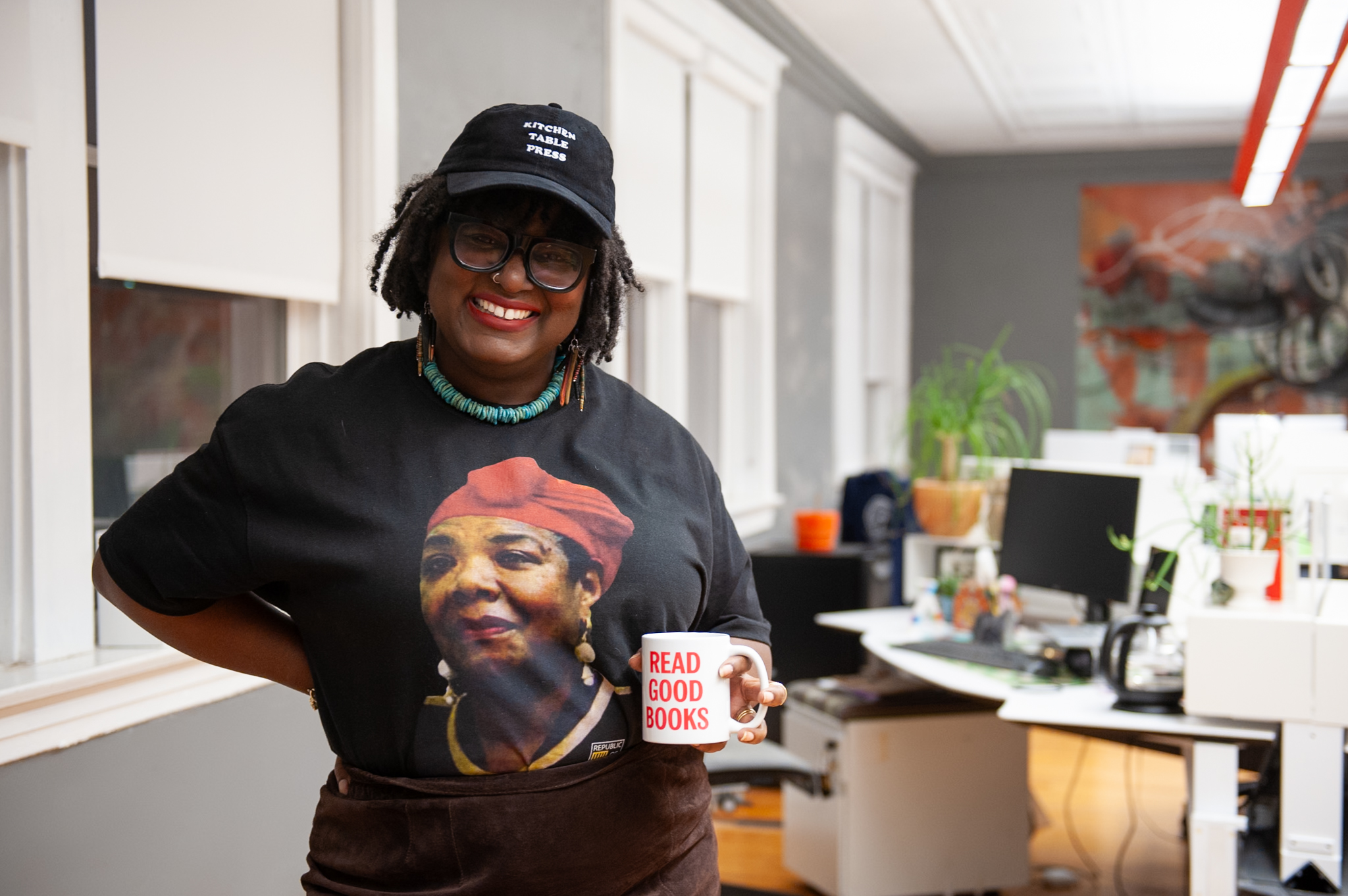 Photo credit: Lindy Drew / Humans of St. Louis
“Growing up, I read voraciously. I read so much. I feel like any writer has that story. My paternal grandmother was someone who also enjoyed Black American literature. She wrote stories that never got published, but she read a lot. When she passed, I asked if I could have all her books. So I inherited a whole collection. So I fell in love with Black stories and Black writers through her. I also fell in love with Black dialect because she loved reading authors like Paul Laurence Dunbar and Zora Neale Hurston. And I picked up how they captured the dialect of enslaved people and people who were emancipated and the stories that came out of that time.
I’ve read most of the books I’ve inherited from my grandmother, and one of the most touching things is running into a slip of paper with her handwriting. She wrote her name inside the front cover of all her books. And I own that from her. As a kid, I also read 𝑇ℎ𝑒 𝐵𝑎𝑏𝑦-𝑆𝑖𝑡𝑡𝑒𝑟𝑠 𝐶𝑙𝑢𝑏 and the 𝑆𝑤𝑒𝑒𝑡 𝑉𝑎𝑙𝑙𝑒𝑦 𝑇𝑤𝑖𝑛𝑠 books. I read the 𝐿𝑒𝑓𝑡 𝐵𝑒ℎ𝑖𝑛𝑑 series and 𝑇ℎ𝑒 𝑊ℎ𝑖𝑡𝑒 𝐵𝑜𝑜𝑘 because I grew up in church. I loved 𝐽𝑎𝑐𝑘 & 𝐽𝑖𝑙𝑙 books. And I loved to get magazines in the mail. I still love that, especially with literary magazines. My husband says, ‘You are single-handedly keeping magazines in business.’ But it was my grandmother who influenced me to become a writer. And now I need to set my sights on having a published book. I’m always saying, ‘I have to finish my own book because Granny never did.’ I cannot wait to have a whole book finished. And the first page is gonna say, ‘For Granny.’ That’s it.”
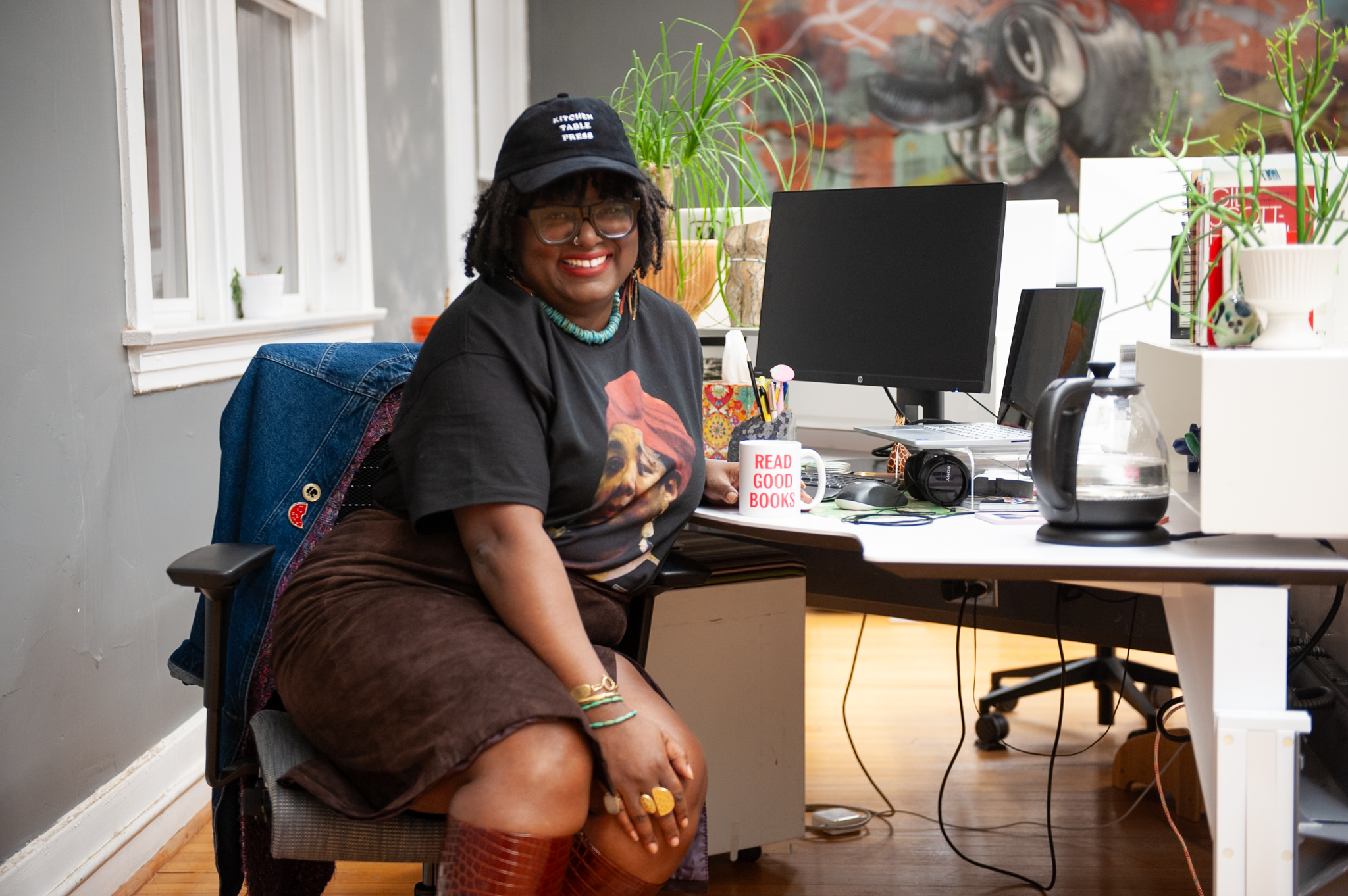 Photo credit: Lindy Drew / Humans of St. Louis
“I appreciate that there’s an independent route to get things published. But it also requires a lot of sacrifice when it comes to finances, time, mental capacity, and figuring out editors and artists. I know about the independent route. But I’ve done a lot of work. I have a bachelor’s degree in writing. I have a master’s in fine arts and writing. And I want to pursue this next step to write a book through the traditional route. I know once you’ve published independently and sold a number of copies, there’s an agent interested in representing you. And contrary to what you think, if you have a good agent fighting on your behalf, you don’t have to spend any of your money. The main publishers are so well-endowed, they’re gonna give you an advance to write your second one, you’re gonna get paid royalties, and all of that from the books you end up selling. Another thing I want writers to know, especially talking about writers of color, is that we need to be doing more to ensure that the publishing industry sees our stories. And now, in particular, because certain stories need to be prioritized. This is the time. We need the voices of people who are impacted in this moment. And there are people who want to ensure those stories are put out into the world.”
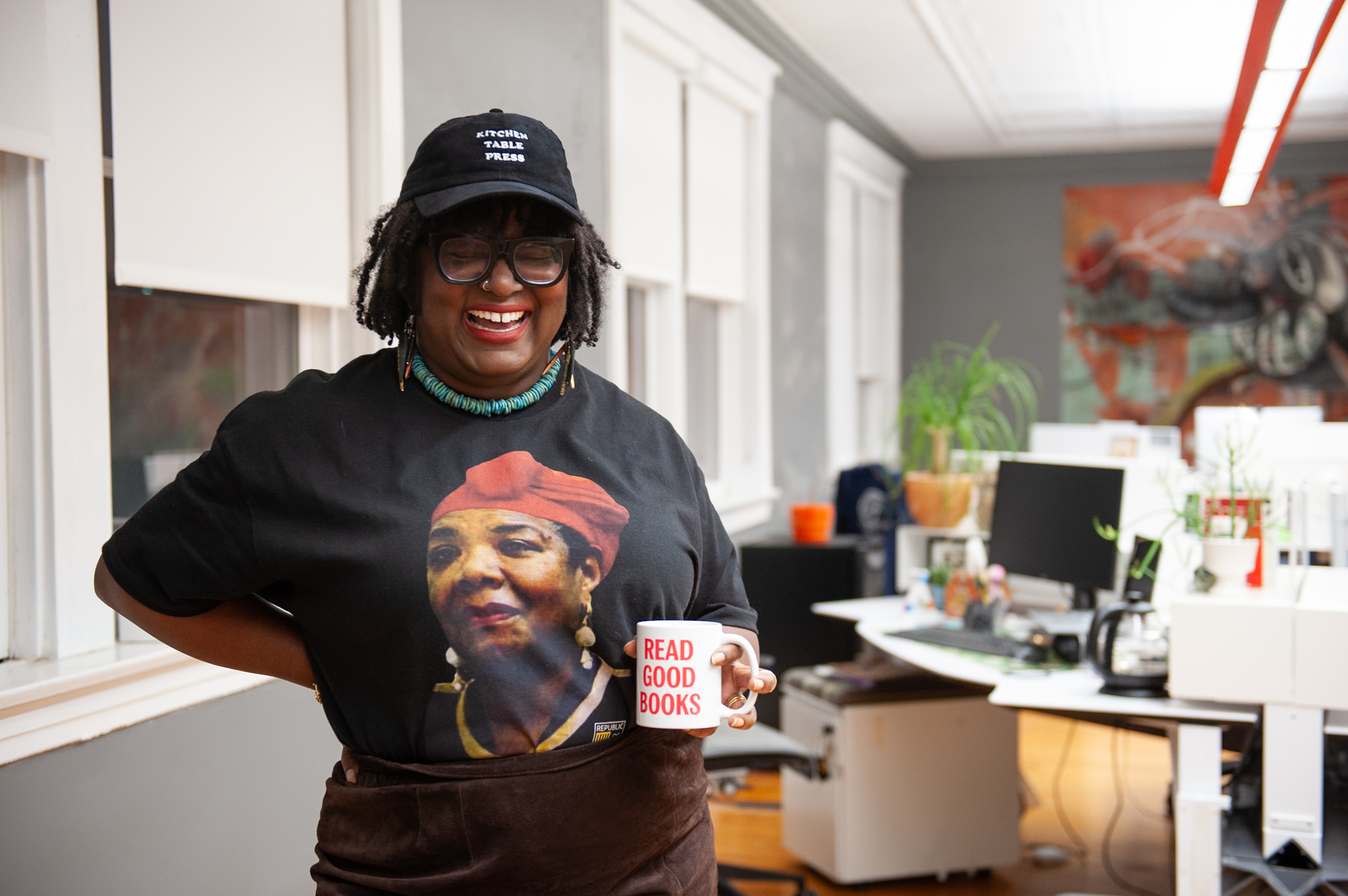 Photo credit: Lindy Drew / Humans of St. Louis
“I’m a chaotic writer. I told everybody at the Wild Seeds Writers Retreat with the Center for Black Literature in upstate New York. And the teacher who led our workshop, Ladee Hubbard, who is this well-published, beautiful writer and author, said, ‘When I do my first drafts, I don’t have an outline. I only have an outline when I’m starting the editing process.’ I’ve heard many teachers say, ‘You may have an idea for your story, but you don’t know where it’s going until you’re writing it. And once you start writing it, it will take you on a completely different journey.’ I’m always open to that. I’m also primarily writing true stories, and the process of writing true stories is that it’s f*cking emotional.”
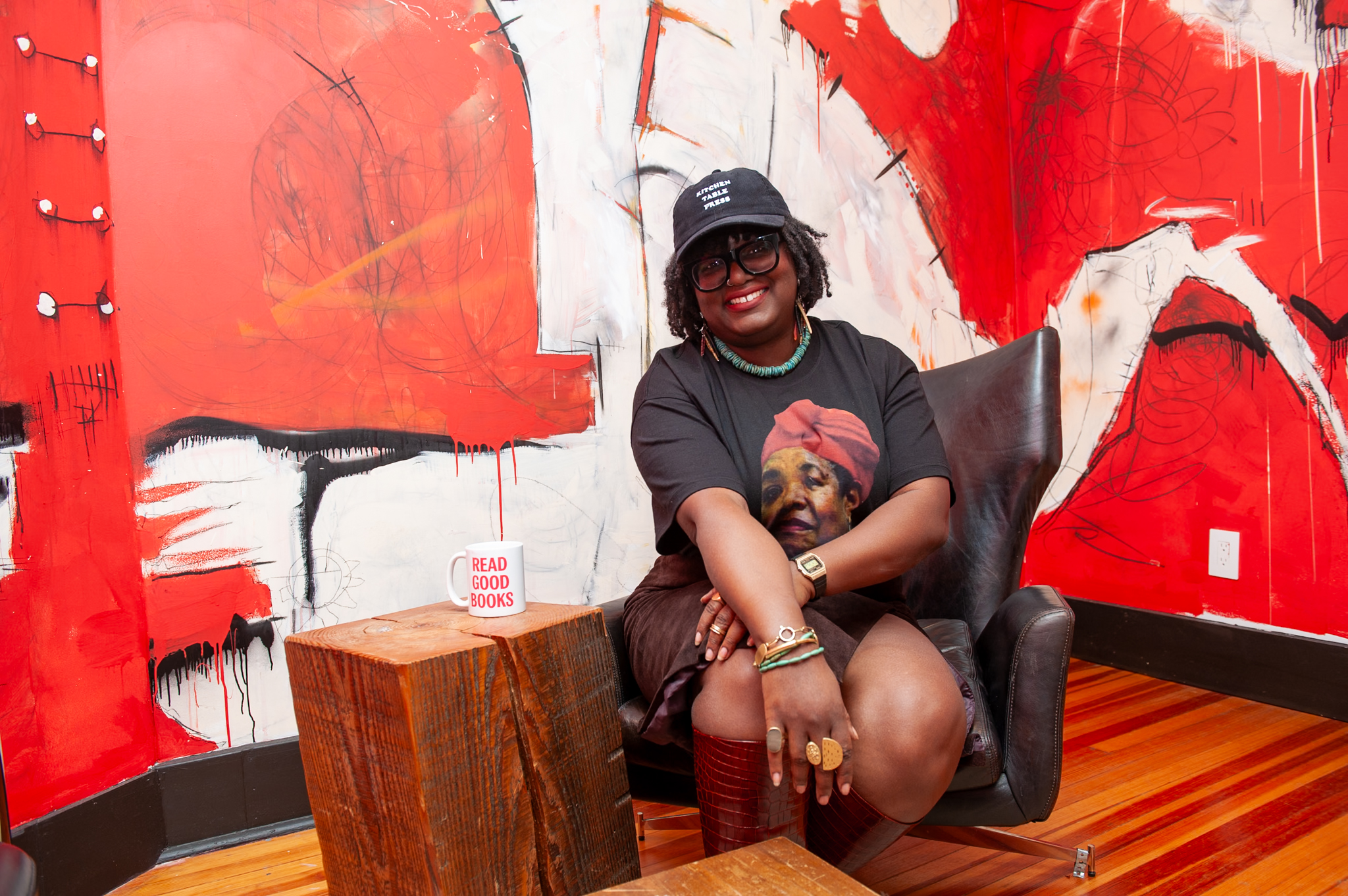 Photo credit: Lindy Drew / Humans of St. Louis
“Since moving back to St. Louis, I’ve also done intense work in violence prevention. I worked at Safe Connections primarily around teen dating and gender-based violence. At one point, I was the manager over our youth programs. I’m a teacher these days, but I worked in violence prevention for over 10 years. And now I own a business around anti-racism work called Undo Bias. We work with organizations in thinking about how to create equitable workspaces for Black and Brown folks. Of course, that’s been challenged with the current administration. But we’ve still had partners who count on us for the work. And that work provides a lot of liberty for me to do my writing. It is the thing that sustains my writing.
Writing is something a lot of places have taken for granted unless you’ve published books and quite a few of them. But writing hasn’t always been readily recognized as an art form. Poetry, yes. But when you’re writing a memoir or creative nonfiction, it’s not always the case. There are many awards and grants for these things, but I think what people attribute to the arts are the visual arts. Like, there’s not a museum of letters. The library is, if you will. But we take writing and reading for granted, whereas the skill of creating a tapestry or monument or painting or photograph — those mediums are on display.
Writing is such an undertaking. When I write, I have to do it in isolation. I write into the wee hours of the night. I used to stay up all night. And it’s hard because I have to juggle my other work and need to be available to people from 9 to 5, too. So residencies and retreats to get away for weeks at a time help me finish pieces to get them out to the world. When you get to a residency, everything is taken care of for you, and a stipend will or will not be provided. If it’s not, that’s an example of how having Undo Bias is supportive of my creative process. Even when residencies provide a place to stay, my bills don’t stop. I can’t put that kind of pressure on my husband in addition to being away from home, so running Undo Bias helps fill that gap.”
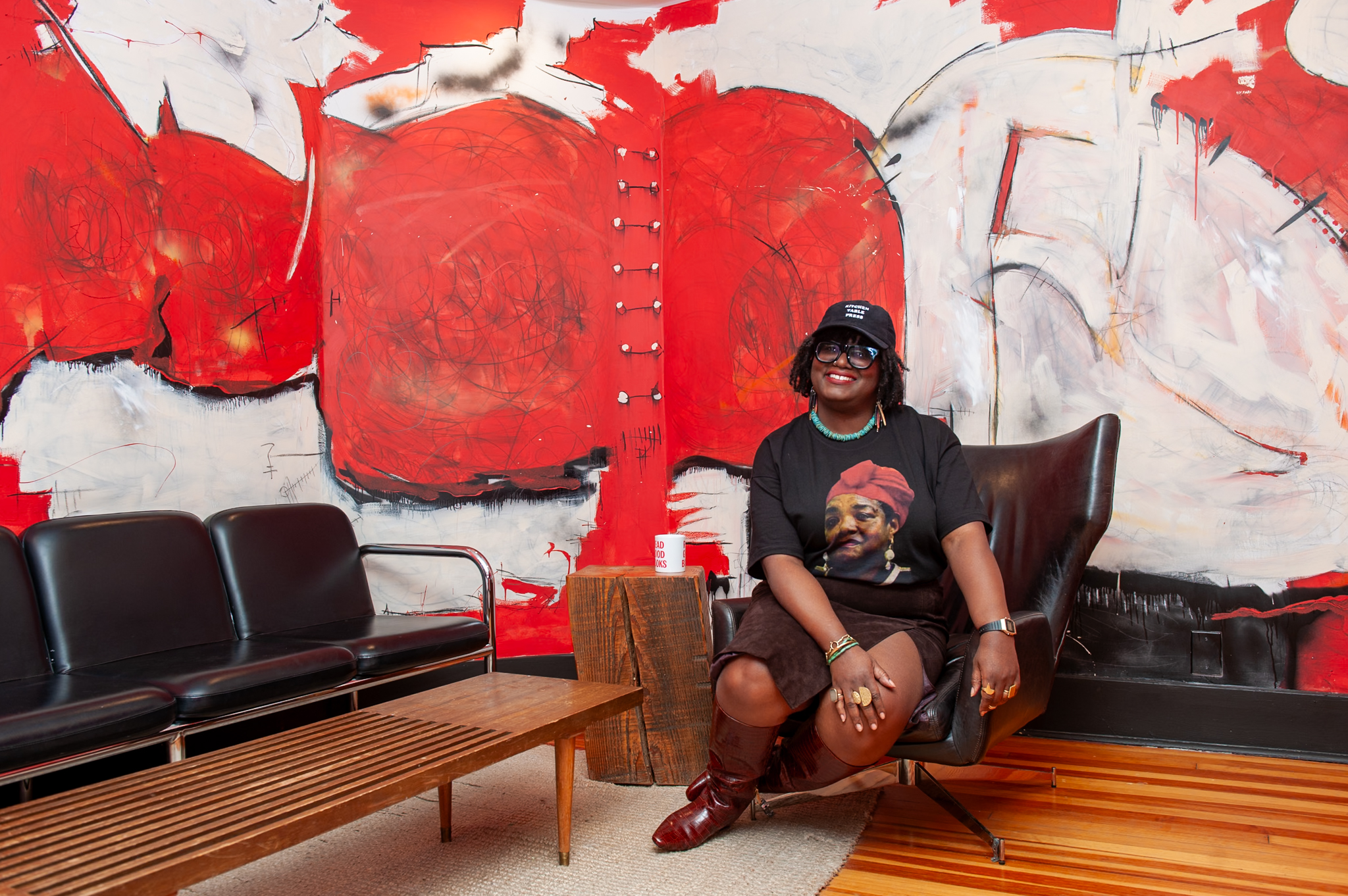 Photo credit: Lindy Drew / Humans of St. Louis
“When I went to Arkansas, I finished 𝑊ℎ𝑒𝑛 𝑀𝑎𝑚𝑎’𝑠 𝑃𝑟𝑎𝑦𝑒𝑟𝑠 𝑊𝑒𝑟𝑒𝑛’𝑡 𝐸𝑛𝑜𝑢𝑔ℎ for publication. And when I went to Alaska for a residency, I completed 𝑊ℎ𝑎𝑡 𝑇ℎ𝑒𝑦 𝐶𝑎𝑙𝑙 𝑈𝑠 𝑖𝑠 𝑀𝑎𝑔𝑖𝑐, which got published immediately after I came back home. Last summer, I went to New York and finished 𝑇𝑜 𝐾𝑎𝑏𝑎𝑙𝑒, a story I was set on doing for a long time. Our fiction workshop facilitator and author there, Ladee Hubbard, said something that clicked to help me finish a piece and get it out. Mere hours after submitting 𝑇𝑜 𝐾𝑎𝑏𝑎𝑙𝑒 to several literary journals, it was accepted by Cutleaf Journal and published online earlier this summer. So I know that when I get out of this environment of being stressed with work and my family, and I’m able to sit down with my stories, I get things done. I get them out into the world. But I must have the time and resources to do that. Before I left my last job, I’d been working so hard it was ridiculous. I missed two grant opportunities to apply with RAC. But this past year, I got a Regional Arts Commission grant. I also work with Mid-America Arts Alliance, which is great at compensating artists for the work they’re doing.”
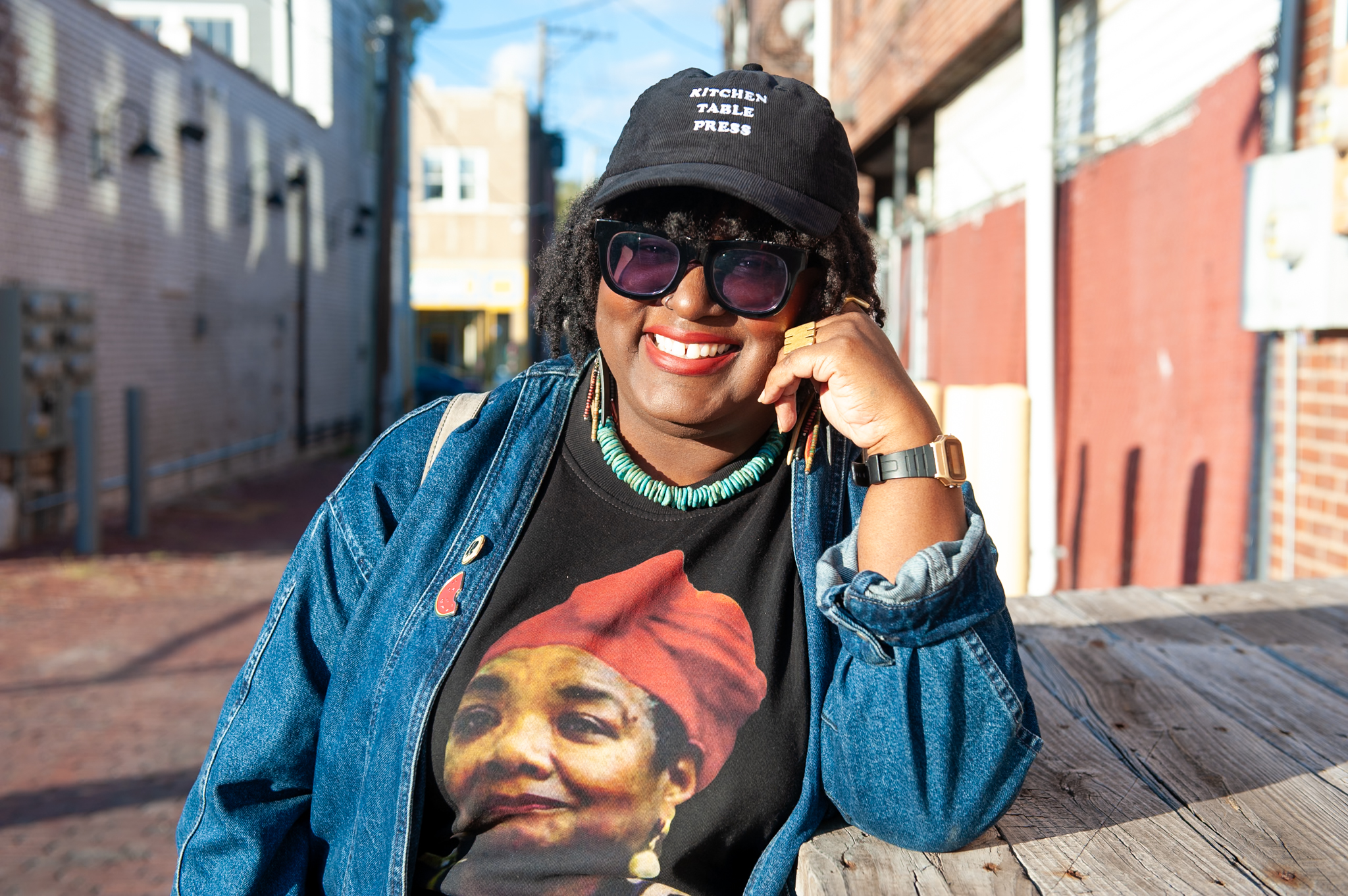 Photo credit: Lindy Drew / Humans of St. Louis
“In the last few years, Undo Bias has built this program called Arts and Liberation. Doing antiracism work is a huge undertaking. I’m a Black woman going into white spaces all the time. My counterpart is white, and he gets to work a lot of times with white folks. But even still, I’m up against hearing, encountering, pushing back against some of the things said, and also fighting to tell people, ‘My life matters. Black boys’ lives matter. Black moms’ lives matter.’ I have to always push back against that, and at one point, it became so exhausting. So I was like, ‘We have to do something gratifying in this work.’
I do a lot of retail therapy on my dime, but actually, I wanted to do something a little healthier. So that’s how Arts and Liberation began. James Meinert is a musician and visual artist, and I’m a literary artist. So we’ve been curating these programs where we get to work with artists and bring together activists, artists, and community members to enjoy and partake in some kind of art. There’s always a literary component to it. And we feel like it should be sustenance for the people doing this work in the world, but also to have revolutionary moments of joy and to simply have a good time with one another.
Last year, we partnered with the Saint Louis Art Museum to bring BLK MKT Vintage to St. Louis. This past fall, we partnered with Moraa Nyaribo, a Kranzberg artist-in-residence, whose exhibition, NYUSO, highlighted Black resistance, beauty, and abundance. We threw a closing party for her show by bringing in Kenyan author and Voodoonauts co-founder Shingai Njeri Kagunda from Vermont, African drummers and dancers from Spirit of Angela West African Dance & Drum, and DJ DemBari, an STL-based dancer and choreographer. It was an incredible event, and our goal is to do more.”
𝑌𝑜𝑢’𝑣𝑒 𝑑𝑜𝑛𝑒 𝑠𝑜 𝑚𝑢𝑐ℎ 𝑎𝑙𝑟𝑒𝑎𝑑𝑦!
“This is why my stories take 10 years to write.”
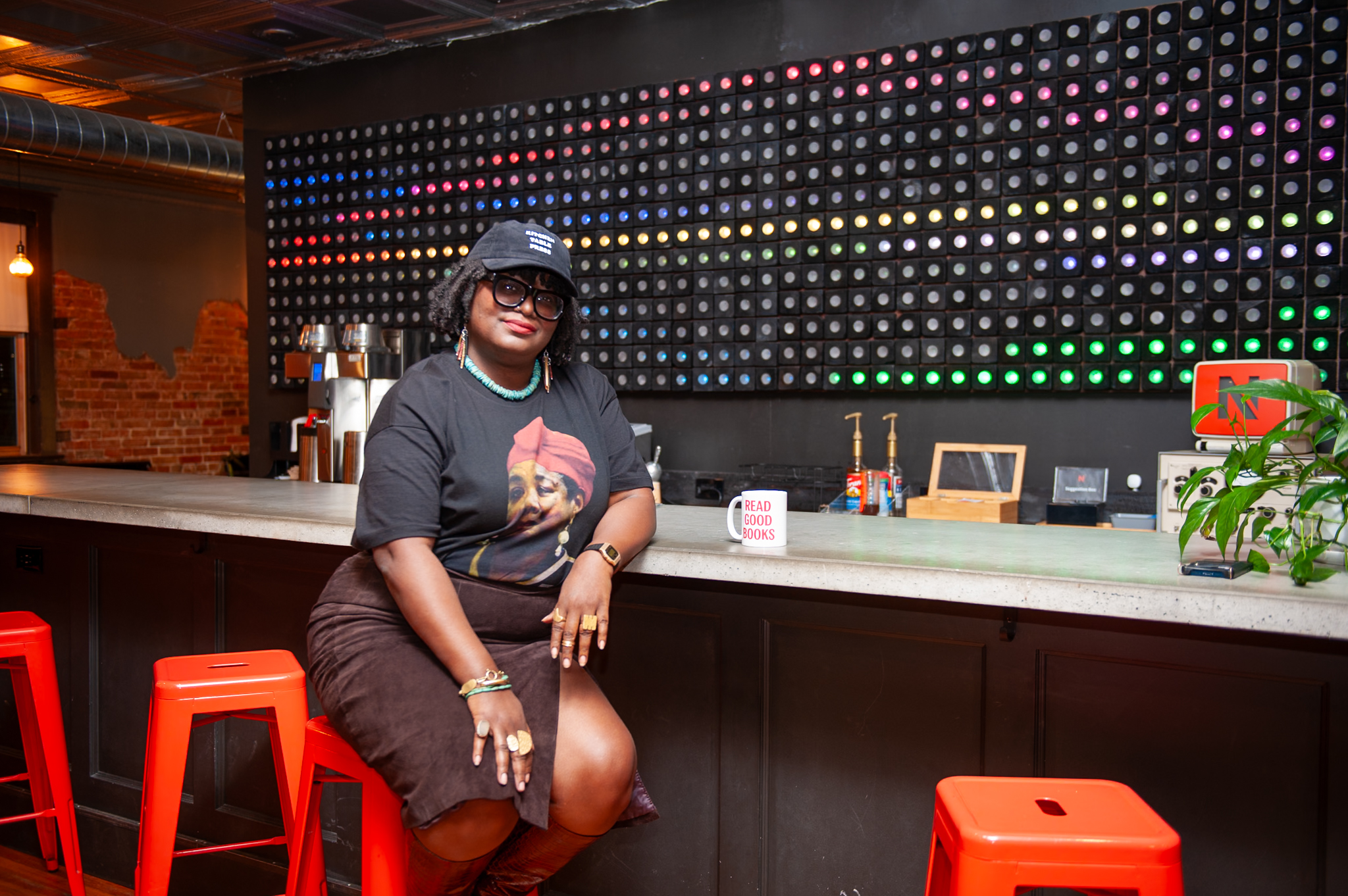 Photo credit: Lindy Drew / Humans of St. Louis
𝑊ℎ𝑎𝑡’𝑠 𝑏𝑒𝑒𝑛 𝑡ℎ𝑒 𝑏𝑒𝑠𝑡 𝑐𝑜𝑚𝑝𝑙𝑒𝑚𝑒𝑛𝑡 𝑠𝑜𝑚𝑒𝑜𝑛𝑒’𝑠 𝑔𝑖𝑣𝑒𝑛 𝑦𝑜𝑢 𝑎𝑏𝑜𝑢𝑡 𝑦𝑜𝑢𝑟 𝑤𝑜𝑟𝑘?
“One I really appreciate is when people say they feel like the dialogue is real, that they can hear it. That’s such a huge compliment because I pay close attention to the way people talk in order to capture that on a page. People who do screenwriting and playwriting do it well because it’s for the stage. And it is a skill. Because when it comes to creative nonfiction, I’m not going to remember dialogue from 20 years ago. So what I’ve learned is important is keeping the essence of what was said and figuring out a way to convey the actual words in a way that still allows it to be felt and heard by the reader.
Sometimes I do remember a line of what someone said, and that’s enough to build a whole world of dialogue. Taking that kind of permissive approach for true stories has been helpful for me. And in the world of creative nonfiction, every author is different in how they keep fidelity to real life. I feel strongly that my stories have to be as close to true life as possible. And the only deviation from that is in dialogue, because you can’t necessarily remember everything that’s been said. But at the end of the day, I do also subscribe to the idea that creative nonfiction is not journalism. In journalism, we’re responsible to the audience to ensure that the truth is what they’re reading. As authors of creative nonfiction, we’re usually telling our own stories, and we’re the owners of those stories.”
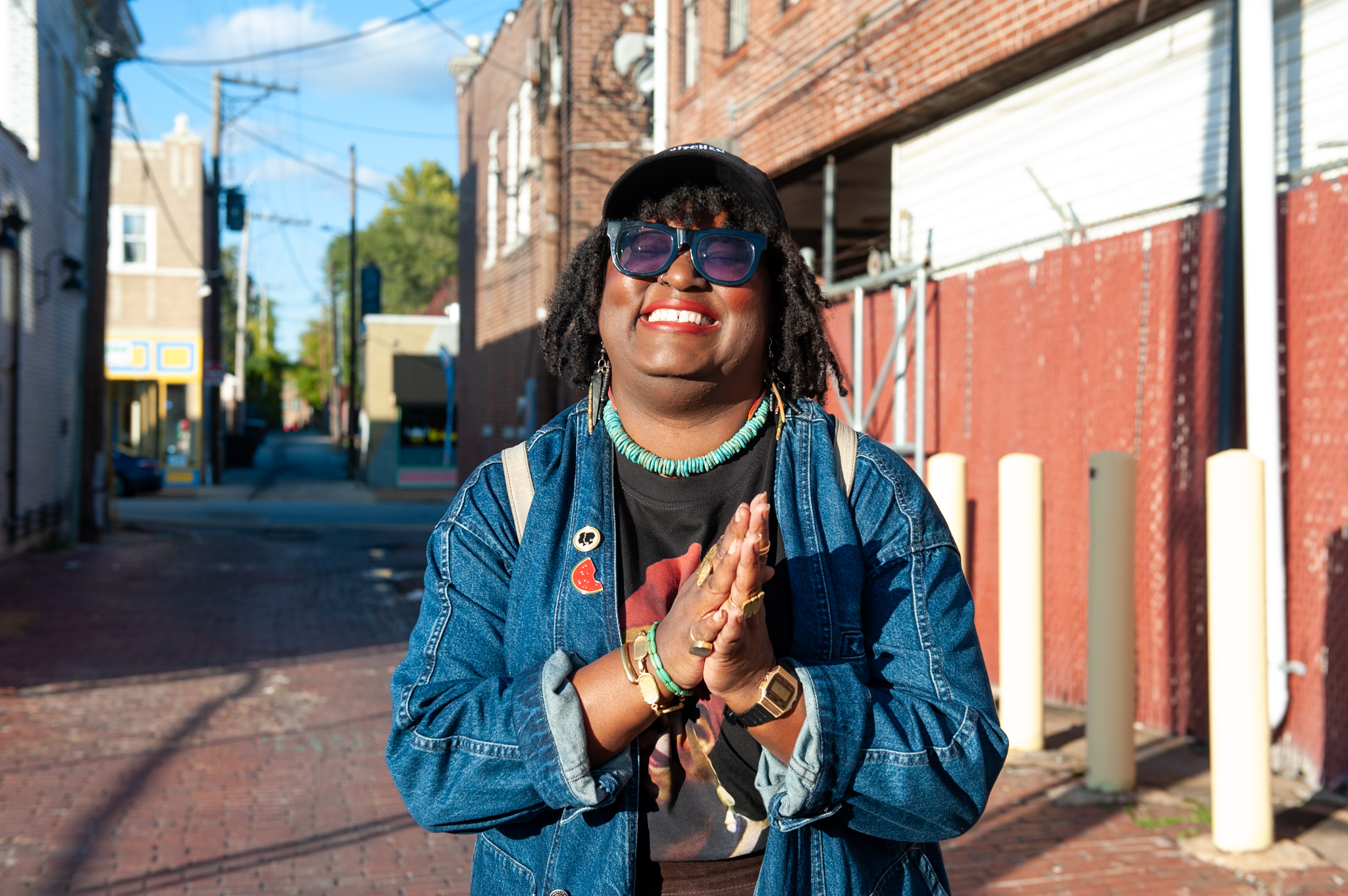 Photo credit: Lindy Drew / Humans of St. Louis
𝑌𝑜𝑢’𝑟𝑒 𝑎 𝑣𝑜𝑟𝑎𝑐𝑖𝑜𝑢𝑠 𝑟𝑒𝑎𝑑𝑒𝑟, 𝑡ℎ𝑒 𝑖𝑚𝑝𝑜𝑟𝑡𝑎𝑛𝑐𝑒 𝑜𝑓 𝑟𝑒𝑎𝑑𝑖𝑛𝑔 𝑤𝑎𝑠 𝑚𝑜𝑑𝑒𝑙𝑒𝑑 𝑡𝑜 𝑦𝑜𝑢 𝑔𝑟𝑜𝑤𝑖𝑛𝑔 𝑢𝑝, 𝑎𝑛𝑑 𝑡ℎ𝑖𝑠 𝑖𝑠 𝑡ℎ𝑒 𝑓𝑖𝑒𝑙𝑑 𝑦𝑜𝑢 𝑤𝑜𝑟𝑘 𝑖𝑛. 𝑌𝑒𝑡, 𝑤𝑒’𝑟𝑒 𝑖𝑛 𝑎 𝑡𝑖𝑚𝑒 𝑤ℎ𝑒𝑟𝑒 𝑝𝑒𝑜𝑝𝑙𝑒 𝑑𝑜𝑛’𝑡 𝑟𝑒𝑎𝑑 𝑎𝑠 𝑚𝑢𝑐ℎ 𝑎𝑛𝑦𝑚𝑜𝑟𝑒.
“We don’t read enough. My husband did a deep dive into AI and how addictive the tech world is. And he learned that people who are wealthy in the tech industry are very regimented in how they introduce and prescribe technology to their children. I’m sure it’s a spectrum, right? There are people throwing screens at their kids’ faces, and there are people religious about not doing that. And I think wealth plays a big part. I spent time in New York not too long ago, and people still read on the train. So I am curious about how do we get our children interested in writing and reading in these working-class communities? I don’t think that everywhere in the world people aren’t reading. I know so many African writers. My goal is to open up a bookstore and library in Mukono, Uganda, where the university is where I studied. I studied in East Africa and, later, in Lagos, Nigeria, was a student of Chimamanda Ngozi Adichie for two weeks. Because of that, I’ve come to learn of so many Nigerian writers who are writing and whose work is being read.
I was a neighborhood reading captain for Ready Readers, and my god-grandbaby, who is two years old, is in love with books. We have so many books around our house, and he loves all the board books. He’s like, ‘Book, book, book!’ How do we ensure he keeps loving books? I make the kids read in my house. And I intend to instill a love of reading in them for as long as I can. I’m hoping they are always excited about books and storytelling.
People are still reading, and maybe it’s not so much here in this country. But my goal is to write something that is beloved here by people who are still in love with letters and the word and how people beyond our borders are interested, too. It’s necessary. It’s hard and sad to see how the writing world is diminishing. But then again, it’s not. I’m reading so many stories right now. I was at Goodwill and saw this book I’d been thinking about that I fell in love with in college. I was like, ‘Oh my god, 𝐵𝑙𝑢𝑒 𝐿𝑖𝑘𝑒 𝐽𝑎𝑧𝑧 by Donald Miller is right there. I’m taking it home today.’ And I started reading it again last night.”
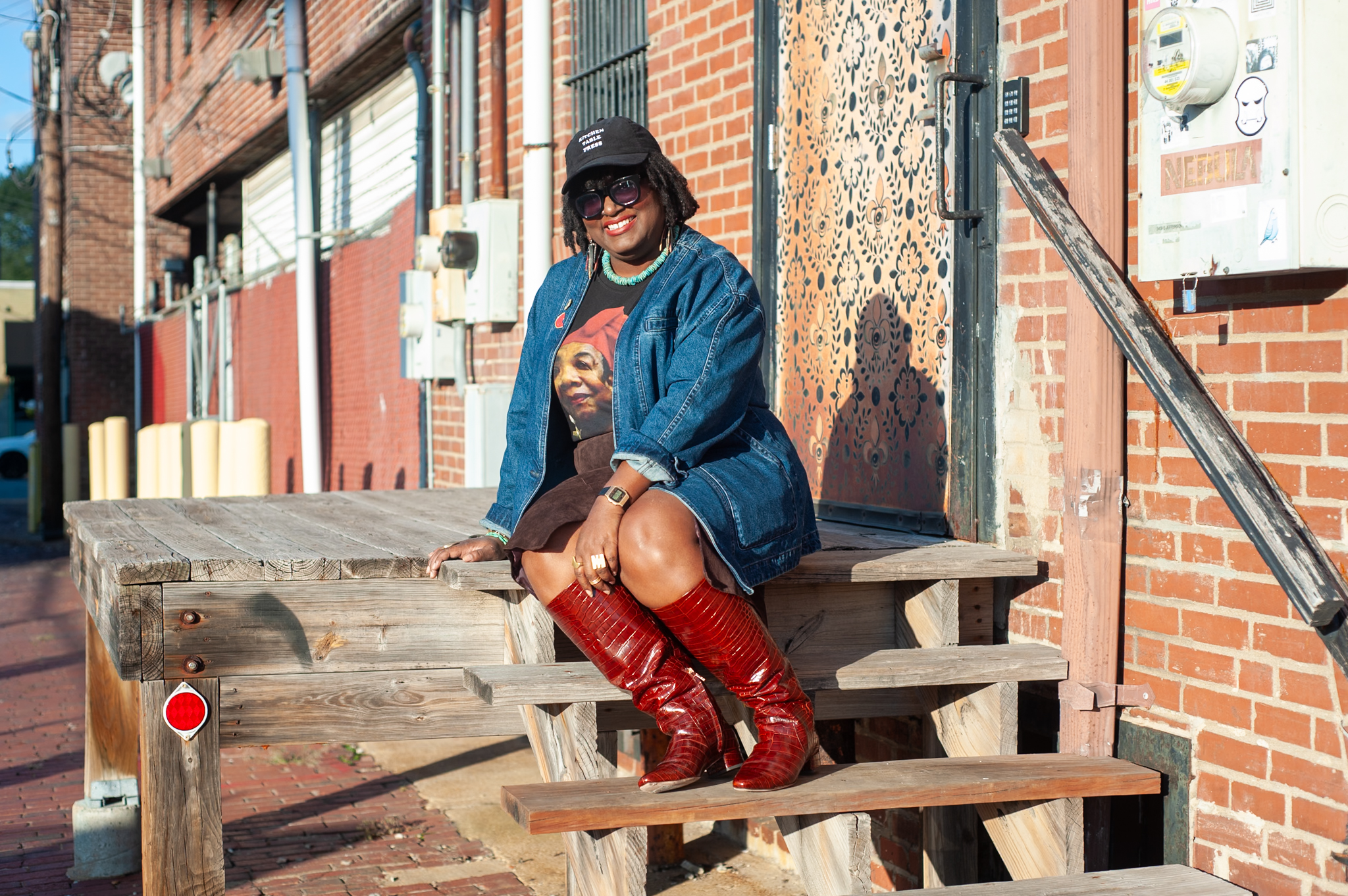 Photo credit: Lindy Drew / Humans of St. Louis
“Finally, I wanted to be sure to mention that I had this feeling of, ‘Gosh, the Regional Arts Commission chose me to do this interview, when there are so many literary artists in St. Louis?’ I had a whole lot of trepidation about it initially. Because I don’t have a book published. So for me, it used to be, ‘Oh, I don’t have an MFA.’ But now I have an MFA. Now it’s, ‘Oh, I don’t have a book published.’ So, I’m always moving the benchmark to my value when it comes to being seen as a writer, an author. And I don’t even embrace the term literary artist anymore because I’m also able to curate programming, I love teaching, and I feel like an Evangelist to tell folks, ‘Write your story. And don’t just write it. Get it out into the world.’ People are always looking to publish your stuff. I have so many resources to share, and I want to make it more pronounced that I am supporting writers in getting their work out into the world.”
Zenique Gardner Perry | zeniquegardnerperry.com
About Humans of St. Louis
Humans of St. Louis (HOSTL) is a 501(c)(3) non-profit organization with the mission of sharing photographic portraits and first-person stories to highlight local needs, issues, and experiences from people in the St. Louis region. HOSTL gives followers an intimate look into the lives and struggles of the people of St. Louis, one photo and story at a time, and is the second most popular “Humans of” site in the U.S. after Humans of New York.

Follow Us On Social Media