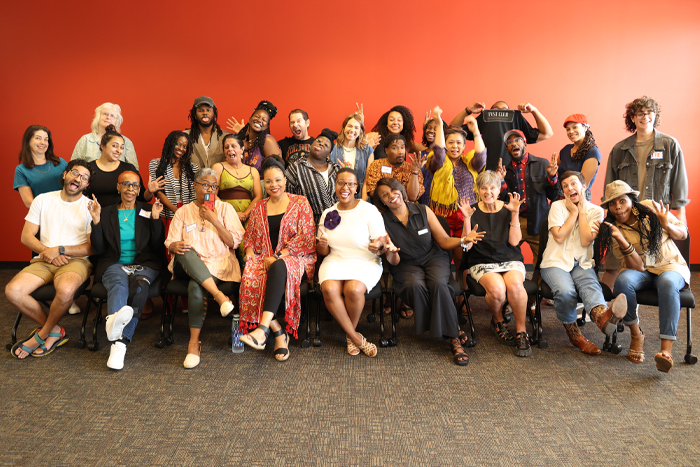
The CAT Institute will begin operating as an independent nonprofit in 2026, with continued support from RAC. Learn more about the exciting future of the CAT Institute.
The CAT Institute’s Next Chapter
As RAC prioritizes its role as a grantmaker, the Community Arts Training (CAT) Institute is spinning off from RAC to become its own non-profit entity in 2026.
This strategic move signals a new chapter for CAT, amplifying its role as a vital training ground for community-rooted artists, social workers, educators, community organizers, and civic leaders committed to social change through the arts. This transition is being stewarded by a CAT Institute task force, comprised of CAT alums, faculty, and current program lead, Pacia Elaine Anderson, with support from long term CAT Institute partner Sue Greenburg/VLAA, and former CAT directors Ann Haubrich and Roseann Weiss.
Since its inception, the CAT Institute’s home has been within the Regional Arts Commission, where CAT reaped the benefits of convening space, leadership, and administrative support. This tenure is marked by supportive executive leadership, including Commissioners, contributing to CAT’s success and reputation as a national training model.
In turn, CAT supplied RAC with expanded networks, national visibility, and awareness of transferable tools for cross-sector collaboration. The CAT Institute engendered a climate where RAC was at the forefront of centering partnerships with health and human services, after school educational initiatives, and civic and community-based ventures.
In this next chapter of CAT, we expect continued and advanced training/instruction, professional development opportunities for the alums, bold partnerships, and reaching deeper into the larger footprint of the Bi-State region. And CAT will have the distinction of being part of RAC’s portfolio of investments.
FOR MORE INFORMATION, CLICK HERE.
About the Community Arts Training (CAT) Institute
For almost three decades, artists, cultural workers, community activists, educators, and social service professionals have been a driving force in the movement for positive social change in St. Louis. RAC’s Community Arts Training (CAT) Institute is proud to count many of those changemakers as part of its vast alumni network.
The CAT Institute provides a comprehensive training program, preparing artists and their community partners to collaborate in creating and sustaining transformative arts programs, often in under-resourced settings, such as neighborhood organizations, social service agencies, and as part of educational programs. The fellows grapple with program planning and adaptability, partnership development, and hands-on projects–some of which may be designed during their fellowships.
CAT fellows come from a wide range of artistic and cultural practices, ethnicities, socioeconomic backgrounds, ages, and identities. After completing the program, many go on to establish arts and community-based programs, on their own or as part of a larger entity or network. Others become changemakers in social justice movements or help shape public policy. Some guide youth through teaching artistry or elevate their social and community arts practices using the CAT “with not for” approach, ever striving for a more just and equitable society.
To date since 1997, more than 350 social workers, educators, community activists, and artists of all disciplines have completed this cross-sector training and use the tools gained through their CAT experience in communities around the world. The CAT Institute is the oldest sustained training program of its kind in the country.
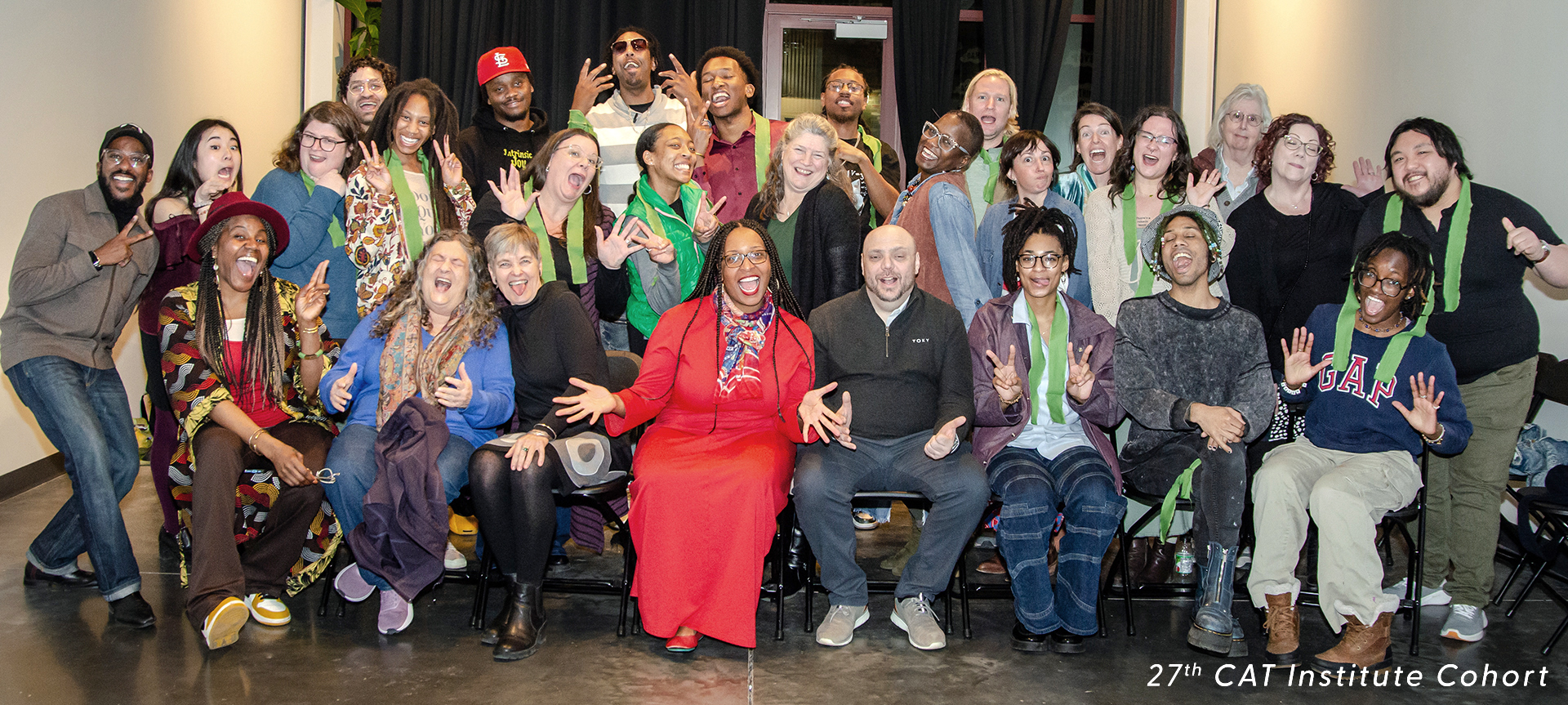
Announcing the 27th Cohort
The CAT Institute network has expanded as we continue the important task of positive community change with a new, dynamic group of creatives and community caretakers. We look forward to embarking on this evolving learning journey and thank the CAT alumni network for its support in carrying on the institute’s mission and values.
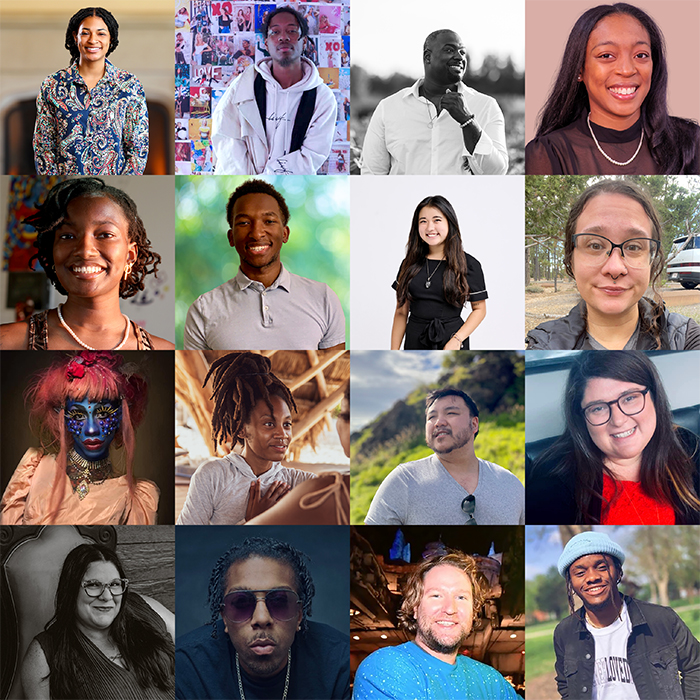
We welcome the 2024/2025 CAT Cohort! Click here to meet them.
Powering Positive Social Change Through Art
Through a rigorous application process, the program identifies participants who seek to acquire arts-based tools to transform communities, while developing their collaboration skills, and exploring new concepts and ways of working.
CAT Institute Fellows participate in a total of 120 hours of training. Fifty-six (56) hours of in-session training is conducted over the course of five months, which occurs during intensive day-long sessions. Fellows also complete an additional 60+hours of learning between sessions in the form of readings, team assignments and meetings, and field study/site visits. Full attendance and participation in class sessions and assignments is required.